







Introduction:The new tea brand Nayuki has recently been embroiled in a wave of store closures, with frequent reports on social media of outlets quietly shutting down in multiple locations. Official data shows that in the third quarter of 2024, the number of directly operated stores net decreased by 10. Although the addition of franchised stores helped balance part of the shortfall, the scale gap with leading brand Heytea continues to widen. Consumers have also reported issues such as declining product quality control and the switch from freshly baked goods to pre-made items. This article provides an in-depth analysis of operational reports and market feedback to dissect the current operational challenges and adjustment strategies facing Nayuki.
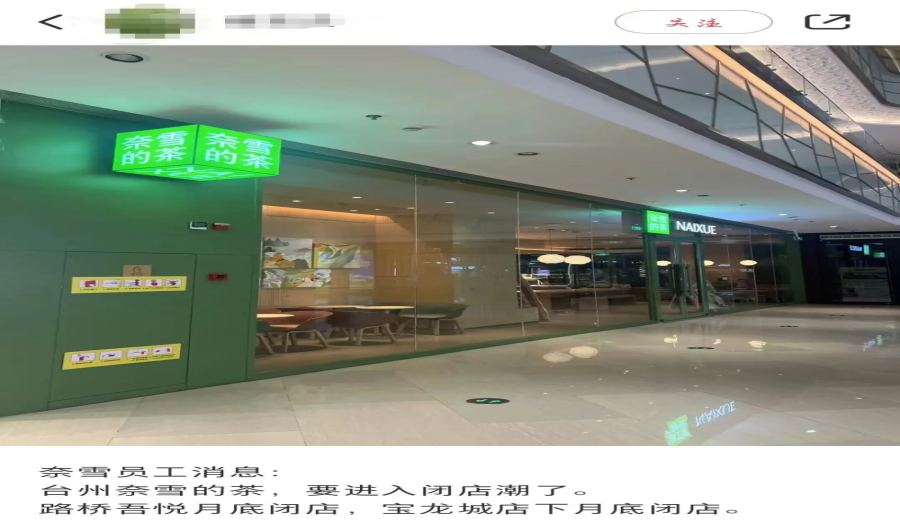
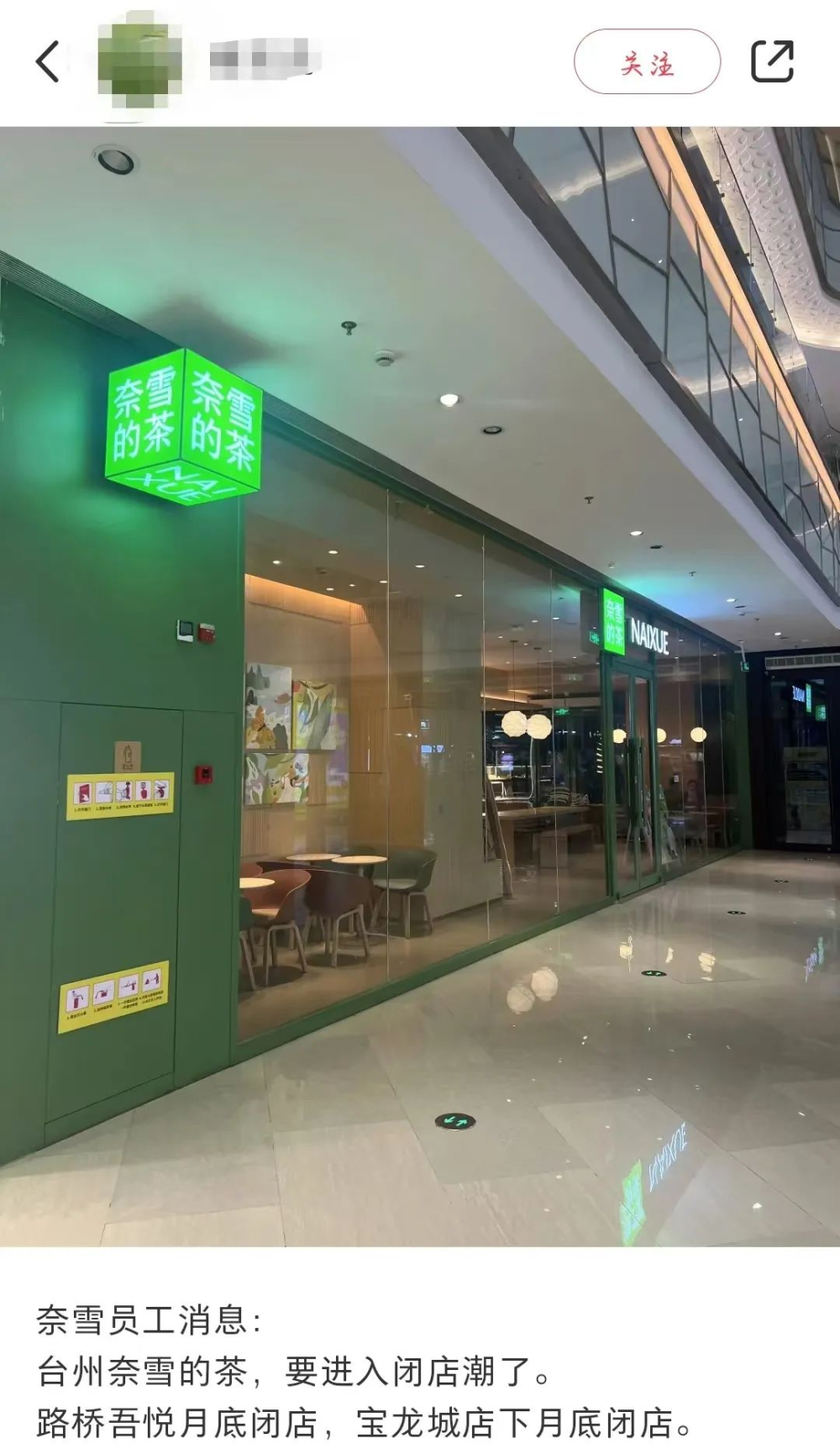
Recently, multiple consumers in Taizhou, Zhejiang, have noticed a concentration of store closures at local Nayuki outlets. Online rumors indicate that the Wuyue Plaza store in Luqiao is set to cease operations by the end of the month, while the Powerlong City store plans to end operations next month. In the comments section, it has also been reported that the Yintai store in Wenling and the Wuyue store in Yuhuan have withdrawn, raising concerns among local customers about the brand’s operational status.
This phenomenon is not isolated. Netizens from Hefei, Hangzhou, Nanjing, and other cities have left comments stating that Nayuki branches around them have been disappearing one after another. For example, feedback such as “most of the Hefei stores have closed,” “the Hangzhou in77 store has long been out of business,” and “the new store on Ziyang Street stopped operating just six months after opening” suggests that the wave of closures may not be a localized adjustment but rather a signal of the brand’s strategic contraction.
On October 18, Nayuki released its "2024 Third Quarter Operational Report," confirming the rumors: during the quarter, a total of 89 directly operated stores were closed. Although 23 new directly operated stores and 56 franchised stores were opened simultaneously, the overall number of stores still net decreased by 10. Compared to competitor Heytea’s extensive network of 4,417 stores, Nayuki’s current size of 1,884 stores (including 1,531 directly operated and 353 franchised) shows a significant gap.
Officially, the company explained that in the third quarter, it adopted a more cautious store expansion strategy, proactively optimizing underperforming directly operated stores to improve per-store efficiency. For the franchise business, it strengthened the screening of franchisees, prioritizing mature partners who align with the brand’s values. However, these measures have not fully eliminated consumer concerns.
Market feedback indicates that Nayuki is facing dual challenges: product quality control is said to be less stable than before, and the signature European-style breads, which have switched from being freshly baked daily to being pre-made, have seen a noticeable decline in freshness and taste. Many regular customers have stated that since the switch to factory-delivered baked goods, their frequency of visiting stores has significantly decreased. In addition, in the highly competitive new tea market, Nayuki’s product differentiation advantage has gradually become blurred.
Looking back at the brand’s development history, Nayuki maintained its popularity through frequent new product launches and cross-industry collaborations, and achieved its first full-year profit last year. However, whether the current store closure adjustments can reverse the downturn remains uncertain.Notably, as of the end of September, the number of its franchised stores had increased by a net 272 compared to the beginning of the year (offsetting the closure of 72), indicating that the brand is shifting its expansion focus toward the franchise model.
For consumers, if planning to visit a Nayuki store, it is recommended to confirm the operating status of the destination outlet in advance via the official app. Observations show that store closures are usually announced 1–2 weeks in advance on the mini-program, and some directly operated stores in core commercial areas of certain cities tend to be more stable than those in community locations.
The above content is compiled by CoffeeHunters, a coffee news website.


