







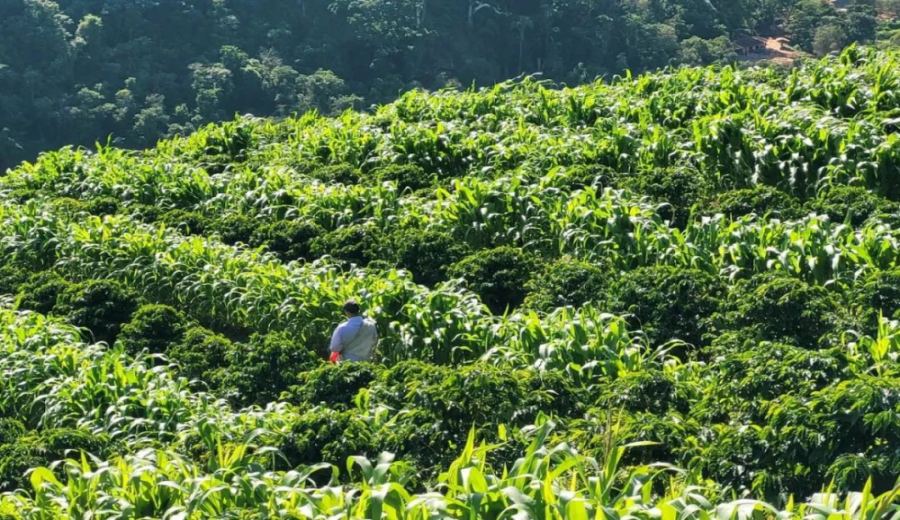
Introduction:Brazil is a global leader in coffee supply, with its Minas Gerais state being the core production area, accounting for 30% of the country’s total output. This article delves into the distribution of Brazil’s main coffee-growing regions, focusing on the natural advantages of Minas Gerais and the Cerrado sub-region, exploring how altitude, climate, and variety influence flavor, and introducing Daterra Estate’s sustainable practices and variety research achievements. It also shares the flavor profile of a beginner-friendly Cerrado Red Bourbon coffee bean.
Brazil is known as the “Kingdom of Coffee,” not only the world’s largest coffee producer and exporter but also contributing about one-third of the global total coffee output. Its coffee cultivation spans 17 out of the 26 states, among which Minas Gerais, with its exceptional geographical conditions, firmly holds the position as the country’s primary coffee-producing region, yielding 30% of the national output.
The flavor profile of Brazilian coffee is distinctly different from the pronounced fruity acidity typical of East African coffees, such as those from Ethiopia. As most Brazilian coffee is grown at medium to low altitudes, and due to the local climate, it generally exhibits a more understated, full-bodied flavor profile. As a result, it has traditionally been used as the base for blended coffee. However, with the growing emphasis on quality in recent years, an increasing number of Brazilian coffee farms have embraced specialty coffee production, gradually standing out in the international market.
Daterra Estate is one of the standouts, with a history dating back to the early 20th century. The estate was founded by an Italian immigrant family, initially settling in Campinas, São Paulo in 1902, where they made a living through farming. However, the family experienced hardships early on, and it wasn’t until 1976 that the current owner, Donato, redefined the development direction and officially established Daterra Estate. Initially, the estate mainly grew fruit and raised livestock. Later, realizing the excellent potential for coffee cultivation in the Cerrado region of Minas Gerais, they relocated here, acquiring multiple farms including Boa Vista and Taboues, and committed themselves to cultivating specialty coffee.
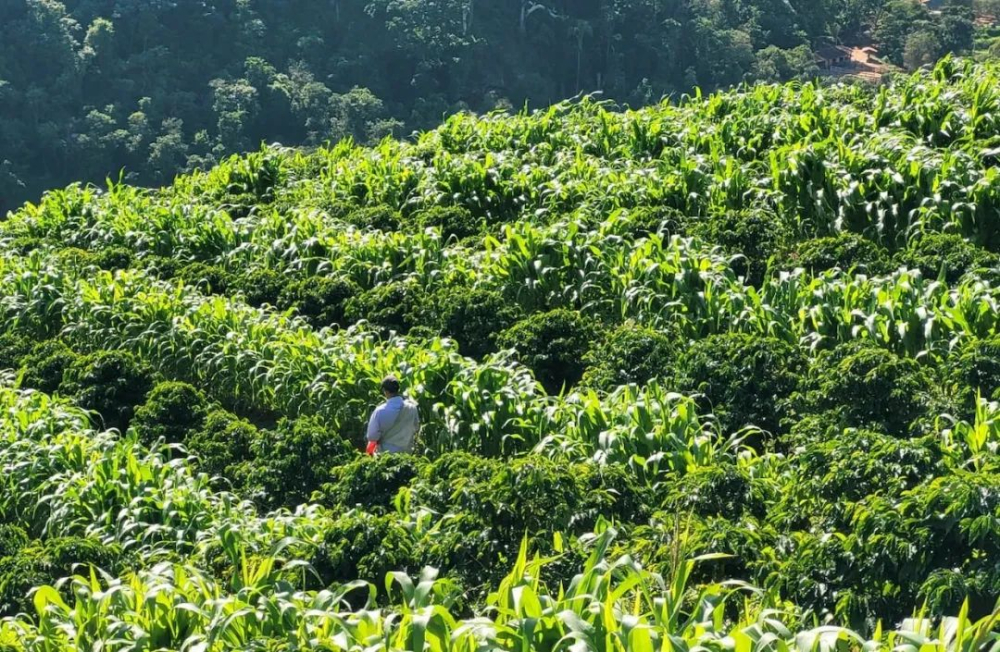
Minas Gerais is not only Brazil’s highest-yielding coffee state, but its geography and climate are also highly suitable for coffee growth. The state has numerous rivers and abundant water sources, and mountain ranges effectively weaken the intrusion of moist Atlantic sea winds, providing a stable environment for coffee trees. The state also includes several well-known coffee sub-regions, among which Cerrado and Sul de Minas are the most renowned.
The Cerrado region is located in the central-western part of Minas Gerais. To be classified as premium-grade Cerrado, coffee farms must be situated at an altitude of 1,000 meters or above. The region experiences significant day-night temperature variations, with cooler nighttime temperatures helping to slow the ripening process of coffee cherries, thereby promoting sugar accumulation. Coupled with fertile soil and abundant underground water sources, this results in Cerrado coffee beans with unique aromas, a full-bodied mouthfeel, relatively mild acidity, and rich flavor layers.
In the specialty coffee consumer market, Cerrado coffee beans are quite popular. For example, a Red Bourbon variety from this region is often processed using the honey method and typically presents aromas of nuts, peanuts, and cocoa chocolate when brewed. It has a full-bodied taste with low acidity, making it very suitable for beginners trying pour over coffee, and is often chosen as a daily drinking bean.
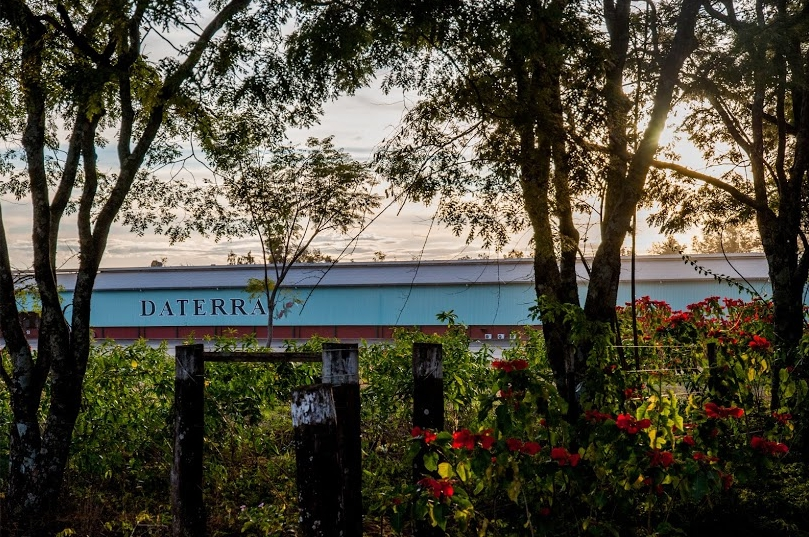
The name Daterra Estate originates from Portuguese, where “Da” means “from” and “Terra” means “land.” The overall meaning conveys gratitude for the nourishment and bounty of the earth. The estate has long been committed to sustainable agriculture and has obtained multiple international certifications, including Rainforest Alliance Certification, Environmental Management System Certification, and Organic Certification. The estate is equipped with professional agronomy and cupping teams, ensuring high-standard quality control from planting to harvesting and processing, guaranteeing that every batch of coffee beans can showcase the best possible flavor.
Currently, coffee at Daterra Estate is grown at an altitude of around 1,200 meters, with main varieties including Bourbon, Catuai, and Mundo Novo. In addition, the estate collaborates with the Brazilian Agricultural Research Corporation in Campinas to develop emerging varieties, such as Aramosa. This variety is a hybrid of Arabica and another low-caffeine variety, Rocemosa. Since one of its parent varieties naturally has low caffeine content, Aramosa has inherited this trait, and it may become a representative low-caffeine specialty coffee variety in the future.
The above content is compiled by CoffeeHunters, a coffee news website.


