







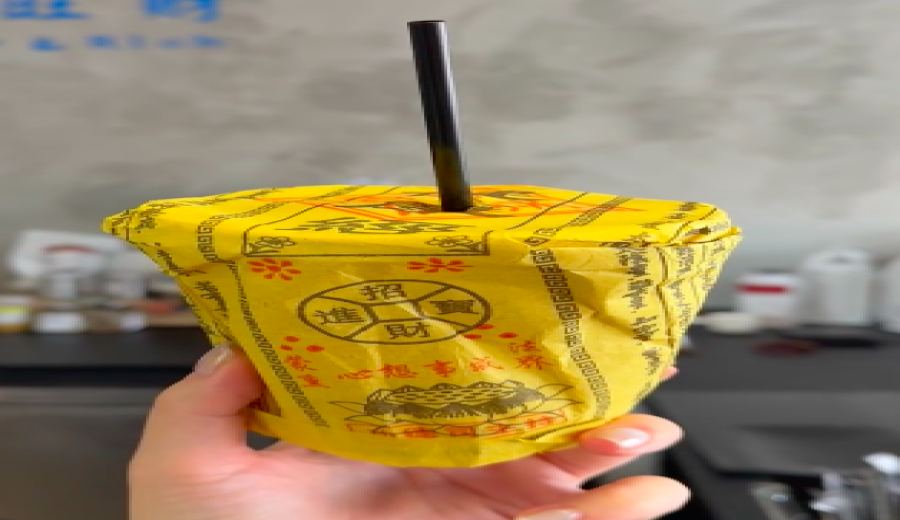
Introduction:A coffee shop located near a temple has launched “Merit Coffee,” wrapped in yellow talisman paper. For every cup sold, a portion of the proceeds is donated to the temple, attracting many netizens to check in. However, this creative marketing campaign that combines religious imagery has also sparked intense online discussion about whether it is “commercializing faith.” This article delves into the background of the incident, public reactions, and explores whether such marketing tactics can truly win long-term customer support.
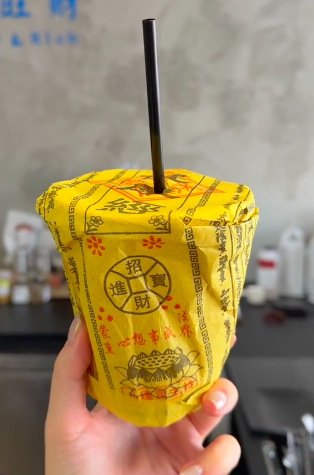
Recently, a uniquely packaged coffee has become a hot topic on social media. The cup is completely wrapped in bright yellow talisman paper, and netizens have nicknamed it “Merit Coffee.” This special drink comes from a café situated near a temple, where the packaging is handwritten daily by monks and then delivered to the shop for use—meaning it’s not mass-printed but instead available in limited quantities during specific time slots.
According to customer feedback, whether they ordered a basic Americano or the shop’s signature specialty drink, each was carefully wrapped in talisman paper when served. Notably, the coffee shop doesn’t merely borrow religious terminology for marketing purposes. It’s reported that the owner promises to donate a portion of the proceeds from each “Merit Coffee” sold to the nearby temple, allowing customers to enjoy their coffee while also “accumulating merit.”
This creative idea quickly received praise from some netizens, who felt it blended local culture with modern beverages and offered high emotional value—some even said they went out of their way to experience it. However, many people who hold religious beliefs in reverence raised concerns, questioning whether it commercializes faith. Comments included, “Using the image of Buddha to attract customers is really inappropriate,” and “Wrapping drinks in sacred talisman paper shows great disrespect to the faith.”
In addition, some attentive netizens pointed out that such talisman papers usually have specific uses in folk belief and shouldn’t be discarded casually. Some were worried that treating them like regular trash might “create negative karma” or be disrespectful. In response to these concerns, some suggested that those wishing to drink with peace of mind could keep the talisman paper and burn it properly. Others noted that the shop collects the talismans uniformly and disposes of them appropriately on behalf of customers.
In recent years, more and more young people have visited temples to “burn incense and pray,” seeking spiritual comfort amid their busy lives—a trend dubbed the “incense craze.” This trend has also led many businesses to seize the opportunity, using religious elements like “fate,” “merit,” and “drawing lots” as marketing selling points to appeal to consumers who value the spiritual aspect.
However, when these religious or metaphysical elements are combined with trendy beverages, controversy often arises. Previously, a beverage brand released a cup design featuring the “Speechless Bodhisattva,” which sparked polarized discussions online. Some found it amusing, while others believed religion should be treated with respect and distance, not taken lightly or mocked.
Regarding the “Merit Coffee” incident, netizens familiar with metaphysical culture analyzed that traditional talisman paper inherently carries meanings of warding off evil and praying for blessings. Using it to wrap drinks isn’t necessarily inappropriate, but if consumers wish to be more reverent, they are advised to burn the paper after use as a sign of respect. However, some observers caution that even if the appearance is eye-catching, if the flavor and quality of the beverage fail to meet customer expectations, the trend may still lead to customer loss once the hype dies down.
Overall, this “Merit Coffee” is undoubtedly a bold cross-industry attempt that has successfully sparked discussion and attention. However, if businesses hope to build long-term reputations in a competitive market, they still need to find a more nuanced balance between product essence, customer experience, and cultural respect.
The above content is compiled by CoffeeHunters, a coffee news website.


