








Introduction:A café in Taiwan recently encountered a dispute where a customer had been occupying a seat for an extended period, using the free power supply to charge their phone and binge-watch shows without making any purchases. After multiple warnings from staff proved ineffective, the police were called, and the customer was handcuffed as a “suspect caught in the act of theft.” The next day, the same customer returned to the shop demanding to review the surveillance footage and accusing both the shop and the police of mishandling the situation. This incident highlights the common issue of “resource freeloaders” in café operations and the boundaries between customer rights and business interests.
In Taiwan, a typical café recently became the focus of public debate after a regular customer repeatedly occupied a seat, used the in-store power outlet to charge their phone, and watched shows with the sound on—without purchasing anything. Despite multiple polite reminders from the staff, the customer continued their behavior unabated, even ignoring the rules when advised, which ultimately led the shop to involve the police.
According to the shop owner, the customer visited at least four or five times, always choosing the same seat, charging their device while watching shows, yet never buying any drinks or food. Although the café did not enforce a minimum spend, it expected customers to at least make some purchase. Staff had communicated with the customer several times hoping for cooperation, but their appeals fell on deaf ears.
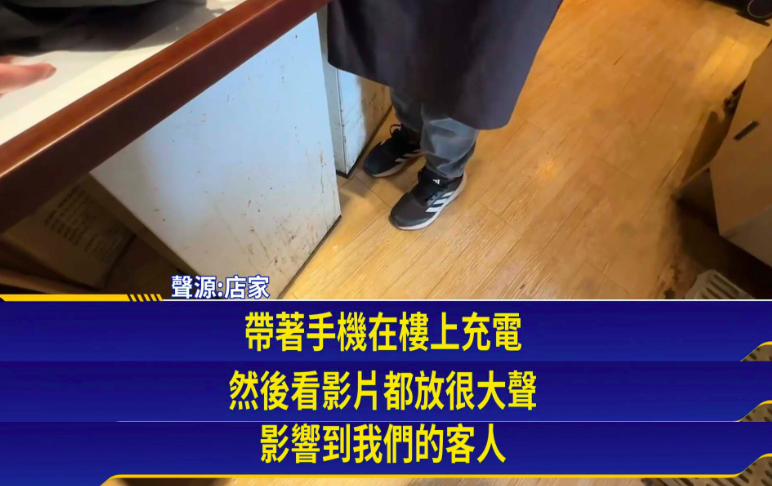
On the day of the incident, the customer returned once again, not only continuing to charge their phone for free but also watching content without headphones, with the loud audio significantly disturbing other patrons’ dining experience. Staff approached to mediate, requesting the customer lower the volume and stop using the power outlets, but the individual remained completely uncooperative, even ignoring the staff’s advice.
After repeated attempts to resolve the issue through communication failed, the café chose to call the police, hoping for official assistance in dealing with this long-standing problem. When police arrived, they first tried to persuade the customer to leave, but the person refused to cooperate, insisting they hadn’t caused any issues and would neither stop charging their device nor leave the premises.
Due to the customer’s continued non-compliance, the police eventually arrested them under the charge of “theft in flagrante delicto,” cuffing them and taking them to the police station. The police station chief stated that the individual had used the shop’s resources without consuming anything, and that the café had acted reasonably by calling the police. Officers resorted to forceful measures only after persuasion failed.

However, the story didn’t end there. The next day, the same customer returned to the same café, demanding access to the surveillance footage from the incident, claiming they had done nothing wrong, and instead accusing the staff of forcing them to make purchases. They further alleged that the police had detained them without showing a warrant and had injured their wrist in the process. To support their claims, the customer presented a medical injury report and pointed out the area on their wrist where the handcuffs had allegedly caused harm.
In response to the customer’s counterclaims, the shop owner stated that calling the police was a measure taken to maintain a normal business environment and was entirely appropriate. Faced with the customer’s persistent harassment, the owner agreed to let them review the surveillance footage but emphasized that the final decision would be left to the judicial authorities to ensure fairness and justice.
This incident has sparked widespread discussion about the boundaries of café operations. Many industry professionals pointed out that behaviors such as seat hogging and free use of power outlets, though seemingly minor, can negatively impact other customers’ experiences over time and increase operational costs for businesses. How to maintain a friendly atmosphere while clearly regulating customer behavior has become a key issue for café owners to consider.
Experts suggest that cafés could display clear usage guidelines within their premises—such as setting limits on charging time, requiring a minimum spend, or designating specific charging areas—to help reduce similar disputes. At the same time, customers should understand that the use of public resources should be based on fairness and mutual benefit, avoiding actions that may backfire and damage their own reputation and rights.
The above content is compiled by CoffeeHunters, a coffee news website.


