







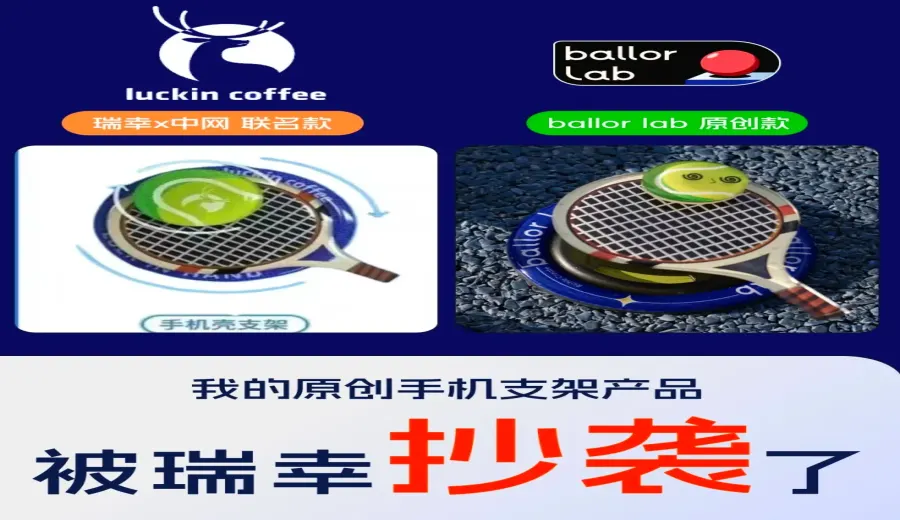
Introduction:Luckin Coffee’s recent collaboration with the China Open tennis tournament has sparked a design controversy. An original designer has accused the brand of releasing a phone case stand that bears an uncanny resemblance to their own work — from color schemes to intricate details, the two are nearly identical. Adding fuel to the fire, a tennis-themed pillow was also found to closely mimic a product from a well-known sports brand, raising suspicions about everything from labels to stitching. This article delves into the specifics of the incident, explores the ethics of co-branded merchandise design, and offers practical tips for distinguishing original creations from copies.
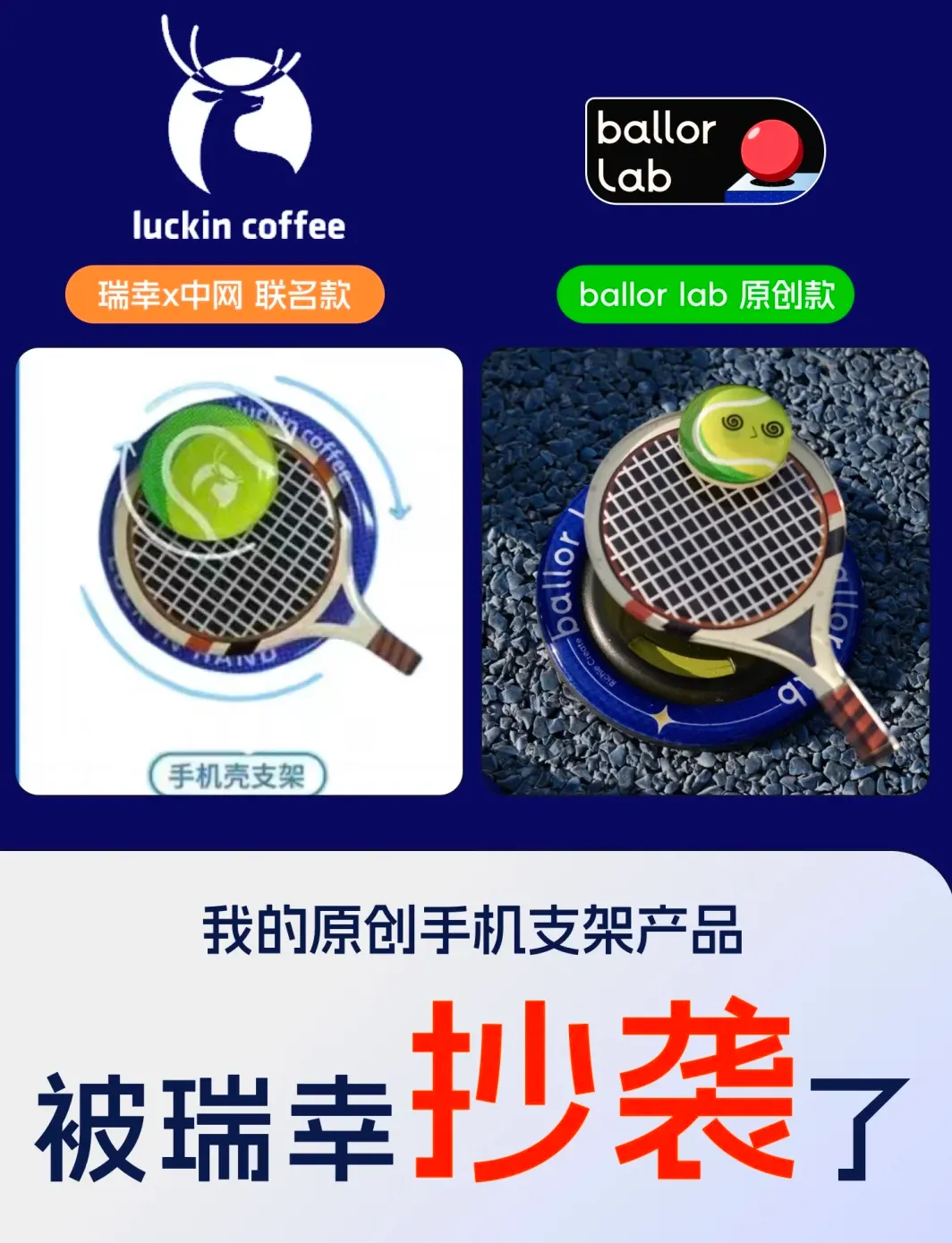
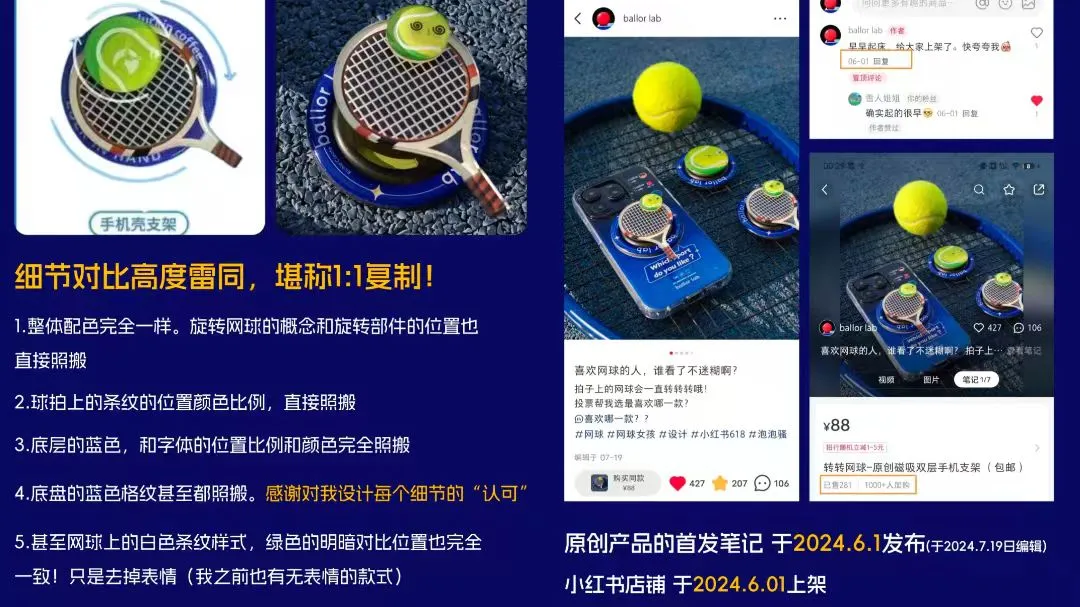
Luckin Coffee’s latest collaboration with the China Open has unexpectedly become embroiled in a design plagiarism scandal. An independent designer took to social media to allege that Luckin’s co-branded phone case stand is strikingly similar to a piece they released last year. From the overall color palette and the spinning tennis ball concept, to the details of the blue base and white lettering, the similarities are almost exact — the only difference being the replacement of the tennis ball’s emoticon with the Luckin logo.
The designer emphasized that their original work was completed in December of last year and officially launched in June this year, making it over three months old at the time of the alleged infringement. They pointed out that the white stripe pattern and the green shading on the tennis ball in Luckin’s co-branded product are exactly the same, with only minor decorative elements altered — making it hard to dismiss the resemblance as mere coincidence. The designer has since publicly called on the brand to respect original designs and expressed hope for further dialogue to resolve the issue.
The controversy isn’t limited to the phone stand. Several other co-branded merchandise items launched by Luckin, including a tennis pillow, have also been accused of copying. A sports brand noted that Luckin’s blue tennis pillow bears an extremely close resemblance to one of its past products — from the placement of the label, to the texture of the plush fabric, to the details of the stitching, the similarities are almost indistinguishable. While tennis balls may generally look alike, netizens pointed out that the design elements of Luckin’s pillow are nearly identical to the original.
A sharp-eyed netizen even found what appears to be the “original image” of Luckin’s pillow on the official page of the sports brand, further intensifying accusations of plagiarism. Industry professionals noted that Luckin’s pillow imagery was derived from the original image through simple modifications — including background removal, color changes, and the addition of the brand logo. Though the process may not be complex, it raises serious ethical concerns in design.
As the issue gained traction, Luckin’s official comment section was flooded with questions and demands for clarification. However, as of press time, the brand has yet to issue any public response regarding the incident. The controversy has dealt a significant blow to the brand’s image in terms of co-branded marketing, and has sparked widespread discussion about the originality of designs in brand collaborations.
Experts advise consumers to pay attention to design details and originality when choosing co-branded merchandise, and to support products that truly embody creativity. For brands, respecting original designs is not only a legal obligation but also a key factor in maintaining brand reputation.
The above content is compiled by CoffeeHunters, a coffee news website.


