








Introduction:Have you ever wondered why many pour over coffee beans exhibit particularly vibrant floral and fruity aromas? The answer often lies in the altitude of their origin. High elevation not only influences the growth rhythm of the coffee plant but also directly shapes the complexity and clarity of its flavors. This article will delve into how altitude, through factors such as temperature, diurnal temperature variation, sunlight, and soil, fosters coffee beans with standout flavor profiles—and provide practical advice on selecting high-altitude pour over beans to help you find your desired flavor.
Those who enjoy pour over coffee often notice an interesting phenomenon: beans that emit clear floral and fruity notes typically come from high-altitude regions. This is no coincidence but rather the result of multiple natural conditions at altitude that influence the flavor development of the coffee cherries. Understanding this relationship can give you more direction when selecting beans and help you more precisely capture the flavor types you love.
First,the low temperatures in high-altitude areas significantly slow down the ripening process of coffee cherries.Compared to lower altitudes, the cooler day and night temperatures at high elevations allow coffee trees to grow at a more leisurely pace. The cherries remain on the tree longer, giving them ample time to accumulate sugars and aromatic compounds. This process is akin to simmering a rich broth over gentle heat for a long time—the moderate temperature and extended duration naturally yield a deep, mellow flavor. Take Ethiopia’s Huika as an example: this coffee from a high-altitude region often boasts pronounced tropical fruit notes, such as strawberry, passionfruit, and even jackfruit, along with prominent sweetness—all the result of slow, prolonged ripening.
Second,the large diurnal temperature variation common in high-altitude regions helps balance the acidity and sweetness within the cherries.During the day, abundant sunshine enables the coffee trees to actively perform photosynthesis, synthesizing rich sugars; by night, the sudden drop in temperature slows metabolism, reducing the consumption of sugars and acidic compounds. This results in cherries with brighter acidity that is not overly sharp. For instance, Yirgacheffe Gedeb Guji’s Gedi Ding Ding from a high-altitude area, when brewed, delivers gentle citrus, berry, and floral notes, with a crisp yet non-irritating acidity and a green-tea-like aftertaste—a classic example of high-altitude acidity expression.

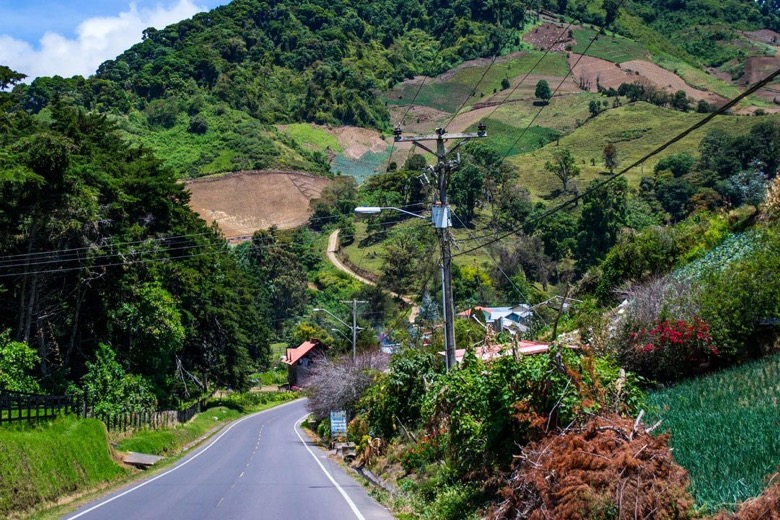
Beyond temperature and diurnal variation,the frequent foggy conditions and unique soils in high-altitude regions also play a significant role in shaping coffee flavors.Many high-altitude coffee farms are perennially shrouded in mist. This diffused light reduces the direct exposure of coffee trees to intense sunlight, making the growing process more stable and aiding the delicate development of flavor compounds. Additionally, many high-altitude regions have volcanic soils rich in various minerals, providing ample nutrients to the coffee trees and thus producing beans with a full structure and rich inner complexity. For example, Panama’s Emerald Estate’s Red Label Geisha, grown in a high-altitude and fog-abundant area, when brewed, showcases elegant jasmine floral notes paired with delicate citrus and bergamot flavors. It has a clean, transparent mouthfeel and a long-lasting aftertaste—an exemplary result of the interplay between altitude and terroir.
Of course, altitude is not the sole determinant of coffee flavor. Processing methods (such as washed, natural, or honey), coffee varieties (like Arabica, Geisha, or Typica), and roast levels all significantly impact the final flavor profile. However,high altitude lays an important foundation for the clarity and layered complexity of flavors,especially in the expression of floral and fruity notes, where its advantages are undeniable.
If you’re a pour over coffee enthusiast, when selecting beans, be sure to pay attention to the altitude information on the packaging.If you prefer bright floral and fruity aromas, it’s recommended to prioritize batches grown at altitudes above 1500 meters.If you lean more toward balanced and mellow flavors, medium-to-high-altitude beans can also deliver surprisingly delightful taste experiences. Every high-altitude coffee bean is a crystallization of the region’s lengthy growth period and natural conditions, condensed into a tiny bean—waiting for you to unlock its unique charm during brewing.
The above content is compiled by CoffeeHunters, a coffee news website.


