







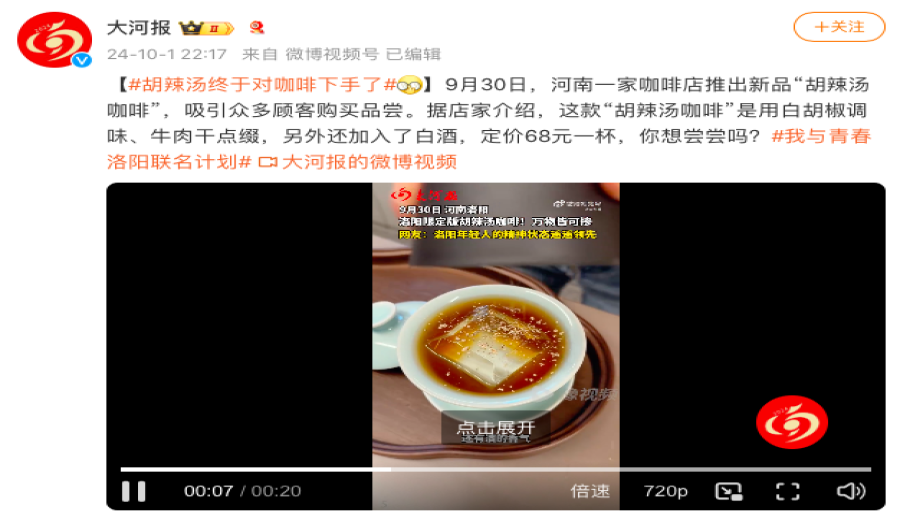
Introduction:A coffee shop in Luoyang, Henan, has stirred up discussion by launching a special drink called “Luoyang Spicy Soup,” which blends espresso, Erguotou liquor, white pepper, and over 30 other ingredients—including beef jerky—for a price of 68 yuan per cup. This creative beverage, made with more than 30 ingredients, has been described by some customers as having a “unique and interesting flavor,” but it has also drawn strong skepticism from locals who question whether it authentically represents the traditional spicy soup. This article delves into the recipe design logic behind this cross-boundary drink, the differing market reactions, and highlights the cultural preservation considerations when combining coffee with local snacks.
Recently, a coffee shop in Luoyang introduced an innovative coffee beverage named “Luoyang Spicy Soup.” It combines espresso, Erguotou liquor, white pepper, beef jerky, and over 30 other ingredients, with each cup priced at 68 yuan, quickly becoming a hot topic online. Resembling a dark brown soup in appearance, this special drink—merging elements of a traditional snack with modern coffee techniques—attracted many curious consumers seeking novelty experiences, while also provoking strong objections from local residents.
It is understood that the inspiration for the drink came from Henan’s well-known traditional snack, Spicy Soup, but the actual recipe includes an espresso base along with various spices. According to those who tried it, they could detect hints of spiciness reminiscent of pepper and a meaty aroma, yet the overall flavor was notably different from traditional Spicy Soup.Notably, the price of this special drink is equivalent to the cost of about eight regular bowls of conventional Spicy Soup.Despite the high price, it still attracted many customers who specifically came to try it.
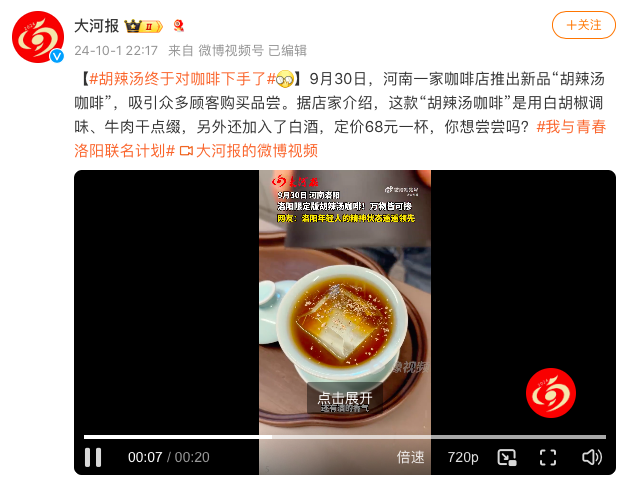
In social media discussions, several locals from Luoyang bluntly stated that they “found it hard to accept this kind of cross-boundary combination,” believing that merging a representative local snack with coffee was overly gimmicky.Some consumers specifically pointed out that naming the drink “Luoyang Spicy Soup” might mislead visitors from other places,making them think the coffee beverage could actually deliver the traditional flavors of Spicy Soup. One local netizen commented: “People from Luoyang can’t drink this stuff,” and “This name will make outsiders think we all drink pepper coffee.”
The business owner revealed that the original intention behind creating this special drink was to promote Luoyang’s food culture through innovation, translating the spicy character of Spicy Soup into a flavoring element for coffee.The actual recipe includes around 30 seasonings. In addition to the basic coffee ingredients, Erguotou liquor was added to enhance aroma, white pepper to intensify the spicy layers, and crumbled beef jerky to add texture.While this compound blending technique created a unique taste experience, it also sparked controversy due to its deviation from the core characteristics of the traditional snack.
Observations within the coffee industry show that in recent years, more and more shops have attempted to develop signature drinks by incorporating local specialties—such as coffee specials inspired by bubble tea or creative lattes that incorporate braised flavor elements.However, industry experts caution that such cross-industry product designs require especially careful handling of cultural representation,particularly when using food names with strong regional identity, which can easily trigger comparisons among consumers.
Regarding this controversy, some food critics noted that Spicy Soup itself already varies in recipe across different regions in Henan—some versions emphasize the spiciness of pepper, while others focus on the richness of bone broth.The Luoyang version is particularly distinctive for its specific combination of spices and the texture of gluten.Although this coffee special borrows the “spicy impression” commonly associated with Spicy Soup, the actual flavor profile presented shows a clear divergence from the core characteristics of the traditional snack.
The industry suggests that when combining coffee with local cuisine, greater attention should be given to cultural communication—for example, by using more neutral descriptions such as “inspired by the flavor of Spicy Soup,” or by explaining the creative concept through the story behind the drink.The key lies in balancing innovative experimentation with cultural respect, avoiding oversimplification or misinterpretation of traditional food features that could instead confuse consumers.This case perfectly highlights the delicate balance between preserving the essence of a dish and expressing creativity during the process of coffee innovation.
The above content is compiled by CoffeeHunters, a coffee news website.


