







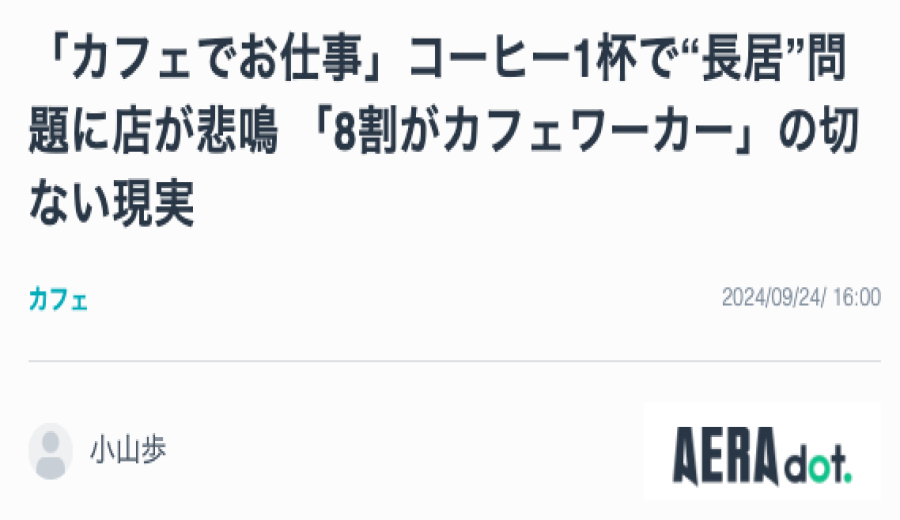
Introduction:As remote work becomes increasingly prevalent, many people have turned cafés into mobile offices, enjoying long stays at low prices. However, for cafés that rely on high table turnover rates, this trend has created significant operational pressures. This article delves into the crisis Japanese cafés face due to customers occupying seats for extended periods, as well as how businesses are balancing revenue and customer experience through management measures—offering valuable insights for both the industry and consumers.
In today’s era of remote work becoming the norm, many individuals choose to spend their workdays in cafés. With just a cup of coffee costing around ¥420, they can stay for several hours or even over ten. For these customers, the café environment aids concentration and has become their regular workspace. But for cafés that depend on quick table turnovers, prolonged customer occupancy poses considerable operational challenges.
Japanese media have reported that due to a large number of customers ordering just one drink yet occupying seats for extended periods, many cafés have been unable to cope and have been forced to close. This phenomenon has gradually become a focal point of social concern. Particularly in major cities, high rents and labor costs mean that café revenues rely even more heavily on rapid seat turnover.
According to survey data, the number of café closures across Japan last year reached 72, a sharp increase from 34 the previous year, marking a historical high. Analysis of the underlying reasons points mainly to two major difficulties: the challenge of raising coffee prices and low seat utilization rates.
To address this issue, some cafés have begun implementing time-limit measures. For example, signs are posted near power outlets reminding customers that seats are limited to 90–120 minutes of use. Additionally, some establishments have chosen to reduce the number of public power sockets, hoping to encourage customers to vacate seats sooner and improve seating efficiency.
However, such measures are not without risks. Some operators note that enforcing time limits may upset certain customers, potentially affecting repeat business. Especially in highly competitive markets, balancing good service quality with effective seat management has become a significant challenge.
In fact, this challenge is not unique to Japan. In Europe, South Korea, and other regions, many cafés also face the issue of so-called “digital nomads” occupying spaces for long periods. These customers often order just one or two drinks but stay from morning till night, sometimes using power outlets, requesting free water, or even conducting video meetings—not only increasing operational costs for the café but also affecting the dining experience of other patrons.
Some shop owners point out that such long-stay customers may inadvertently disrupt the originally quiet and comfortable atmosphere of the café. Especially when they speak loudly on the phone or hold meetings inside, it can be bothersome to others. As a result, some proprietors admit they are more cautious about welcoming customers who might negatively impact the overall operational environment for extended stays.
In summary, achieving a balance between ensuring customer comfort and boosting business revenue has become a shared challenge for café operators worldwide. Moving forward, exploring more innovative management strategies and operational models will be an ongoing focus for the industry.
The above content is compiled by CoffeeHunters, a coffee news website.


