







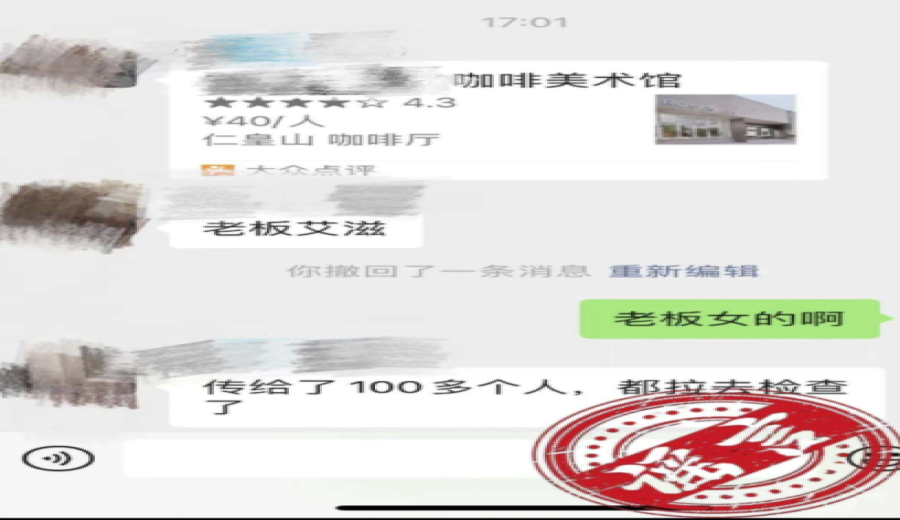
Introduction:A rumor about the wife of a well-known internet-famous café owner in Huzhou allegedly spreading HIV went viral on social media, causing public panic. After police investigation, the information was found to be false, and the rumor-monger has been administratively detained. This article delves into the incident, explores the impact of online rumors on individuals and society, and offers practical advice on identifying and preventing misinformation.
Recently, a popular internet-famous café in Huzhou was caught up in a malicious rumor scandal. Netizens posted on social media claiming that the café’s owner had contracted HIV and had infected over a hundred people, with some even being taken in for testing. This false information spread rapidly, with related screenshots widely circulated online. It not only made customers who had visited the café uneasy but also triggered a wave of panic in the local community.
Faced with the sudden rumor attack, the café owner bravely chose to report to the police, hoping to restore the truth and clear her name through legal means. Upon receiving the report, the Cybersecurity Division of the Huzhou Public Security Bureau immediately launched an investigation and quickly clarified the details of the incident.
The investigation revealed that the source of the rumor was a man surnamed Shen. Surprisingly, Shen had no prior connection or interaction with the café owner whatsoever. He had merely heard this “explosive news” during a casual chat with friends. Out of curiosity and a desire for gossip, he forwarded the unverified information to a social group with over 400 members, causing the rumor to snowball and spread rapidly, inflicting significant harm on the individual involved and disrupting social order.
According to Article 25 of the Law of the People’s Republic of China on Penalties for Administration of Public Security, intentionally spreading rumors, falsely reporting dangerous situations, epidemics, police incidents, or other acts that disrupt public order may result in detention for five to ten days and a fine of up to 500 yuan; if the circumstances are relatively minor, detention for up to five days or a fine of up to 500 yuan may be imposed.
After verification by the police, Shen’s actions were clearly determined to constitute “fabricating facts to disrupt public order.” In accordance with relevant laws, Shen was legally sentenced toan administrative detention of four daysas punishment.
In fact, similar rumor incidents in the coffee industry are not unprecedented. As early as 2018, a sensational online article titled “Starbucks’ Biggest Scandal Exposed: Drinking Coffee Causes Cancer” went viral on WeChat Moments, garnering over 10 million clicks. The article took a U.S. court ruling out of context and deliberately singled out Starbucks to create panic. Later, multiple authoritative media outlets including People’s Daily and CCTV, as well as science communicators, stepped forward to debunk the rumor and clarify the truth.
Additionally, according to a report from the Jinan Internet Joint Rumor Refutation Platform, on June 24 of this year, a message circulated claiming that “on June 21 in Jinan, two coffee shops had conflicts with customers due to long wait times, and a staff member, losing control of their emotions, spilled coffee powder.” Official verification confirmed this was false information and did not occur in Jinan.
In the case report, the police specifically reminded the public to remain rational and cautious in online interactions. Spreading false information is not only illegal but may also lead to legal sanctions; in serious cases, it could even result in criminal liability.
This HIV rumor incident involving the owner of a Huzhou internet-famous café once again serves as a wake-up call. Online rumors not only severely damage an individual’s reputation but can also have far-reaching impacts on social order. As internet users, we must uphold legal boundaries and ensure the truthfulness of the information we share, jointly maintaining a healthy and clear online environment. When faced with unverified messages, we should stay calm, avoid believing or spreading them, and let rumors stop with the wise—working together to create a safe and positive online space.

The above content is compiled by CoffeeHunters, a coffee news website.


