







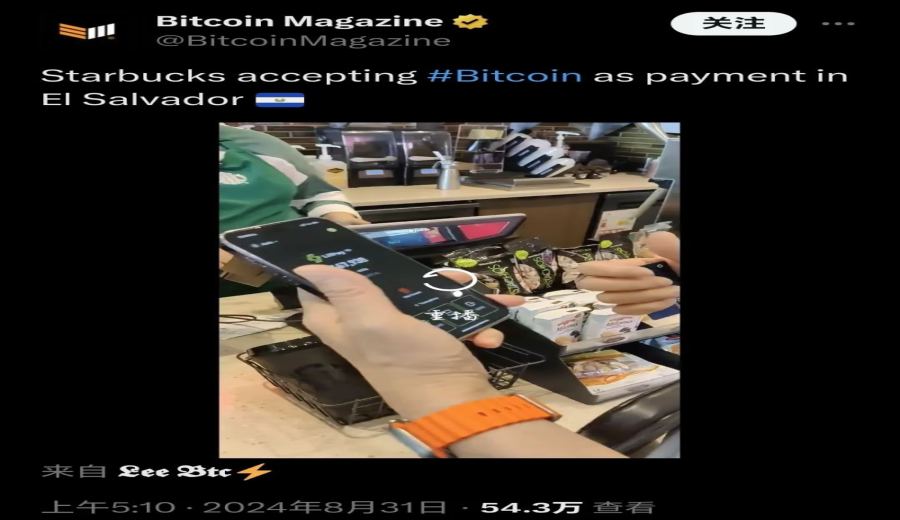
Introduction:After El Salvador became the world’s first country to adopt Bitcoin as legal tender, local Starbucks outlets have recently begun accepting direct Bitcoin payments—no longer requiring conversion via U.S. dollars. This move not only responds to local market demand but also practically verifies the feasibility of cryptocurrency in everyday consumer scenarios. This article delves into the technical and market background behind this innovation, as well as its potential impact on global payment trends.
Since its inception in 2009, the question of whether Bitcoin could be integrated into daily consumption has been widely debated. Now, Starbucks outlets in El Salvador have achieved a breakthrough—local customers can now purchase coffee beverages directly with Bitcoin, without needing to convert it to dollars through third-party platforms. This practical application marks a significant advancement in cryptocurrency payments and represents a key step by El Salvador, the first country to recognize Bitcoin as legal tender, in promoting the adoption of digital currency.
Bitcoin is a peer-to-peer (P2P) based digital currency that is not issued by any specific financial institution but is generated through complex algorithms and substantial computational effort, differing fundamentally from traditional currency systems. In its early days, many questioned its nature, even associating it with game tokens or scams. However, over time, Bitcoin’s market value has continued to rise, with a single Bitcoin reaching values of several thousand to tens of thousands of dollars in the U.S. market, gradually being regarded as an asset with tangible transactional value.
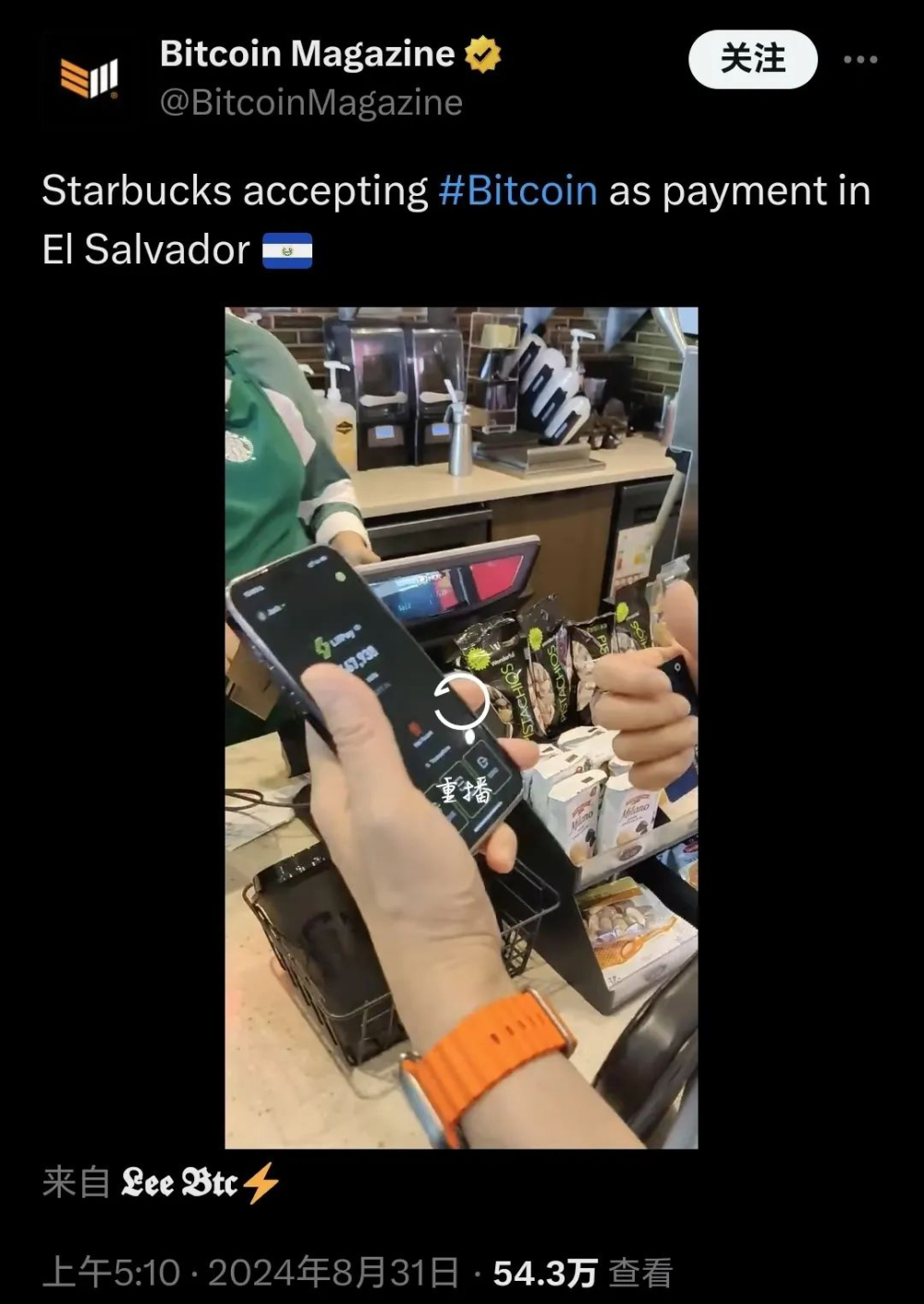
Although most countries remain conservative or restrictive toward Bitcoin—such as Thailand and Pakistan, which have outright bans—others like the United States and Japan have acknowledged its status as a legitimate payment tool. El Salvador, however, stands out by becoming the world’s first country to recognize Bitcoin as legal tender, actively promoting its everyday use domestically and gradually fostering an environment where consumption can be conducted using Bitcoin.
In the past, Starbucks in the region originally partnered with the Bitcoin futures platform Bakkt, requiring customers to first convert their Bitcoin into dollars to complete transactions—Starbucks itself did not directly handle Bitcoin payments. But the situation has recently changed. According to the latest publicly available images, customers at Starbucks in El Salvador can now directly use Bitcoin to purchase products, indicating that the company’s strategy has caught up with market demand and further streamlined the payment process.
This adjustment not only responds to local customers’ familiarity with and demand for cryptocurrency but also successfully attracts consumer groups interested in digital assets. Many Salvadorans already possess basic knowledge and operational experience with Bitcoin, showing high interest in this novel payment method, which they believe not only brings convenience but also reduces the cumbersome procedures and additional costs associated with traditional financial transactions.
For the global market, Starbucks’ move carries symbolic significance. It signifies the possibility of cryptocurrencies gradually integrating into mainstream consumer scenarios and provides a practical case reference for other countries and businesses. As more merchants begin to accept digital currencies, future payment methods are expected to become more diversified and digitalized, offering consumers more flexible and secure choices.
It is worth noting that while only Starbucks outlets in El Salvador currently offer this service, its successful operation will provide valuable experience for other regions and brands. Whether more countries and chain brands will follow suit in the future is worth ongoing observation. At the same time, consumers attempting to use cryptocurrencies such as Bitcoin for payments should also pay attention to practical issues such as transaction security, wallet management, and exchange rate fluctuations, ensuring smooth payment processes and the safety of their assets.
The above content is compiled by CoffeeHunters, a coffee news website.


