







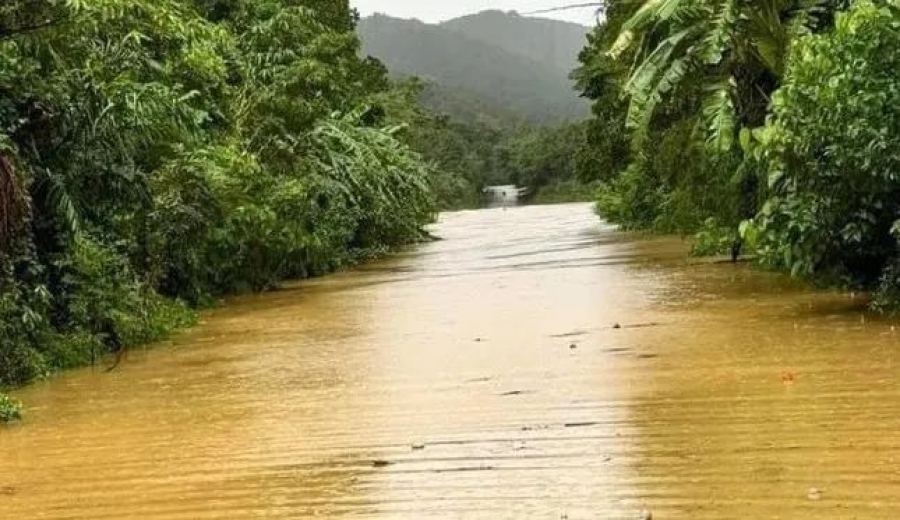
Introduction:Vietnam has recently been hit by two consecutive tropical storms, causing severe damage to infrastructure in the central region and disrupting operations at major coffee export ports such as Haiphong and Da Nang. A large number of containers have been stranded, affecting the export progress of Robusta coffee beans. Coupled with reduced production due to drought earlier in the year, Vietnam, the world’s second-largest coffee producer, is facing a supply crisis, which has further driven up international Robusta futures prices. This article explores how the storms have disrupted Vietnam’s coffee supply chain and the potential impact on the global market going forward.
In September, Vietnam’s central region was hit by two successive tropical storms, causing casualties and infrastructure damage, while also indirectly affecting coffee harvesting and exports in the country’s coffee-growing areas. Although the main coffee-growing regions—the highland areas in the central-western part of the country, including Dak Lak, Lam Dong, Gia Lai, and Kon Tum provinces—were not directly struck by the storms, heavy rainfall in surrounding areas still poses a potential threat to coffee crops that are about to enter the harvesting season.
Among them, Tropical Storm “Soulik” made landfall along Vietnam’s central coast on September 19, with maximum sustained winds of 74 kilometers per hour—equivalent to a Category 8 wind—and gusts reaching 10–11 on the Beaufort scale. The storm was accompanied by persistent heavy rainfall, leading to floods and landslides in many areas. It caused damage to 93 houses, injured one person, and resulted in the collapse of two schools and 13 hillsides. Such extreme weather severely disrupted local transportation and logistics, creating obstacles for coffee shipments.
It is worth noting that this is not the only recent storm event. Prior to this, Vietnam had just experienced Typhoon “Yagi,” the strongest in 30 years, which brought torrential rains and floods, destroyed key transportation routes, and resulted in at least 127 deaths and 54 people missing nationwide. Power and communication systems in many areas were also disrupted. Disaster management authorities have pointed out that the situation could worsen further, with profound impacts on agriculture and export industries.
Geographically, north-central Vietnam has been the hardest-hit area, with floodwaters in multiple counties and cities even breaking historical records. Nearly 50,000 houses have been damaged, and vast areas of farmland and cash crops have been submerged. Official statistics indicate that approximately 162,000 hectares of farmland and 9,500 hectares of cash crops have been affected by the floods. Many factories have been forced to halt operations due to power outages and transportation disruptions, with some businesses estimating that it may take at least a month to resume normal operations.
For Vietnam’s coffee industry, although the main producing areas were not directly impacted by the storms, the highland coffee belt in the central-western region has still been affected by heavy rainfall in the surrounding areas. To make matters worse, Vietnam experienced severe drought earlier this year, with many coffee-growing regions issuing Level 2 drought alerts. This led to water shortages for coffee trees, yellowing and dropping leaves, and an already anticipated reduction in yield. Now, as the critical fruit-setting stage of the new production season in October approaches, the heavy rains may further knock down coffee berries and flowers, putting additional pressure on future yields.
At the same time, Vietnam’s main coffee export ports, including Haiphong in the north and Da Nang in the central region, have also suffered significant disruptions due to the storms. Among them, Da Nang, being close to the heavily affected Quang Binh Province, has suffered more severe damage. Haiphong, on the other hand, was directly impacted by the typhoon, resulting in ships being unable to leave port and containers being severely stranded. It is reported that some infrastructure at these two major ports, such as large cranes, was damaged or collapsed during the storms, bringing cargo loading and unloading to a complete halt. Some logistics companies have also reported damage or loss of goods in their warehouse areas.
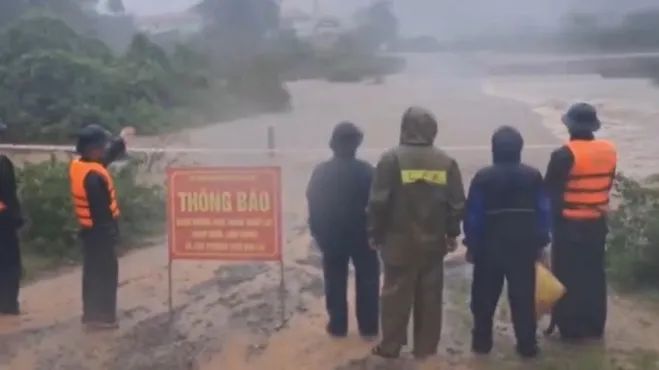
The Vietnam Maritime Administration previously pointed out that there are currently more than 8,000 unclaimed containers piled up at major ports nationwide, occupying a large amount of port space and significantly reducing the efficiency of cargo movement. Among these, the situation at Ho Chi Minh City Port is the most severe, with as many as 5,800 containers yet to be collected. Haiphong Port has 1,500 containers piled up, and Da Nang Port also has about 186 containers stranded. These conditions have significantly slowed down the export pace of Vietnamese coffee.
Export data also confirms the supply disruptions. According to data from the General Department of Vietnam Customs, Vietnam exported a total of 121,600 bags of coffee (each weighing 60 kilograms) in August. While this is slightly higher than the initially estimated 116,000 bags, it is still down 14.1% compared to the same period last year. Looking at the 2023–2024 crop year cumulatively, the total export volume reached 23,441,199 bags, a year-on-year decrease of 12.71%, indicating a continued downturn in overall export trends.
Notably, despite the decline in production, the spot price of green coffee beans from Vietnam’s central highlands continues to rise, with current quotations reaching 110–115 million Vietnamese dong per ton. As the world’s second-largest coffee producer, Vietnam’s various supply bottlenecks are bound to further drive up international Robusta futures prices, having a significant impact on the global coffee market.
The above content is compiled by CoffeeHunters, a coffee news website.


