







Introduction:As cafés become popular photo spots on social media, the act of taking pictures not only relates to personal documentation but also touches upon the boundaries of public space usage. This article explores the tension between customers’ desire to take photos and café owners’ operational rights through real-life cases, and offers practical interaction tips and precautions to help both parties find a harmonious way to coexist.
In the age of social media platforms, cafés are not only places to enjoy coffee but often serve as backdrops for customers capturing beautiful moments. However, when simple, documentary-style photography turns into commercial use or overly staged shoots, it can lead to friction between café owners and patrons. A recent controversy sparked by a photo incident—where the owner framed and displayed the mediation agreement—has once again brought the topic of “whether photography is allowed in cafés” into the spotlight.
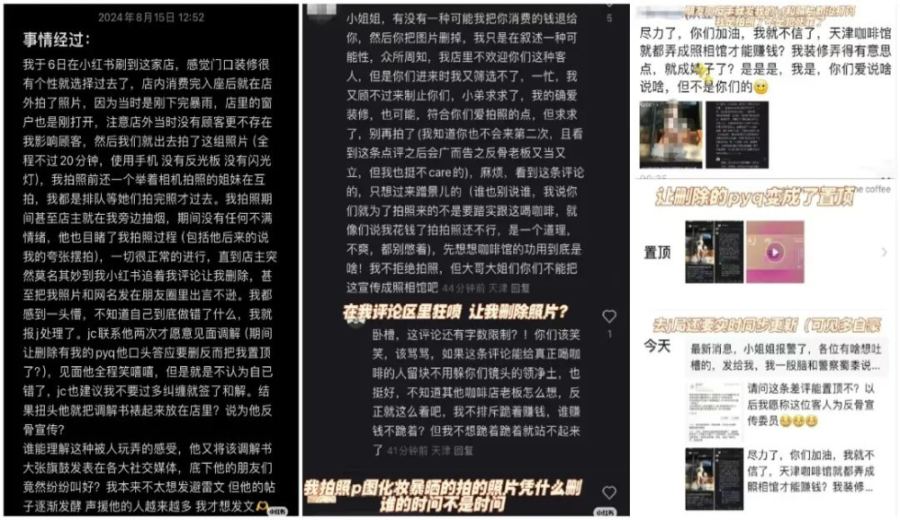
For many consumers who pursue a sense of life aesthetics, well-decorated cafés are not just places to enjoy beverages but also ideal spots for taking perfect photos. Many people, after making a purchase, will naturally take a few photos to share on social platforms as part of their daily record. One netizen, along with friends, visited a local café and took commemorative photos with their phone at the entrance, which lasted about twenty minutes. At the time, no other customers were entering or exiting, and although the owner was nearby, they did not show any signs of displeasure.
However, after the netizen posted the photos and accompanying text on a social platform, the café owner asked in the comments for the content to be deleted. The owner even shared the photos and the netizen’s username in their personal social circle, along with negative remarks. This left the customer confused and upset, eventually leading them to report the matter to the police. After mediation, both parties reached an agreement: the owner agreed to remove the related posts, and the customer chose not to pursue the matter further. But then, the owner framed the mediation agreement and displayed it prominently inside the café, sparking heated online discussion.
From the consumer’s perspective, taking photos while visiting a café is often seen as a kind of ritualistic “I was here” gesture, mainly aimed at documenting small joys in life. But it’s undeniable that some influencers or bloggers treat well-designed cafés as free photo studios, moving around the space to find the best angles, which can affect other customers’ dining experiences.
Such unrestrained photography not only disrupts the originally tranquil and comfortable atmosphere of the café but may also disturb guests who wish to quietly enjoy their coffee. As a result, more and more café owners choose to post signs at the entrance such as “No portrait photography” or “No commercial photography” to remind customers to follow the rules.
For customers who want to take photos, being in a café that doesn’t allow photography can be disappointing. These unpleasant experiences often lead them to share negative reviews or cautionary posts online, leaving many owners feeling helpless. Some owners have even proactively posted “self-deprecating” content, stating that their shop “prohibits photography” to avoid misunderstandings; others have gotten into arguments with customers due to overly reactive responses to photography.
Some operators admit that customers sharing photos can indeed bring a certain level of exposure to the café, but if commercial photography or overly staged behavior occurs, it might deter guests who value the environment and coffee quality. Therefore, most café owners have a love-hate attitude toward customer photography, believing that moderate photography that doesn’t affect others is generally acceptable.
But the issue lies in the fact that the definition of “moderate” is unclear, making it difficult to precisely delineate what behaviors fall within reasonable limits and which go too far. As one café owner put it, the so-called “moderate photography” hinges on mutual respect between customers and operators—through prior communication and mutual understanding, misunderstandings and conflicts can be effectively avoided, maintaining a pleasant consumption experience.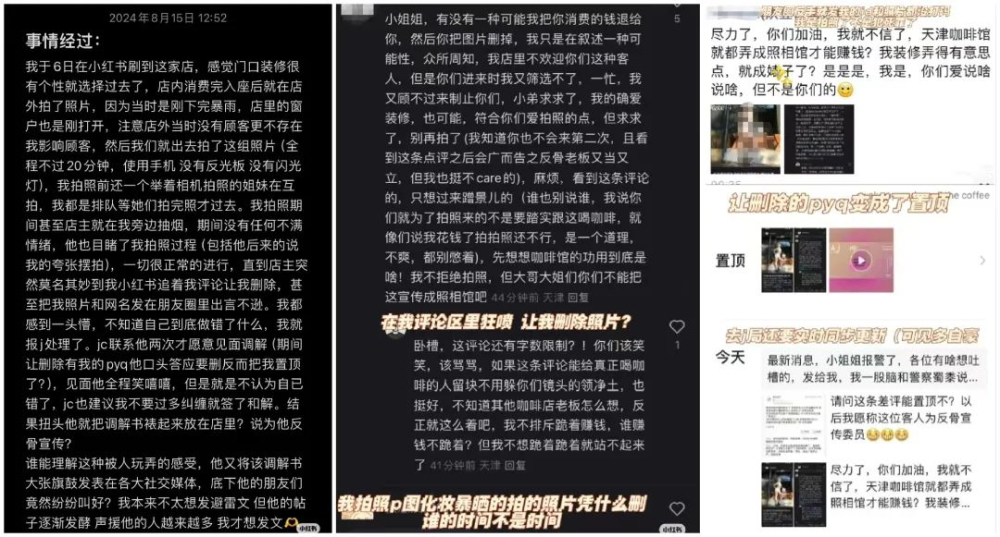
In summary, the core of the café photography controversy lies in the boundaries of public space usage and the balance of rights between both parties. It is recommended that customers proactively ask staff if photography is allowed before taking pictures and be mindful not to disturb others; café owners, on the other hand, can establish clear guidelines through visible signage and friendly communication, allowing both sides to enjoy their coffee time in an atmosphere of mutual respect.
The above content is compiled by CoffeeHunters, a coffee news website.


