







Introduction:A temporarily closed café in Shanghai was broken into by an impostor posing as a staff member, resulting in the theft of high-value equipment including a grinder and a water boiler, with losses exceeding 40,000 yuan. Surprisingly, coffee beans accidentally spilled during the thief’s first break-in became a key clue that helped police identify the suspect. The case not only reveals potential security loopholes in the industry but also serves as a reminder for café owners to strengthen access control and security awareness.
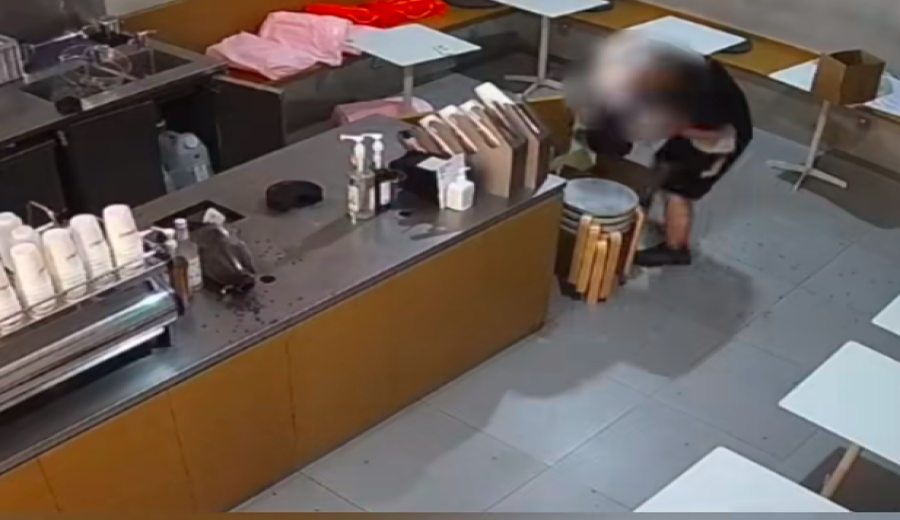
Police in Jiading District, Shanghai, recently solved a case involving the theft of equipment from a closed café. The suspect took advantage of the lax security during the shop’s closure to repeatedly sneak in and remove high-value machinery. It is understood that the suspect disguised himself as a staff member and successively stole two professional grinders and one water boiler, with the total value involved exceeding 40,000 yuan.
The case originated from the keen observation of grid patrol officers. During a routine inspection of the mall, officers noticed the same man frequently appearing inside a closed café, who each time hurriedly moved large equipment and carelessly spilled coffee beans on the ground without cleaning up. Due to the suspicious behavior, the grid officer immediately reported it through the local governance platform.
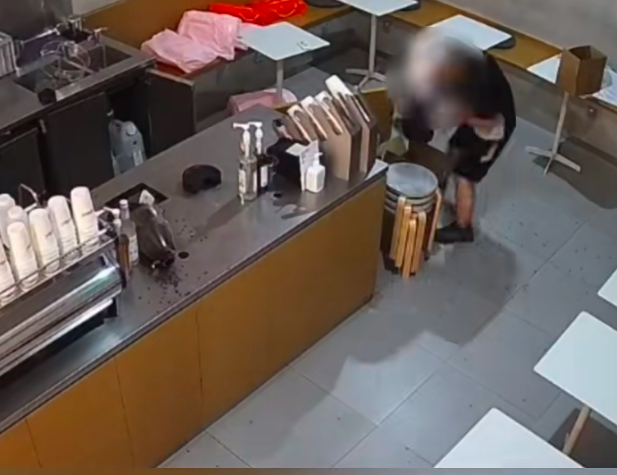
After receiving the report, the police quickly identified the suspect by combining the information about the stolen equipment reported by the café owner. It turned out that the thief had easily sneaked in through the unlocked back door on his first attempt, found a cardboard box to disguise himself as a café employee, and carried away a grinder in the box. Although he felt uneasy after the initial success, seeing that no one had noticed, he struck again within half a month, stealing the remaining equipment at night.
The key turning point occurred early in the police investigation, when the thief accidentally knocked over coffee beans during his first theft. The spilled beans became an important clue. Based on the coffee beans left at the scene and surveillance footage, the police gradually reconstructed the suspect’s modus operandi and timeline, and finally arrested him on August 30th, recovering all stolen equipment from his residence.
During interrogation, the suspect admitted that he was driven by greed and took advantage of the slightly ajar back door and the absence of guards. He thought his disguise was clever, but did not expect that the carelessly spilled coffee beans would become the decisive evidence in the police investigation. The suspect has been criminally detained in accordance with the law, and the case is still under further investigation.
This case serves as a reminder to café operators that even during closure, it is essential to strictly implement door and window locking and regular safety inspections.It is recommended to ensure that all entrances and exits are securely locked after daily business hours, and additional security measures may be installed if necessary, such as surveillance cameras or alarm systems, to prevent unauthorized individuals from taking advantage.
In addition, equipment selection and management are also aspects that operators need to pay attention to. Stable and durable coffee machines and grinders not only improve extraction quality but also reduce operational disruptions caused by frequent malfunctions. When choosing equipment, in addition to considering performance and brand reputation, operators should also evaluate anti-theft design and maintenance convenience to minimize risks and losses.
In summary, this case of impersonation and theft not only exposes the blind spots in security management of closed businesses but also highlights the importance of paying attention to details in daily operations. From access control to equipment maintenance, every step is related to the safety of the operator’s assets and the stability of their business.
The above content is compiled by CoffeeHunters, a coffee news website.


