








Introduction:When customers request their coffee without ice but are charged an extra fee, it not only raises consumer doubts but also prompts the industry to re-examine its pricing strategies. This article delves into the reasons behind cafés charging a "no-ice fee," analyzes the relationship between ingredient costs and service standards, and provides practical advice for consumers facing similar situations—helping you make smarter choices while enjoying your coffee.
A recent coffee-related dispute has become a hot topic: a customer explicitly requested no ice when ordering a drink at a café but was unexpectedly charged an additional 1 RMB "no-ice fee" at checkout. The incident sparked heated discussions on social media platforms, with netizens sharply divided—some argued that not adding ice should save costs, making the fee unreasonable, while others understood the need for businesses to maintain flavor and volume consistency.
It was revealed that the customer shared order details on social media, showing that they had specifically asked for no ice when purchasing a bagel and orange juice, yet an unforeseen surcharge appeared on the receipt. Such scenarios are uncommon in most coffee shops, as many establishments typically do not charge extra for less ice or no ice requests.
The café explained that each iced drink follows strict standard ratios for ingredients and ice. When a customer opts out of ice, additional ingredients such as juice must be added to maintain the original volume and taste, leading to higher costs—hence the 1 RMB fee. The shop emphasized that this policy is clearly stated on the menu, allowing customers to decide before ordering.
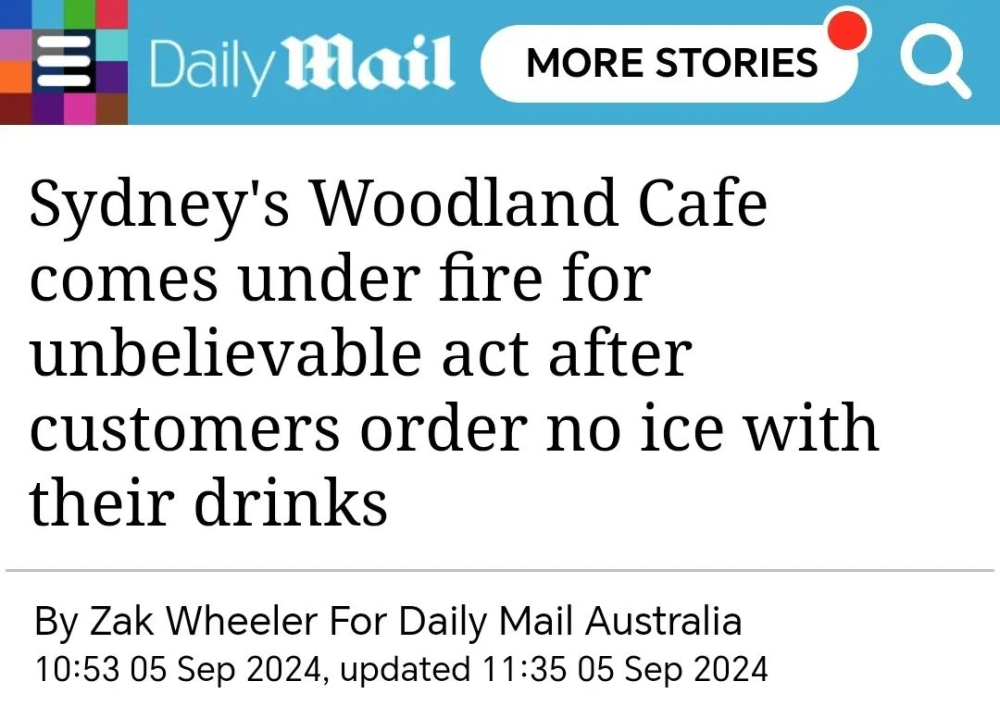
Many consumers find this hard to understand, believing that not using ice should actually reduce costs. In reality, ice is indeed a significant ingredient for beverage shops, whether homemade or purchased, and incurs costs. From this perspective, removing ice should lower production costs rather than increase them.
However, some who support the business point out that ice typically occupies about one-seventh of a cup’s volume. Without it, failing to compensate with more ingredients can make the drink appear less substantial. They argue that maintaining product consistency and customer experience justifies modest price adjustments, especially when special requests are involved.
Industry experts analyze that this controversy reflects modern consumers’ higher expectations for beverage quality and price transparency. Amid inflationary pressures, even a small 1 RMB surcharge can influence customers’ overall impression of a business. Experts suggest cafés seek more creative operational strategies to balance costs rather than relying on potentially off-putting extra charges.
For consumers, here are a few tips when ordering drinks: ask in advance if going without ice affects the price, check if the menu includes relevant notes, and clearly communicate your volume expectations when discussing personal preferences with staff. These small steps can lead to a more satisfying experience and help avoid unnecessary misunderstandings.
Although the "no-ice fee" dispute may seem minor, it highlights the importance of service details and consumer communication in the beverage industry. Regardless of where one stands, fostering mutual understanding and trust is key to maintaining a positive customer-business relationship.
The above content is compiled by CoffeeHunters, a coffee news website.


