







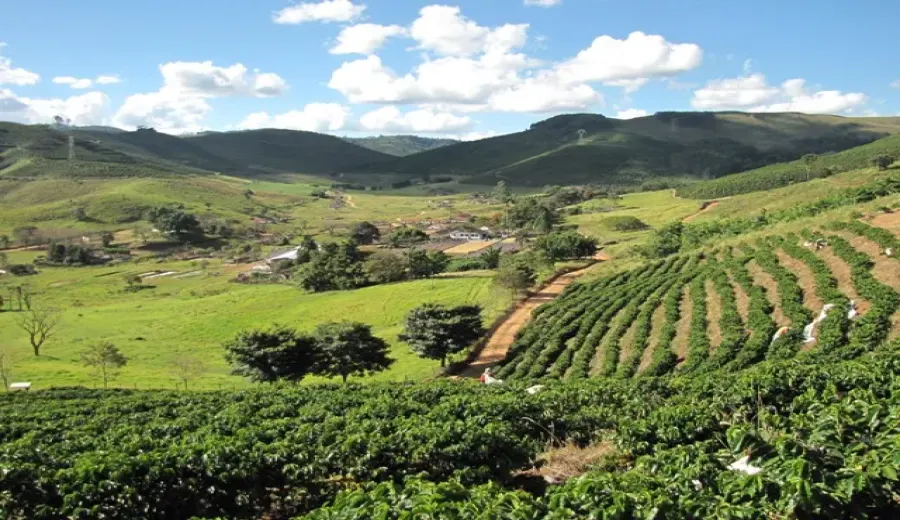
Introduction:Explore how São Paulo State in Brazil, with its unique geography and climate conditions, cultivates specialty coffees rich in complex flavor layers. This article delves into the Alta Mogiana sub-region and its representative Fazenda Rainha estate, analyzing the distinctive flavors of the Yellow Bourbon variety processed with natural drying, and shares practical pour over techniques and roasting recommendations. It’s an in-depth guide that coffee lovers interested in Brazilian coffee and specialty pour overs won’t want to miss.
Brazil has long held the title of the world’s largest coffee producer, with its green bean exports accounting for nearly 45% of the global total, and production fluctuations often influencing international market prices. Among its many producing regions, São Paulo State stands out with its high-altitude terrain, mineral-rich fertile soil, and mild, stable tropical highland climate, giving rise to numerous specialty coffees with unique profiles. In particular, the Alta Mogiana (Alta Mogiana) sub-region within the state is not only one of Brazil’s higher-elevation coffee-growing areas, but its cultivation altitude of 900 to 1100 meters also endows the beans with the potential for rich and bold flavors. Among them, Fazenda Rainha (Fazenda Rainha), with its Yellow Bourbon variety and traditional natural processing, has become a representative specialty coffee estate in the area.
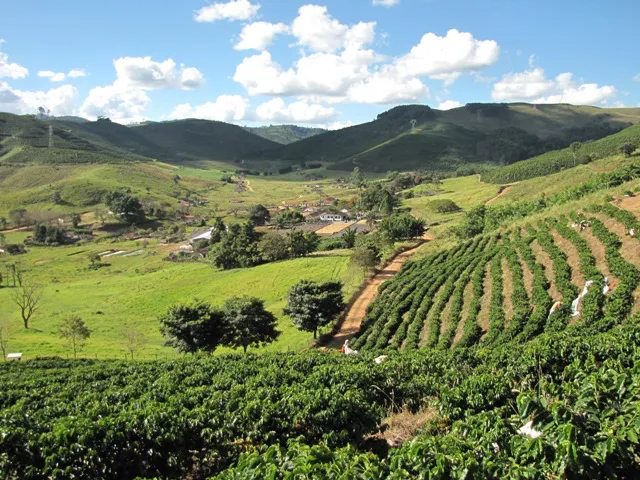
Brazilian coffee is known for its balanced and full-bodied profile, with mild aromas and smooth mouthfeel, often regarded as a model of neutral-flavored coffee. Such coffees are ideal for single-origin pour over appreciation and also serve as the base beans for many espresso blends. As the world’s largest coffee supplier, Brazil’s production fluctuations directly impact international market prices, underscoring its significance. From a geographical perspective, South America boasts the Andes Mountains, vast plateaus, and tropical rainforests, which foster fertile soil and abundant water sources, giving rise to multiple major coffee-producing nations including Brazil. Within Brazil, the southwestern plateau region, with its superior terrain and climatic conditions, has become the main coffee-growing belt, with altitudes generally ranging between 600 and 800 meters, and some areas even exceeding 1000 meters. The sunlight and rainfall conditions are highly conducive to coffee cultivation.
Brazil is divided into 26 states, 17 of which are involved in coffee production, encompassing both Arabica and Robusta varieties. Statistics show that approximately 80% of the nation’s coffee output is concentrated in four states: Paraná, São Paulo, Minas Gerais, and Espírito Santo. Among them, Minas Gerais is not only Brazil’s largest coffee-producing region but also home to renowned sub-regions such as Cerrado and Sul de Minas, with an annual output accounting for about 30% of the national total. The Red Bourbon coffee produced in this state is commonly processed with semi-washed methods, featuring flavor profiles dominated by nuts, peanuts, and chocolate, with gentle acidity and a full, balanced body, making it suitable as everyday drinking beans or for beginners.
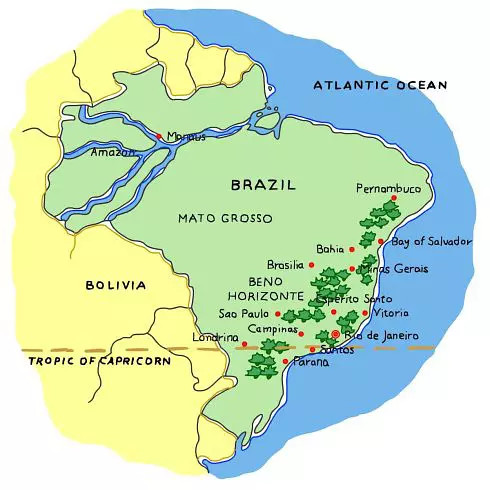
As another important producing region, São Paulo State features diverse terrain, combining coastal river landscapes with inland highland basins. Due to its generally higher elevation and tropical highland climate, it experiences significant day-night temperature variations, which are conducive to sugar accumulation and flavor development in coffee cherries. The Alta Mogiana sub-region within it is particularly noted for its high altitude and mineral-rich soil, making it one of the few high-altitude specialty coffee-growing areas in Brazil. Coffee trees here are mostly grown at altitudes between 900 and 1100 meters, with some premium estates even reaching above 1400 meters, contributing to greater bean density and richer aroma layers.
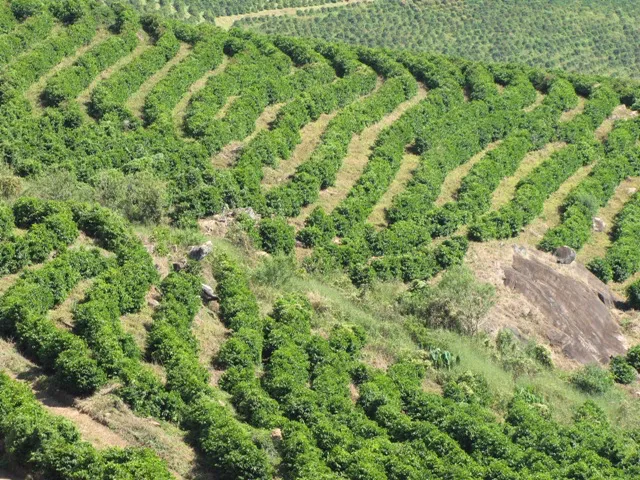
When mentioning Alta Mogiana, one cannot overlook its most representative estate, Fazenda Rainha. This estate belongs to Brazil’s historic Carvalho Dias family, which has long focused on cultivating high-quality Bourbon varieties, with environmental sustainability at the core of its operations. The estate utilizes natural waterfalls to develop pollution-free hydropower and is committed to protecting native forests and promoting afforestation. Due to its steep terrain and non-flat landscape, harvesting mainly relies on manual labor to ensure that every coffee cherry is rigorously selected. The Yellow Bourbon planted at Fazenda Rainha, when processed with natural drying, exhibits intense sweetness and a complex flavor structure.
A well-known coffee brand once selected the Yellow Bourbon beans from this estate, showcasing their classic characteristics through a medium-dark roast. During cupping, this coffee reveals distinct notes of chocolate, nuts, cream, and caramel, along with subtle aromas of sugarcane and black tea. The bitterness is clean and the aftertaste is smooth. As Yellow Bourbon grows slowly in high-altitude environments, the beans have high density and abundant sugar content. A medium-dark roast can fully bring out its rich base while preserving its unique delicate nuances, making it highly suitable for drinkers who love classic Brazilian flavors yet seek complexity.
If you wish to replicate a professional-grade pour over flavor at home, here are recommended brewing parameters and steps by a certain team. It is advised to use Brazilian Yellow Bourbon beans from Fazenda Rainha with a medium-light to medium roast, paired with a KONO filter to enhance body and smooth flow. Specific parameters are as follows: water temperature controlled between 87–88°C, grind size recommended at around 70% passing rate through a Chinese standard No. 20 sieve (medium-coarse), with a coffee dose of 15 grams and a coffee-to-water ratio of 1:15. Employ the classic three-pour method: start with a bloom using double the coffee dose (approximately 30 grams) of water for 30 seconds to initiate aroma release; then pour steadily in small circles until reaching 125 grams for the first pour. Once the coffee bed slightly settles, continue pouring to 225 grams to complete the brew, with a total time of about 2 minutes. This parameter combination helps reduce the risk of over-extraction, avoids excessive release of bitter substances, and maintains clarity and layering in flavor.
The brewed Brazilian Yellow Bourbon coffee from Fazenda Rainha will showcase enticing aromas of dark chocolate, cream, nuts, and peanuts. Upon tasting, it delivers a natural sweetness akin to sugarcane, with an overall balanced mouthfeel and a long-lasting aftertaste. It is a high-quality single-origin coffee perfect for savoring slowly. Whether as your morning pick-me-up or an afternoon relaxer, this specialty coffee from São Paulo State’s high-altitude region offers a unique flavor experience.
The above content is compiled by CoffeeHunters, a coffee news website.


