







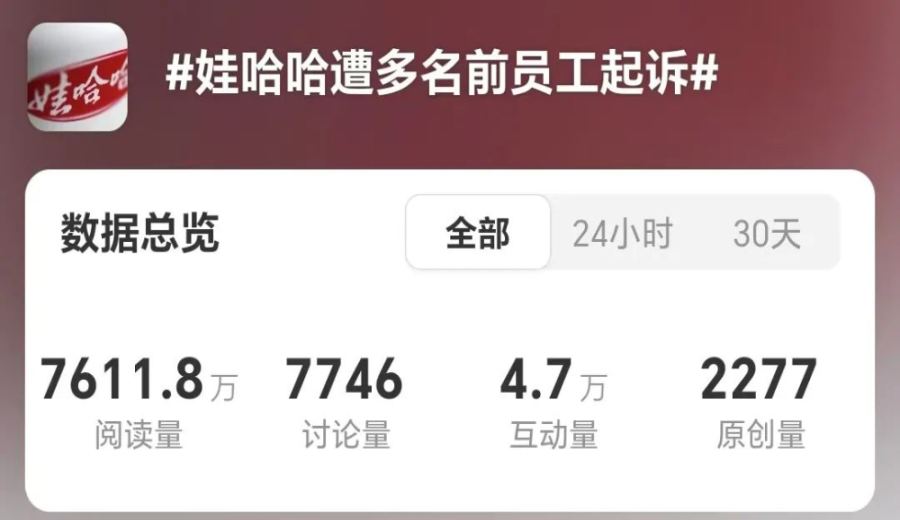
Introduction:The Wahaha Group has recently come under the spotlight due to a collective lawsuit filed by multiple former employees, involving disputes over contract re-signing, the cancellation of dry share dividends, and the zero-yuan transfer of equity. This article delves into the background of the incident, key details, and official responses to help readers understand the full picture and potential impact—especially the legal basis for the equity transfer and the practical issues surrounding employee rights protection.
Recently, the Wahaha Group has garnered widespread attention due to a collective lawsuit initiated by several former employees. Starting in August, some employees were asked to terminate their labor contracts with the Wahaha Group and sign new contracts with Hongsheng Beverage Group, which is controlled by Zong Fuli. This move led to the cancellation of the "dry share dividends" benefits that employees previously enjoyed, sparking dissatisfaction. To date, dozens of employees have launched a collective lawsuit, and the case has entered the judicial process.
In addition to the contract re-signing and dividend cancellation, another point of contention is the equity change at Hangzhou Xiaoshan Shunfa Food Packaging Co., Ltd. The equity held by the grassroots trade union joint committee of the company was transferred to Zong Fuli personally at a zero-yuan price. This decision has led employees to question its reasonableness and the impact on investment returns.
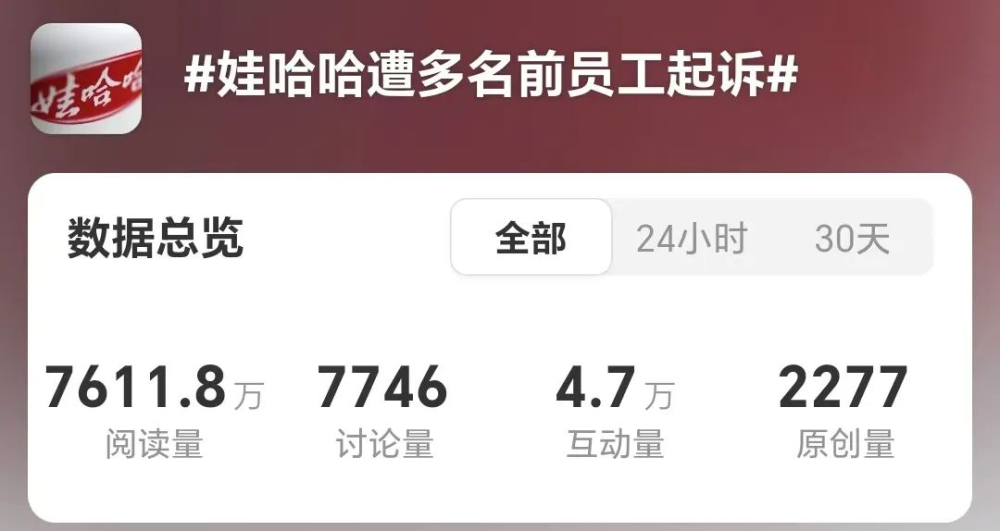
Since the passing of its founder Zong Qinghou and Zong Fuli taking over, the Wahaha Group has been at the center of public scrutiny. Previously, there were rumors that Zong Fuli had resigned, raising concerns about the internal stability of the group. Subsequently, Wahaha issued a statement clarifying that Zong Fuli would continue to be responsible for the group’s management duties.
On August 31, data from Tianyancha showed that Zong Fuli officially became the legal representative, chairman, and general manager of the Wahaha Group, marking her full takeover of the enterprise and the beginning of a series of reform measures.
However, this collective lawsuit by former employees has once again raised questions about the internal management of Wahaha. In response to media reports, Wahaha issued a statement emphasizing that some of the reported content was seriously inaccurate and stated that the trade union had not received any litigation information from the so-called维权委员会 (rights protection committee).
The Wahaha Trade Union pointed out that the internal equity buyback of the employee stockholding association had been approved through a member representative assembly resolution, and the relevant agreements were voluntarily signed by the members. The procedures were legal and did not harm the members’ rights. Regarding the equity transfer of Xiaoshan Shunfa, the trade union responded that it was a normal shareholder change, in compliance with legal regulations and reviewed by the industrial and commercial authorities, with no special reasons involved.
Notably, the official statements from Wahaha did not provide detailed explanations regarding the specific circumstances under which employees were asked to re-sign contracts with Hongsheng Group, nor did they address the decision-making basis for the zero-yuan equity transfer. These unresolved details leave many questions about the incident still needing clarification.
For employees, this incident highlights the importance of safeguarding personal rights during the processes of contract changes and equity transfers. It is advised that employees carefully review the terms of contracts when facing similar situations and seek legal advice when necessary to ensure their own interests are not compromised.
The above content is compiled by CoffeeHunters, a coffee news website.


