







Introduction:Channeling is a common issue that affects the uniformity of espresso flavor. When hot water fails to penetrate the coffee puck evenly as intended, some areas become over-extracted while others are under-extracted, leading to an imbalanced overall taste. This article delves into the causes of channeling, provides indicators for identifying it during extraction, and offers specific dosing optimization tips to help baristas and enthusiasts master key details and improve espresso quality.
When making espresso, if hot water does not uniformly penetrate the entire coffee puck but instead breaks through concentrated areas of lower resistance, a so-called "channeling effect" occurs. This phenomenon causes certain parts of the coffee grounds to be over-extracted, releasing undesirable off-flavors, while other parts are under-extracted due to insufficient water flow, ultimately resulting in an imbalance in the concentration and flavor of the final drink. This issue is less noticeable in pour over or French press methods, but it is particularly sensitive under the high-pressure, high-temperature extraction conditions of espresso, as a large amount of soluble flavor compounds must be extracted from the puck in a short period of time, demanding a high level of uniformity in the coffee bed. Although we cannot directly observe the flow path of hot water through the puck, we can still effectively identify the presence of channeling by examining the appearance of the puck post-extraction and the behavior of the extracted liquid.
In simple terms, channeling refers to the uneven distribution of hot water within the coffee puck. To extract a balanced and fully flavored cup of coffee, it is not only necessary to precisely control extraction parameters such as grind size, pressure, and water temperature, but also to ensure that hot water can steadily and uniformly permeate the majority of coffee particles at a consistent rate. Ideally, water will diffuse steadily from top to bottom under the influence of gravity, extracting the essence from each coffee particle. However, water has a tendency to follow the path of least resistance. Once the density of the coffee bed is uneven, the water flow will seek out looser or more porous areas to pass through more quickly, much like how rainwater tends to seep along surface cracks.
The result is that areas heavily penetrated by the water flow will be over-extracted, releasing bitterness and impurities, while areas with insufficient flow will be under-extracted, leading to a lack of flavor. When these two extremes mix, the overall coffee will exhibit clear defects in both concentration and aroma complexity — tasting either overly sharp and harsh, or flat and dull. Particularly in espresso, where the extraction time is usually only 25 to 30 seconds, and the process operates under 9-bar high pressure and temperatures above 90°C, it demands the extraction of approximately 60% to 70% of the soluble solids from the puck in an extremely short period of time. As a result, the reliance on puck uniformity is even greater, and when channeling occurs, its impact on the final flavor becomes even more pronounced.
Although it is not possible to directly observe the actual flow path of hot water during extraction, once channeling occurs, it usually leaves noticeable traces either visually or in terms of extraction performance, allowing for a preliminary judgment of the problem even before tasting. First, you can observe the surface of the removed coffee puck. If there are many holes of varying sizes, these are typically the "channels" where the water flow concentrated, also referred to as "punctures." These holes indicate that the coffee density in those areas was lower or the distribution was loose, allowing the water pressure to break through easily and form abnormal fast-flow paths.
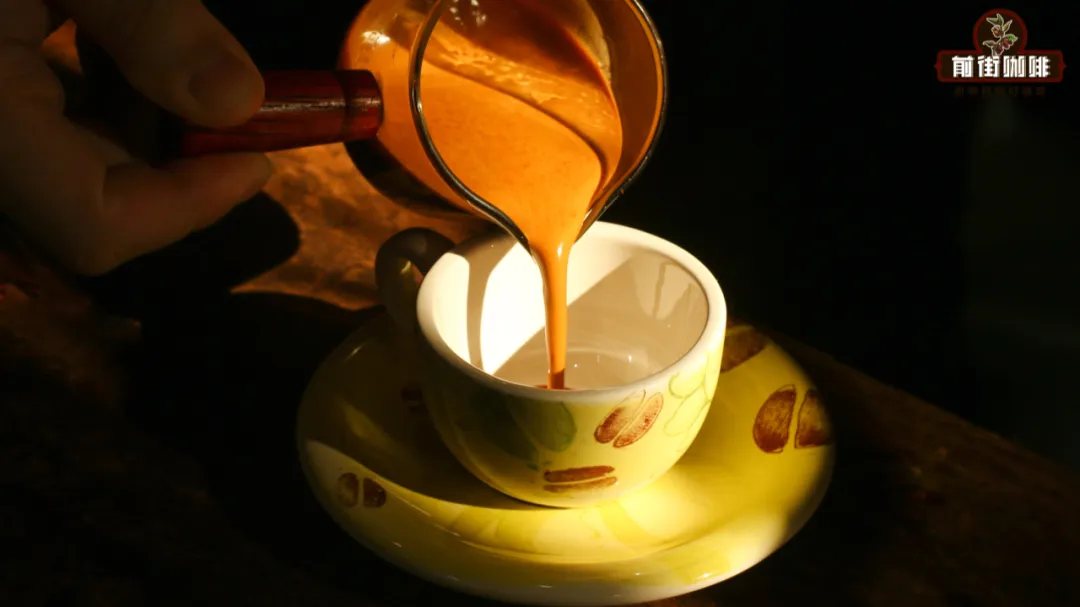
Another intuitive basis for judgment is observing the flow of espresso liquid when using a bottomless portafilter. If there is noticeable splashing or spraying during extraction, it is likely caused by uneven water flow speed and pressure distribution due to channeling, resulting in unstable flow behavior at the outlet. One of the original design intentions of the bottomless portafilter is to facilitate the observation of such extraction phenomena, allowing users to promptly detect and adjust the quality of their dosing and tamping.
The most fundamental solution to channeling lies in optimizing the dosing process. Good dosing not only ensures that coffee grounds are uniformly distributed, but also reduces density differences and gaps within the coffee bed, lowering the likelihood of water selectively penetrating certain areas. It is recommended to use a suitable manual or electric dosing tool to evenly spread the coffee grounds before tamping, avoiding obvious central accumulation or edge thinning. Additionally, the tamping pressure should also remain consistent — too heavy or too light can alter the compactness of the coffee bed, thereby affecting water distribution. Industry technical articles have detailed the precautions involved in the dosing process, including aspects such as dosing angle, rotation method, and tamper selection. For readers who wish to further improve extraction stability, these practical techniques are worth exploring in depth.
Finally, a reminder: if you are practicing extraction using a bottomless portafilter, it is advisable to wear light-colored clothing and maintain an appropriate distance from the portafilter, as the liquid splashing caused by channeling not only affects the taste of the coffee but may also dirty the surrounding area. For baristas striving for perfect extractions, these details are important aspects that should not be overlooked in daily operations.
The above content is compiled by CoffeeHunters, a coffee news website.


