







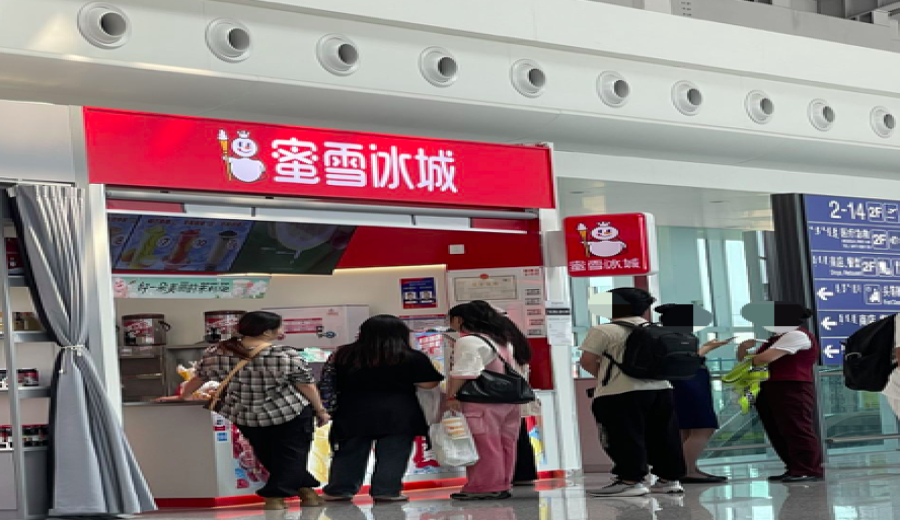
Introduction:Despite operating in high-rent locations such as airports and high-speed railway stations, Mixue Ice Cream & Tea persists with its consumer-friendly pricing strategy of only adding one yuan to the cost — a move that has sparked widespread discussion among consumers. Behind this seemingly loss-making approach lies a meticulously designed supply chain layout and commercial logic. This article delves into how the brand maintains low prices while staying profitable through its globally integrated self-operated supply chain, a franchise revenue structure that accounts for up to 95%, and in-house raw material production — revealing the key success factors behind the world’s fourth-largest restaurant chain.
Recently, many travelers have noticed one store that consistently draws long queues at airport terminals — none other than Mixue Ice Cream & Tea. Surprisingly, even in these high-rent transportation hubs, the prices of its drinks are only1 yuanhigher than those at its urban outlets. While the cost of noodles or other foods in the same areas might surge several times over, Mixue’s commitment to low pricing naturally becomes a hot topic.
Not only in airports across Taiwan or mainland China, but also from Malaysia to Bali, the pricing of overseas stores remains nearly identical to that of the domestic market. Consumers have shared that whether at Mount Tai, Chaka Salt Lake, or even Jiuzhaigou, Mixue almost always keeps its original prices, leading many to praise the brand as “conscientious.”
Generally speaking, food and beverage costs in transportation hubs and tourist hotspots tend to rise sharply due to issues like rent and logistics, resulting in higher retail prices. However, Mixue effectively reduces the costs of ingredients and transportation through its in-house supply chain and centralized procurement, enabling it to control price fluctuations even in high-land-price environments.
This pricing model reflects the brand’s unique business model:Over 95% of its revenue comes from selling raw materials and equipment to franchisees, rather than relying solely on direct store income. This means that as long as franchisees continue to sell products, the headquarters can maintain stable profits without depending on high per-item margins.
According to public data, Mixue Ice Cream & Tea has surpassed30,000stores globally, making it the world’s fourth-largest restaurant chain. Achieving such scale is certainly not something that can be explained by the phrase “small profits but quick turnover” alone — it relies on a comprehensive supply chain system where everything from raw material production to logistics distribution is controlled by the brand itself, significantly reducing intermediary costs.
For consumers, the direct benefit of this strategy is that no matter which city or even which country you’re in, you can enjoy a familiar drink at a similar price. For the brand, maintaining low prices is not only a means of market differentiation but also a key to expanding market share and solidifying customer loyalty.
In summary, Mixue’s ability to only add one yuan to prices in high-cost locations like airports while continuing to expand is not just about the mindset of “earning a little less” — it’s the result of comprehensive optimization across its supply chain, franchise model, and global strategy. The next time you see a Mixue store at an airport, you might better understand the deeper strategy behind that1-yuan difference.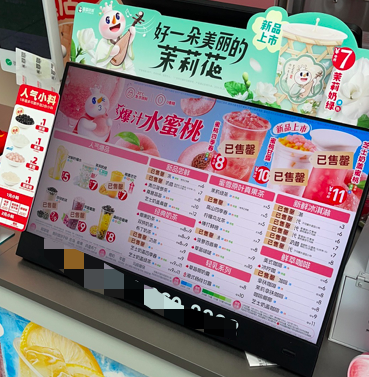
The above content is compiled by CoffeeHunters, a coffee news website.


