







Introduction:Want to understand the unique flavor profile of Brazilian coffee and its rigorous grading standards? This article delves into Brazil’s advantages as the world’s largest coffee exporter, explores the characteristics of its four major producing regions, and explains in detail the meanings behind professional grading terms such as NY2 and SC17/18. From highland terrains to cupping criteria, it helps you master the key knowledge for selecting Brazilian beans and discover the charm of classic flavors like Cerrado Red Bourbon.
Thanks to its vast South American territory and superior natural environment, Brazil consistently ranks first in global coffee exports, accounting for nearly one-third of international market transactions. Despite its impressive output, Brazilian coffee is known for its rich and balanced flavors rather than delicate floral or fruity notes, making it a common base in blended beans. This article will guide readers from production conditions and core region distributions to systematically interpret Brazil’s unique coffee grading system, uncover the professional meanings behind common labels such as ‘NY2 SC17/18 SS FC’, and finally experience their flavor characteristics through real bean examples.
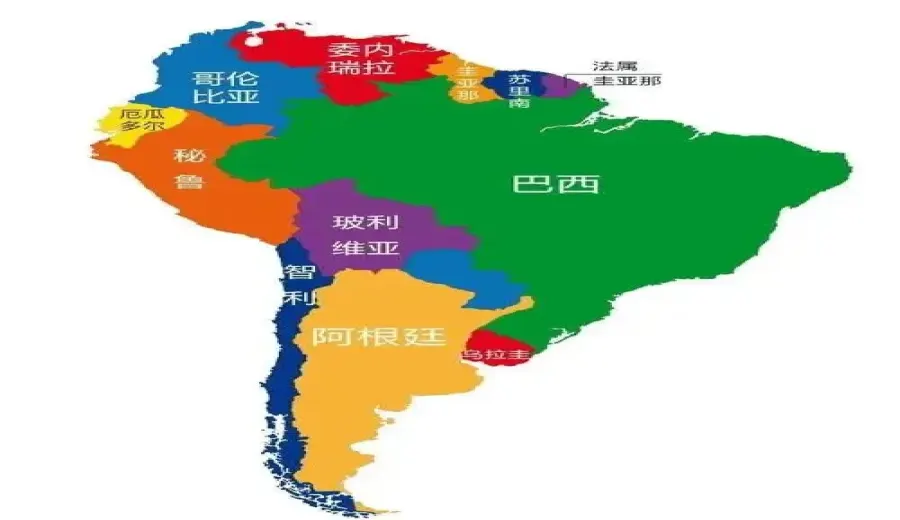
South America boasts rich agricultural potential, with the Andes Mountains stretching across the west and a landscape interwoven with volcanic geology and varied elevations, averaging about six hundred meters above sea level. Most areas feature a tropical climate that is warm, humid, and stable in rainfall, creating ideal conditions for coffee cultivation — the world’s top two exporting countries, Brazil and Colombia, are both located on this continent.
As a key player in the global coffee supply, Brazil’s exports account for about one-third of the world’s total, and this remarkable production capacity is supported by its unique geography and climate. However, its coffee flavors are generally not known for complexity, so they are often used in blends to provide a stable base.
Dating back to the eighteenth century, coffee trade was mostly dominated by European powers. Legend has it that a Brazilian officer gained the trust of the wife of the governor of French Guiana during a trip and brought back a precious coffee seed. This seed was taken to Pará in northern Brazil and later rapidly expanded to the southern regions of the country, laying the foundation for Brazil’s coffee industry.
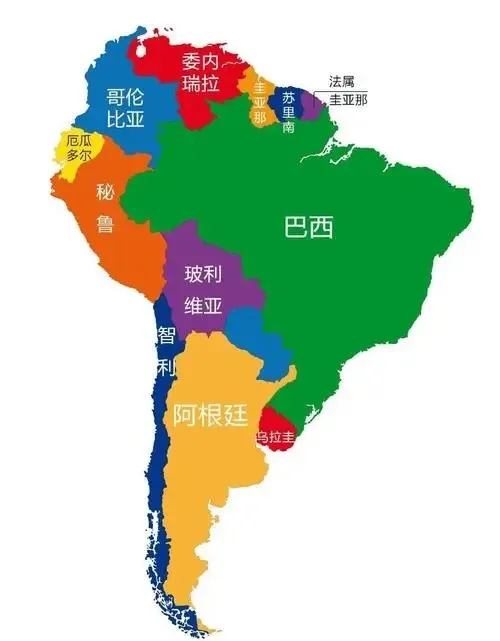
Brazil is not only the largest country in South America by area, but its diverse terrain and resources also create favorable conditions for coffee cultivation. The north is mainly composed of plains below two hundred meters in elevation and the Amazon rainforest, which are not suitable for coffee growth. Therefore, the main coffee farms are concentrated in the central and southern highland areas, where the soil is fertile, water is abundant, and the south enjoys a subtropical monsoon climate with moderate sunlight and ample rainfall, beneficial for the healthy growth of coffee trees.
Out of the country’s twenty-six states, seventeen are involved in coffee production, with Paraná, São Paulo, Minas Gerais, and Espírito Santo together accounting for over eighty percent of the national output. Notably, Brazil cultivates both Arabica and Robusta coffee varieties, showcasing a diverse planting structure.
Located in southeastern Brazil, Minas Gerais is the country’s most renowned coffee-producing region. With abundant agricultural resources, it contributes about thirty percent of the nation’s coffee output. The state has a dense river network with stable water supply, and the surrounding mountains effectively block the intrusion of Atlantic sea breezes, providing an excellent growing environment for coffee trees.
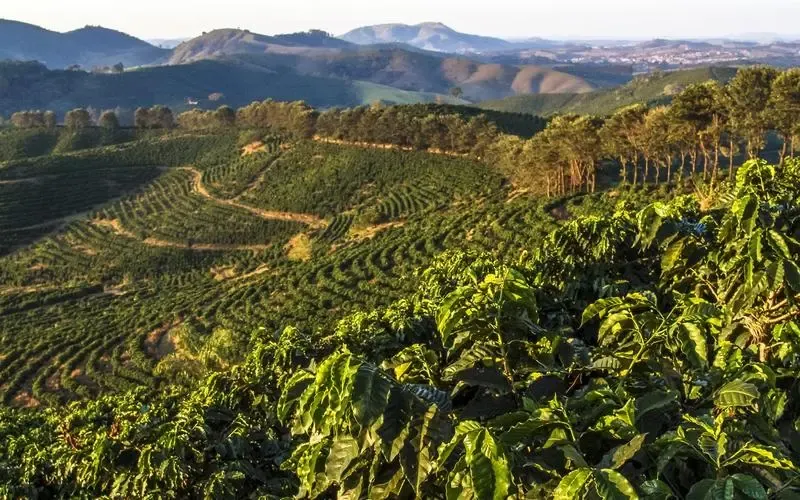
Within Minas Gerais, there are well-known sub-regions such as Cerrado and Sul de Minas. Among them, Cerrado is situated in the central-western part of the state, and only areas above one thousand meters in elevation are recognized as specialty-grade regions. The high altitude, combined with fertile soil, abundant groundwater, and cool nighttime temperatures that slow down bean development, helps accumulate sugars, resulting in the region’s coffee beans’ unique rich flavors.
Brazil’s coffee grading system combines multiple indicators, including the ratio of defective beans, bean size, cupping flavor, and overall taste, forming a more detailed evaluation system compared to other producing regions. Common labels such as ‘NY2 SC17/18 SS FC’ include ‘NY’, representing the grading standards of the New York Coffee Bean Association in the United States, where Brazil’s highest grade is NY2. The following numbers indicate the defect ratio, ranging from 2 to 4, with higher values meaning more defective beans.
‘SC’ refers to the coffee bean screen size, commonly 17/18 or 16/17 mesh, with higher numbers indicating fuller and more uniform beans. ‘SS’ is the cupping score, referenced by SCA standards, with scores of 85 or above classified as the highest grade. Finally, ‘FC’ stands for flavor grade, with common classifications including FC (Fine Cup, premium cup quality) and GC (Good Cup, good cup quality), offering consumers further quality references.
Taking the popular Cerrado Red Bourbon coffee bean as an example, this bean from Brazil’s main variety is often processed using the semi-washed method. When brewed, it often exhibits rich flavors of nuts, peanuts, and chocolate, with low and mild acidity and a full body. It is very suitable for coffee lovers who enjoy bold flavors and is also an excellent choice for beginners exploring the characteristics of Brazilian coffee.
The above content is compiled by CoffeeHunters, a coffee news website.


