








Introduction:Want to understand why pour over coffee often turns out bitter or astringent? These issues are often linked to "over-extraction," but high strength doesn’t necessarily mean over-extracted. This article delves into the key parameters of pour over extraction — how water temperature and grind size influence flavor release — and explains the practical significance of a 22% extraction rate using the Golden Cup theory. After reading, you’ll better understand how to adjust your pour over settings to avoid unpleasant off-flavors and brew a balanced, flavorful cup.
In the process of making pour over coffee, “over-extraction” is a common challenge many coffee enthusiasts face. When your coffee tastes noticeably burnt, bitter, or overly astringent, or when various off-flavors emerge one after another, these unpleasant notes are usually attributed to over-extraction. However, not all discomforting strong bitterness stems from over-extraction. Sometimes, overly concentrated coffee can also produce intense bitterness, but this is actually due to high strength, which isn’t entirely the same as over-extraction.
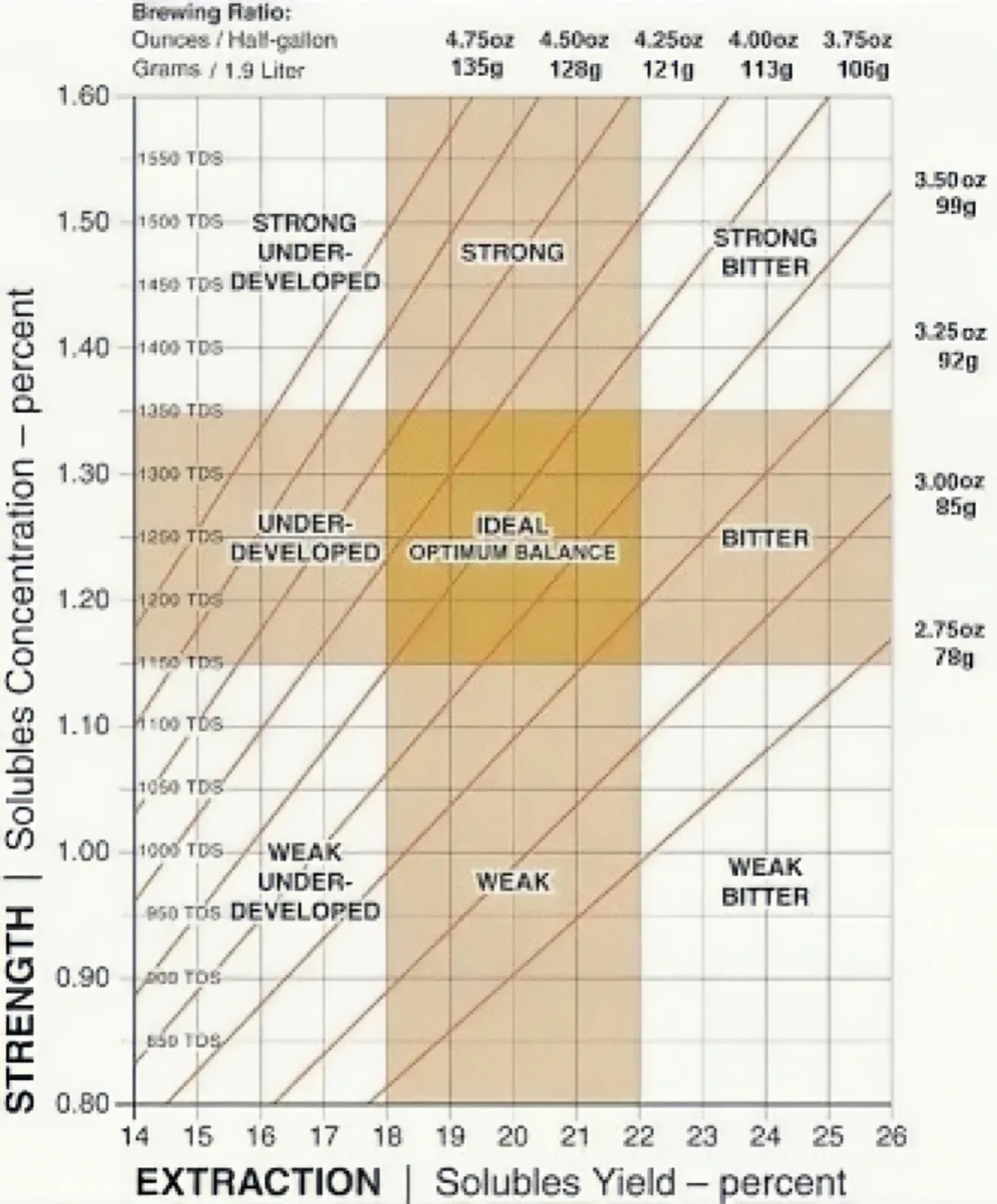
So, what exactly is true over-extraction? Many people refer to the 22% extraction rate upper limit mentioned in the Golden Cup theory, believing that exceeding this number constitutes over-extraction. But is this standard really so absolute? In reality, an extraction rate higher than 22% doesn’t always result in negative flavors — it also depends on the chemical composition of the coffee beans and how flavor compounds are released.

The Golden Cup theory suggests that a coffee enjoyed by most people should have an extraction rate between 18% and 22%. Within this range, the balance between acidity, sweetness, and bitterness in the coffee is more stable, and unpleasant off-flavors are less likely to appear. Once the extraction rate exceeds 22%, the coffee may release too many undesirable substances, resulting in unpleasant flavors — this is the traditional definition of over-extraction.
However, in practice, we’ve found that even when the extraction rate exceeds 22%, some coffees can still deliver good flavor, depending on the quality of the beans and the degree of roast. Therefore, we now tend to judge over-extraction based on the actual flavors we taste — when a coffee shows clear bitterness, astringency, or off-flavors, it’s reasonable to suspect over-extraction, rather than relying solely on numerical extraction rates.
Of course, occasional over-extraction is quite normal, as factors such as ambient temperature and humidity, the storage condition of the coffee beans, or even the time elapsed after grinding can affect extraction results. But if you frequently encounter over-extraction issues, then it’s likely your pour over parameters — especially water temperature and grind size — need reevaluation.
The extraction process in pour over coffee is essentially a chemical reaction between water and coffee grounds. The higher the water temperature, the faster substances in the coffee are released — especially bitterness and off-flavors, which are more easily extracted at higher temperatures. Generally, the recommended water temperature range for pour over is 90°C to 96°C. For light roasts, a slightly lower temperature helps preserve more acidity and aroma, while avoiding the early release of bitter and astringent compounds.
Conversely, if the water temperature is too low — for example, below 90°C — it may lead to under-extraction, making the coffee taste weak and bland, with excessive acidity but lacking the desired depth and sweetness. Therefore, controlling water temperature is a crucial factor affecting flavor balance, and it’s advisable to fine-tune it based on the roast level and characteristics of the coffee beans.
Another key parameter is grind size. The finer the grind, the greater the total surface area of the coffee grounds. Even if the contact time with water remains the same, more substances are released per unit of time, which can easily lead to over-extraction. Especially when using a fine grind without correspondingly shortening the brew time, flavor compounds — particularly bitterness and astringency — are more likely to be heavily released.
It’s recommended that the grind size for pour over coffee be between medium-fine and fine, with the specific choice adjusted according to brewing techniques (such as flow rate control and bloom time) and personal taste preferences. If you find your brewed coffee is too bitter or heavy with off-flavors, try using a coarser grind and observe whether the flavor improves.
In summary, avoiding over-extraction isn’t just about controlling the extraction rate figure, but involves an overall extraction strategy — a combination of water temperature, grind size, brew time, and technique. Understanding how these parameters affect flavor release will help you brew a well-balanced, smooth cup every time. Remember, coffee quality isn’t just about the beans — it’s also a reflection of extraction skill.
The above content is compiled by CoffeeHunters, a coffee news website.


