








Introduction:Many coffee enthusiasts enjoy using light-roast single-origin beans intended for pour over to brew espresso, but often encounter issues such as sourness, astringency, and unbalanced flavor. This article delves into the key differences in density and friability between dark and light roast beans, provides a practical grind adjustment formula, and offers specific recommendations on the coffee-to-milk ratio in specialty coffee drinks. It helps you pull a balanced and rich espresso shot using single-origin beans, making it ideal for coffee hobbyists who want to experiment with innovative brewing methods while pursuing layered flavors.
Many coffee fans purchase large quantities of single-origin pour over beans during limited-time monthly events, only to use them for making espresso. Perhaps it's to move away from the heavy mouthfeel of dark roasts or to explore different flavor profiles — this practice is becoming increasingly common. However, since most single-origin beans are medium-light to light roasted, they differ significantly in bean characteristics from the dark roasts typically used in espresso. Directly applying dark roast extraction parameters often leads to espresso that is overly bright and thin, negatively affecting the subsequent milk coffee experience.
The physical properties of dark and light roasted beans are fundamentally different, which is the root cause affecting extraction outcomes. Dark roast beans generally have a higher expansion rate, lower density, and greater friability, leading to more fine particles during grinding. This creates overly dense water channels, prolongs extraction time, and can release excessive impurities. In contrast, light roast beans, due to their shorter roast duration, have higher density and lower friability. The resulting grinds are more intact and uniform. Applying the coarse grind and short extraction time suitable for dark roasts can instead lead to under-extraction, resulting in a flat and dull espresso.

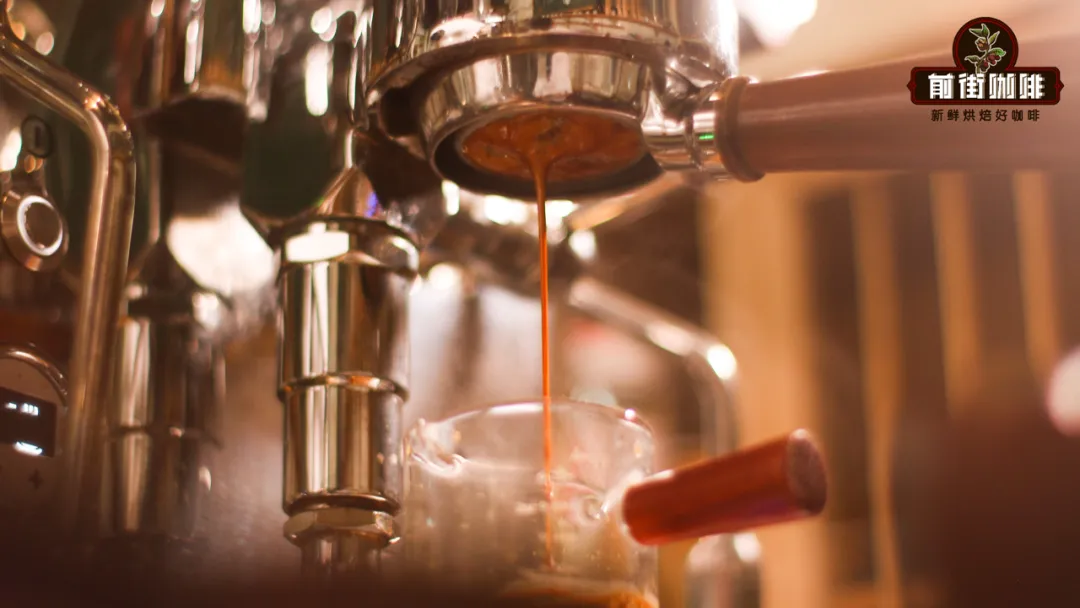
To achieve an ideal espresso using light-roast single-origin beans, the primary task is to adjust the grind size. It is recommended to start by fine-tuning toward a finer grind to reduce the gaps between coffee particles, extend the contact time between hot water and coffee grounds, and thereby improve overall extraction yield. In practice, a simple formula can assist with adjustments: assuming you’re using 20 grams of light-roast beans and aiming to extract 40 milliliters of espresso within 30–35 seconds. If the actual extraction completes in just 10–15 seconds, it indicates the grind is too coarse, and it is advised to adjust the grind setting 2–3 notches finer. It’s important to note that due to their high density, light-roast beans are less likely to release excessive undesirable substances even with extended extraction time. Therefore, fine-tuning can be done based on actual flavor performance until a balanced acidity, sweetness, bitterness, and full-bodied mouthfeel are achieved.
Beyond grind parameters, the proportion of coffee in specialty coffee drinks is also key to the final flavor presentation. Since the flavor intensity of light-roast beans is usually less pronounced than that of dark roasts, directly applying existing coffee-to-liquid ratios may result in the unique flavors of the espresso being masked by milk or other ingredients. To enhance the coffee's presence, adjustments can be made in two directions: first, moderately increasing the coffee dose to elevate flavor concentration per unit of liquid. Because light-roast beans are smaller in volume, many portafilters can actually accommodate more coffee than the recommended amount — for instance, a standard 20-gram portafilter can often hold 22 grams or even more of light-roast beans without concerns about over-tamping.
Another approach is to reduce the total amount of accompanying liquids (such as water or milk), thereby decreasing the dilution effect on coffee flavor. For example, if the original latte ratio using dark-roast beans is 1:5 (40 milliliters of coffee to 200 milliliters of milk), switching to light-roast beans could adjust the ratio to 1:4 (40 milliliters of coffee to 160 milliliters of milk). By reducing the milk volume, the unique flavor of the espresso becomes more prominent. Additionally, light-roast beans typically retain more acidity, and when paired improperly with milk, they can produce an unharmonious taste. It is recommended to slightly increase the extraction yield during brewing, raising the proportion of bitter compounds in the espresso. This helps neutralize acidity, resulting in a smoother and more rounded mouthfeel in the final milk coffee, making it a great option for coffee lovers seeking balanced flavors.
The above content is compiled by CoffeeHunters, a coffee news website.


