







Introduction:A bottled water testing report by the Hong Kong Consumer Council sparked a controversy over bromate levels in samples from Nongfu Spring and Baishan Mountain, leading to consecutive days of sharp stock price declines. How do EU standards affect the evaluation? How did the Consumer Council follow up to clarify the issue? This article provides an in-depth analysis of the full picture of the incident, helping you understand the practical implications of standard differences on product safety and how companies respond to market concerns.
The Hong Kong Consumer Council recently released a bottled water testing report, which pointed out that the bromate levels in samples from Nongfu Spring and Baishan Mountain were close to the upper limit set by EU standards. This news quickly drew market attention. Bromate is a potential byproduct generated during the disinfection process of tap water.The EU has set strict limits for itto ensure the safety of drinking water.
Faced with public pressure, Nongfu Spring swiftly took legal action by instructing lawyers to send a letter demanding the Consumer Council to clarify and apologize. Baishan Mountain also issued a statement, saying that some media reports had misinterpreted the test results, harming the brand's reputation. The firm responses from both companies highlighted the impact of this standard dispute on corporate reputation.
However, the public outcry continued to escalate. Within two days, Nongfu Spring’s stock price plummeted sharply, hitting its lowest level since September 2020, with its market value shrinking by approximately HK$13.1 billion. Dissatisfied with the Consumer Council’s initial response, the company promptly sent its Executive Director Han Linyou and a team of lawyers to Hong Kong to meet with the Consumer Council in person.
According to reports, Nongfu Spring representatives emphasized during the meeting that, due to the significant economic losses caused by the Consumer Council’s article, if it was confirmed that the standards used were incorrect, the Consumer Council should immediately apologize and clarify the situation to prevent further harm to shareholders’ interests.
Early this morning, the Hong Kong Consumer Council issued a clarification statement on its official website, admitting that it had wrongly categorized the Nongfu Spring sample as “distilled water” or “purified water,” when in fact it was “natural drinking water.” Based on this, the Consumer Council reclassified the sample and adjusted its scoring, while also expressing regret for the misunderstanding.
Nongfu Spring subsequently responded, stating that it had received the clarification from the Consumer Council and emphasized that the product had been tested and fully complied with relevant standards. Consumers could drink it with confidence, and the company pledged to continue providing high-quality products to the Hong Kong market.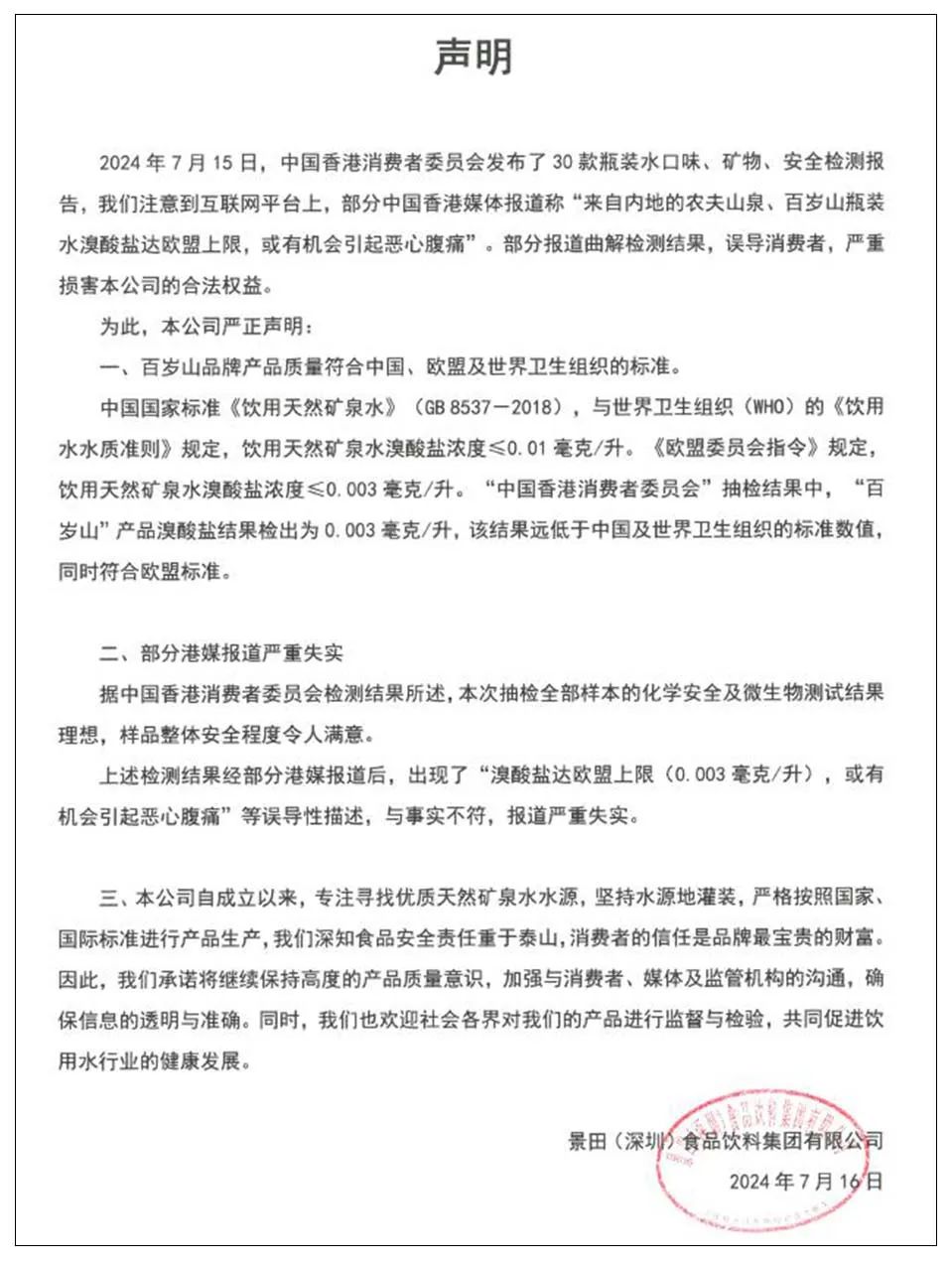
This incident not only reflects the impact of standard differences on companies but also reminds consumers to pay attention to the details of drinking water classification and safety standards. Although the bromate content was at the edge of the EU standard upper limit, it remained within the legally permitted range.The key lies in correct classification and scientific interpretation.
Following the release of the Consumer Council’s clarification statement, Nongfu Spring’s stock price immediately rose, with the increase expanding to as much as 8% at one point, pushing its total market value back above HK$400 billion, reflecting the market’s positive response to the company’s reaction.
The above content is compiled by CoffeeHunters, a coffee news website.


