







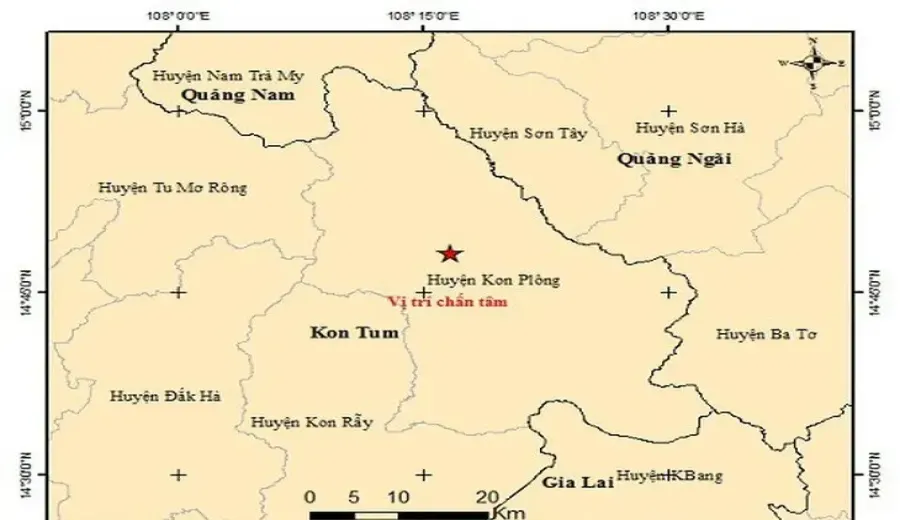
Introduction:In just 24 hours, Kon Tum Province in Vietnam’s Central Highlands experienced 32 earthquakes, the strongest of which reached magnitude 5.0, triggering tremors felt across several neighboring provinces and parts of Thailand. This sudden seismic activity not only threatens the safety of local residents but could also have long-term impacts on the region’s core Robusta coffee-growing areas, which account for 70% of the nation’s total production. This article delves into the causes of the earthquakes, their potential hazards to farmland and water sources, and the challenges that may lie ahead for Vietnam’s coffee supply.
In Kon Plông District, one of Vietnam’s key coffee-growing regions in Kon Tum Province, 32 seismic events were recorded within 24 hours, with the strongest measuring 5.0 magnitude and occurring at a depth of approximately 8.1 kilometers. The natural disaster risk level was classified as Grade 2. The tremors were strongly felt by locals, and reports indicate that people in the Central Highlands and surrounding provinces, as well as as far away as Ubon Ratchathani and Sakon Nakhon provinces in northeastern Thailand, also sensed the shaking.
According to data from the Vietnam Institute of Geosciences and Mineral Resources, between midnight on July 28 and the morning of July 29, Kon Plông District experienced 11 earthquakes, with an additional 21 occurring throughout July 28, totaling 32 seismic events of varying magnitudes and depths within less than 24 hours. The most severe event occurred around 11:30 AM and was categorized as a Grade 2 natural disaster risk, marking the strongest earthquake recorded in the area to date.
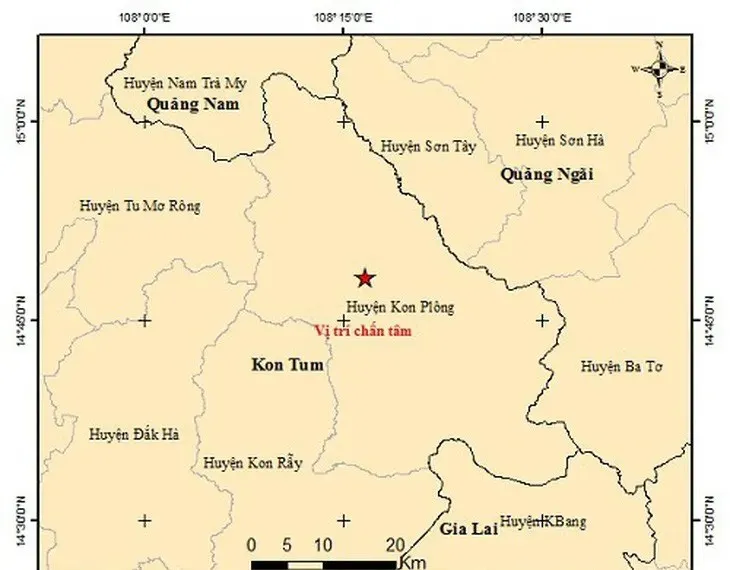
Experts suggest that this series of earthquakes is likely linked to human activities related to reservoirs, such as dam construction or changes in water storage pressure that can induce geological activity. In fact, the Vietnam Institute of Geosciences and Mineral Resources has confirmed that the 5.0-magnitude earthquake was a typical reservoir-induced seismic event. Notably, the area lies on an active fault line, and earthquakes of varying scales may continue to occur in the coming years, though experts estimate that the magnitude is unlikely to exceed 5.5.
Kon Tum Province is a vital part of Vietnam’s Central Highlands coffee-growing region, contributing—alongside Dak Lak, Lam Dong, and Gia Lai provinces—to approximately 70% of the country’s Robusta coffee output. Coffee cultivation in this region plays a significant role in the global market, especially in meeting the demand for instant coffee and dark roasted beans. However, the earthquakes may have altered farmland topography, leading to secondary disasters such as land subsidence, landslides, and even mudflows, all of which directly affect the growing environment of coffee trees.
Furthermore, the earthquakes could cause abnormal fluctuations in groundwater levels and even damage irrigation systems and reservoir structures, exacerbating agricultural water shortages. Since the beginning of this year, Vietnam’s Central Highlands has already been hit hard by severe drought, with many reservoirs at historically low levels and riverbeds cracked. The earthquakes threaten to worsen these issues, dealing a double blow to both coffee yield and quality.

Beyond the direct impacts of natural disasters, Vietnam’s coffee industry has also been grappling with a continuous decline in planting area in recent years. Due to relatively lower profits compared to other cash crops, many farmers have shifted to growing more lucrative fruits or other agricultural products, leading to a year-on-year reduction in coffee cultivation. Industry forecasts suggest that if this trend continues, Vietnam’s coffee planting area could shrink by half by 2050.
Since 2024, Vietnam’s coffee exports have faced dual pressures from abnormal weather and declining yields, with the industry widely expecting a year-on-year drop of around 20% in total exports for the year. The recent spate of earthquakes in Kon Tum Province undoubtedly adds further uncertainty to coffee supply in the coming quarters. For the global coffee market—especially roasters and brands reliant on Vietnam’s Robusta supply—closely monitoring the post-earthquake impacts and recovery progress in the region will be key to formulating procurement and risk management strategies.
The above content is compiled by CoffeeHunters, a coffee news website.


