








Introduction:After completing a pour over, the bed of coffee grounds in the filter can take on a variety of forms — from deep craters to flat surfaces, or even showing signs of layering or muddiness. These visual differences actually reflect the interaction between your pouring technique and the characteristics of the coffee grounds. This article will delve into six common types of coffee bed appearances, including deep craters, off-center craters, flat beds with coffee walls, flat beds without coffee walls, layered beds, and muddy beds, helping you assess whether your pouring is even and adjust your technique accordingly to improve extraction consistency.
As the final drops of water finish dripping through during a pour over, the coffee grounds left in the filter — known as the coffee bed — gradually reveal their final form. Some people manage to produce deep, uniform craters, while others may end up with flat, unremarkable surfaces or even muddy, uneven beds. These varying appearances often leave coffee enthusiasts wondering: what do they actually signify? In truth, these forms mainly reflect your pouring method and the inherent traits of the coffee grounds, rather than directly influencing flavor quality. Next, we’ll take a closer look at six common coffee bed states — including deep craters, off-center craters, flat beds with coffee walls, flat beds without coffee walls, layered beds, and muddy beds — to help you interpret the effects of your pouring technique and further optimize your pour over process.
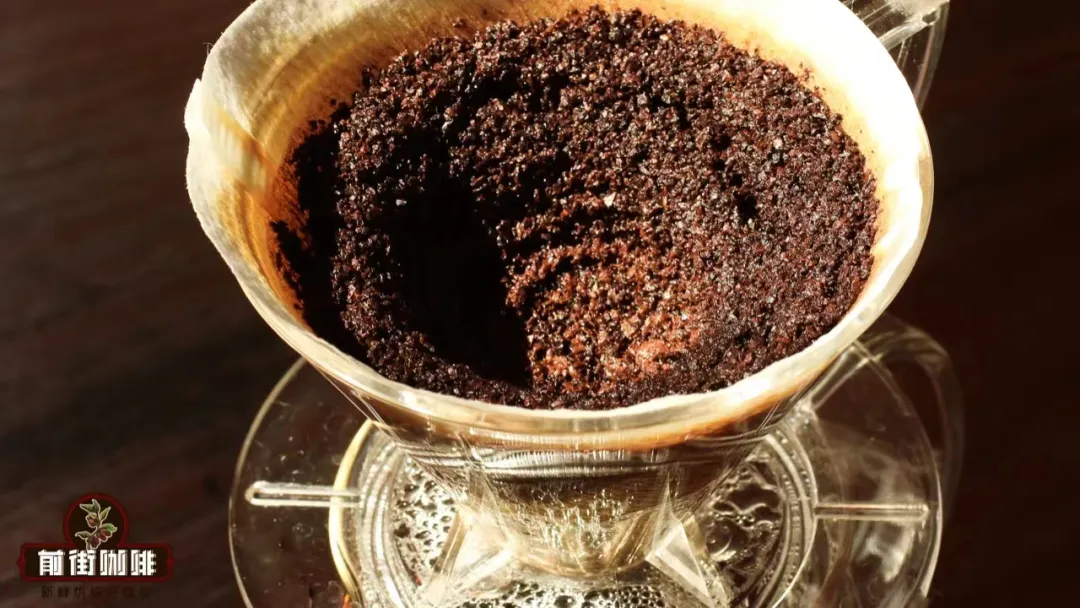
First and most striking is the deep and even crater-like coffee bed. This form typically occurs when a relatively large and focused stream of water is used, directed primarily toward the center of the coffee bed. This causes the coffee grounds to be uniformly lifted, resulting in a crater that is consistent in both depth and shape. It’s worth noting that besides pouring technique, factors such as the amount of coffee and the density of the grounds also influence crater formation. A greater amount of coffee leads to higher coffee walls, naturally creating a deeper crater; meanwhile, lower-density coffee grounds — such as those from dark roasts — are more likely to form noticeable craters due to their lighter, fluffier nature. Additionally, using fewer pour intervals helps maintain the three-dimensional structure of the coffee bed, making the crater more pronounced. Therefore, simply observing the shape and depth of this crater can give you an initial sense of how focused your pour is and the state of your coffee bed.
However, you might sometimes find that although the crater is deep, its shape is noticeably off-center — not straight down but tilted to the left or right. This so-called off-center crater is usually caused by the pouring stream not being perfectly vertical. Different brands and models of pour over kettles have varying spout designs, and even when poured at the same angle, the direction of the water flow can differ. For example, a spout with a downward-curving gooseneck design is more likely to produce a near-vertical stream compared to a straight spout. If the spout you’re using doesn’t easily create a vertical water column, it’s advisable to adjust your pouring angle or technique to avoid the hot water hitting the coffee bed at an angle, which can lead to over-extraction on one side. Excessive water force might also break down the coffee walls, causing channeling and affecting overall extraction evenness and strength. If you notice such an off-center crater after brewing, it might be worth reviewing your pouring motion to identify possible areas for improvement.
Another common coffee bed state is the flat bed with coffee walls. This type of bed appears relatively level, with no obvious crater, and retains a small ring of coffee grounds around the edges. There are generally three main reasons for this. The first is that the coffee bed wasn’t intentionally lifted during pouring. Instead, water was poured slowly in wide circles, preventing the coffee grounds from being adequately agitated and thus failing to form a crater. The second reason could be too many pour intervals: with each pour, the coffee grounds gradually absorb water, become saturated, and lose adhesion. Eventually, their increased weight causes them to slide down the walls of the filter until most of the grounds settle at the bottom, with only a small portion remaining stuck to the sides. The third reason relates to the density of the coffee grounds themselves. If the grounds are relatively dense, the water has a harder time lifting them — even if they briefly float, they quickly sink back down, ultimately resulting in a flat-looking coffee bed.
In contrast to a flat bed with coffee walls, a flat bed without coffee walls features an even base with almost no visible coffee grounds clinging to the sides of the filter. This usually happens when hot water directly impacts the inner wall of the filter, washing away the coffee grounds that were originally attached to the walls. If you’re using a filter with a pronounced ridge design — such as a V60 — this pouring method can also lead to channeling, where water flows quickly through the gaps created by the ridges, resulting in under-extracted coffee and a diluted overall strength. Therefore, when you notice a flat, wall-less coffee bed, it’s important to examine your pouring path and avoid letting water directly hit the filter walls, reducing the risks of channeling and uneven extraction.
Additionally, a layered or segmented coffee bed is another noteworthy formation. Regardless of whether the center of the bed is a deep crater or flat, if you observe a clear dividing line around the edges of the cup that separates the coffee walls from the central coffee layer, this is referred to as layering. This phenomenon is also usually caused by improper pouring, particularly when water is overly concentrated on the edges, leading to uneven extraction along the sides. Similar to an off-center crater, layering can reduce overall extraction consistency, so it’s important to pay attention during brewing and avoid directing the water flow toward the edges of the filter to maintain uniformity across the entire coffee bed.
Finally, a muddy bed represents a relatively extreme coffee bed state, characterized by a messy, uneven surface accompanied by the presence of a crater. This condition is almost certainly caused by an excessively high amount of fine coffee particles. Too many fines not only make the coffee bed look chaotic, but can also clog the filter pores excessively, prolonging brew time and leading to over-extraction. If you frequently encounter a muddy bed, it’s recommended to start by examining your grind size and the quality of your grinder. If the grind is too fine, consider adjusting to a slightly coarser setting. If the issue stems from the grinder itself, you might consider using a sieve to remove excess fines or even evaluate replacing it with a more stable-performing grinder to achieve a more uniform particle distribution.
In summary, while the appearance of the coffee bed can offer many clues about your pouring technique and the state of the coffee grounds, it is not absolutely linked to the final flavor outcome of the coffee. Don’t judge a cup of coffee solely by its looks. Instead, use observations of the coffee bed to reflect on your brewing process, and further adjust your pouring techniques and parameters to pursue a more stable and satisfying extraction result.



The above content is compiled by CoffeeHunters, a coffee news website.


