








Introduction:Have you ever brewed a pour over coffee that tastes thin and insipid, like plain water? This is actually a common issue many coffee enthusiasts face, especially beginners. This article delves into the reasons behind under-extracted coffee, exploring how key parameters such as coffee-to-water ratio, water temperature, grind size, and brewing time affect extraction, and provides practical adjustment tips to help you easily brew a pour over coffee with balanced flavor and rich mouthfeel.
Sometimes pour over coffee boasts intense aroma and layered complexity, yet other times it turns out as bland as water, with almost no recognizable coffee flavor. This issue is not only common among beginners but also hard for even seasoned coffee enthusiasts to completely avoid. Compared to the bitterness caused by over-extraction, the problem of coffee being too weak and lacking flavor is more widespread and more likely to discourage people.
When the coffee you drink tastes weak, hollow, or even has an unnatural hint of saltiness or astringency, it’s very likely due to “under-extraction.” Under-extraction refers to the failure of water to fully dissolve the flavorful compounds in coffee grounds during brewing, resulting in a final cup that lacks the desired complexity and body.
To understand why this happens, we first need to know that coffee contains hundreds of chemical compounds—some contribute sweetness, fruit acidity, and body, while others can produce undesirable flavors, such as excessive astringency or woody notes. Therefore, we need to optimize extraction efficiency by controllingcoffee-to-water ratio,water temperature,grind size, andbrewing timeto ensure water extracts the desirable flavors from coffee just right.

When any of these extraction parameters deviate—for example, if the grind is too coarse, the water temperature is too low, or the coffee-to-water ratio is off—it can lead to incomplete extraction. The water fails to dissolve enough flavor compounds effectively, and what you end up with is a cup of coffee that tastes thin and lacks layers. This is what we call “under-extraction,” and it’s one of the most common reasons why coffee ends up tasting like water.
Besides weak flavor, under-extracted coffee may sometimes come with unpleasant sensations, such as a salty aftertaste or slight astringency in the mouth. These are due to the insufficient release of desirable compounds in the coffee, while the proportion of undesirable ones relatively increases.
So, how can you adjust to improve this situation? First, it’s recommended to start with thecoffee-to-water ratio. Generally, the standard coffee-to-water ratio for pour over coffee is around 1:15 to 1:17, meaning 15–17 milliliters of water per 1 gram of coffee grounds. If you find your coffee too weak, you can slightly reduce the ratio—for example, to 1:14 or 1:15—to increase the concentration and make the flavors more perceptible.
Next, check yourgrind size. If the coffee grounds are too coarse, water will pass through the coffee bed too quickly, without enough time or surface area for proper extraction, leading to incomplete release of flavor compounds. It’s recommended to adjust the grind to a medium-fine level, similar to the texture of fine sugar, depending on your brewing device and bean characteristics. This helps extend the contact time between water and coffee, improving extraction yield.
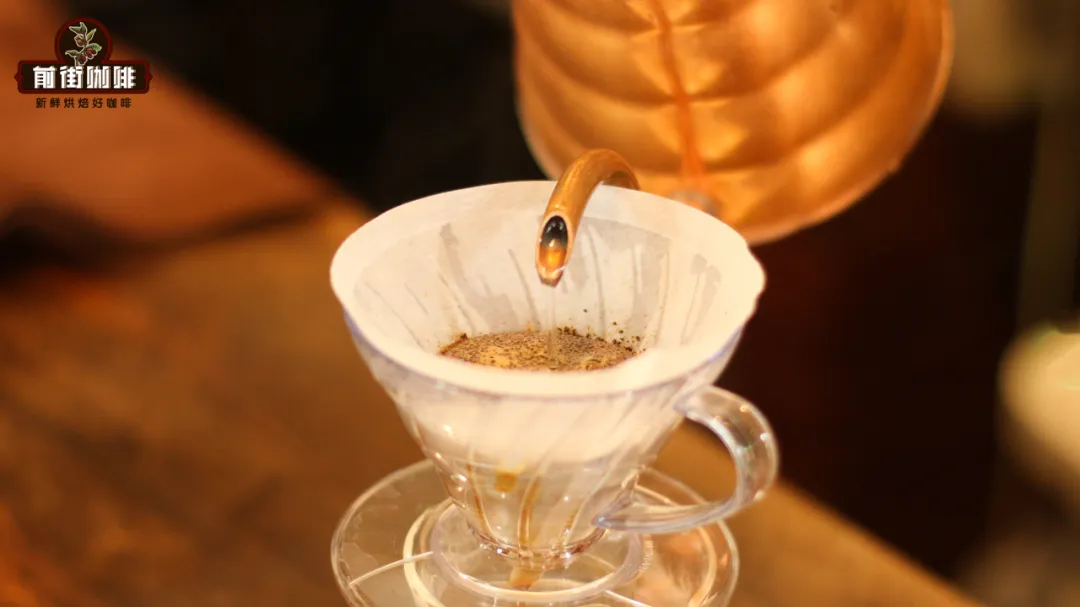
Then there’s the control ofwater temperature. For pour over, a water temperature between 90°C and 96°C is generally recommended. When the water is too cool, molecular activity decreases, making it difficult to effectively extract aromatic compounds and sweetness from the coffee, often resulting in a weaker taste. If you’re using light roast beans, you can slightly increase the temperature; for dark roasts, you can go a bit lower, but it’s best not to go below 88°C to avoid more noticeable under-extraction.
Finally, don’t overlook thebrewing time. The total recommended brewing time for pour over is typically between 2 to 3 minutes, depending on flow rate and technique. If the pouring speed is too fast or if there aren’t enough pauses during pulse pouring, the overall brewing time may be too short, and the flavor compounds won’t have enough time to dissolve fully, resulting in a lack of depth in the cup.
In summary, if you want to fix the issue of pour over coffee tasting like water, it’s advisable to adjust the coffee-to-water ratio, examine the grind size, confirm the water temperature setting, and control the brewing time. Through systematic fine-tuning, you’ll gradually find the optimal extraction balance that suits your taste, allowing you to brew pour over coffee with full flavor and distinct layers.
The above content is compiled by CoffeeHunters, a coffee news website.


