







Introduction:The results of the 2024 Thailand Cup of Excellence (COE) competition have been announced, with the Hmong coffee plantation from Nan Province once again taking the top spot with a high score of 91.8. This marks the second consecutive year that this plantation has claimed the championship. This article will take an in-depth look at how this championship coffee plantation, nestled deep in the mountains of northern Thailand, grew from nothing and stood out through organic farming and meticulous management. It will also guide you through the development trajectory and regional characteristics of Thailand’s coffee industry. Whether you’re a coffee enthusiast or industry professional, you’ll gain valuable insights.
In recent years, Thai coffee has been actively moving toward specialty production, achieving remarkable results in international competitions. The list of participants for the 2024 Cup of Excellence (COE) competition was revealed, and the Hmong Coffee Biofarm (Coffee De Hmong Biofarm), located in Nan Province in northern Thailand, once again claimed the championship with a high score of 91.8, achieving back-to-back titles. Managed by the Wichai Kamnerd Mongkon family, this coffee plantation is situated in a remote, densely forested mountain area. Since transitioning to coffee cultivation in 2012, it has consistently adhered to organic farming practices, growing varieties such as Geisha, Catimor, and Java, and has finally earned the recognition of international judges.
When it comes to the origins of Thai coffee, the earliest traces can be traced back to the late 19th century during the reign of King Rama V, when Dutch merchants introduced coffee tree seeds from Indonesia. However, due to various factors, it did not develop immediately. It wasn’t until the 1970s that King Bhumibol Adulyadej of Thailand promoted royal projects aimed at replacing opium cultivation with cash crops. Coffee, which thrives in high-altitude environments and offers high ecological benefits, became a key focus. These projects concentrated on the mountainous regions of northern Thailand, particularly Chiang Mai and Chiang Rai provinces, laying the foundation for today’s specialty coffee in northern Thailand.
Thailand’s geographical environment is diverse, spanning both tropical and subtropical climate zones. The country is predominantly mountainous and plateau, with plains accounting for only about half of the total land area. Nationally, it can be roughly divided into four major geographical regions: the mountainous jungles of the north, the central Chao Phraya River plain, the northeastern plateau, and the southern mountain ranges bordering the Malay Peninsula. Climatically, Thailand is a tropical monsoon region, with the year divided into a hot season (February to May), a rainy season (June to October), and a cool season (November to February of the following year). The average annual temperature is around 27.7°C, occasionally exceeding 40°C, with an annual rainfall of about 1100 mm. The relatively humid environment is conducive to coffee growth.
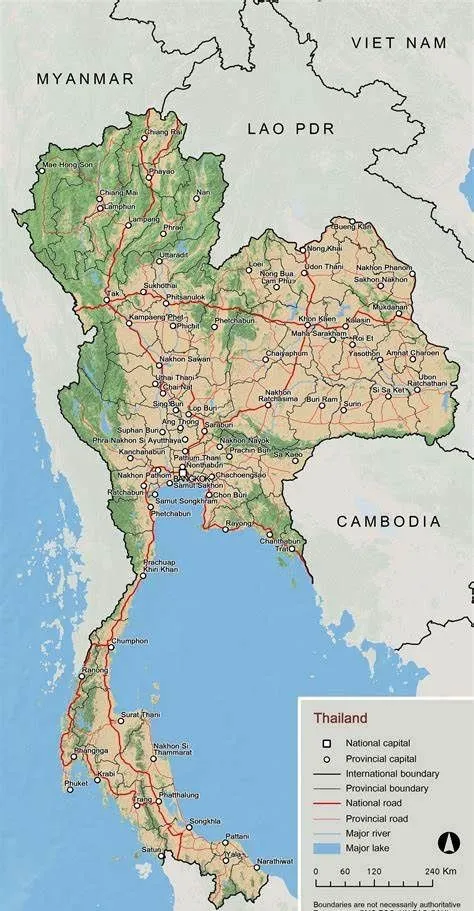
Coffee cultivation in Thailand is mainly concentrated in the northern and southern regions. Due to differences in climate and soil, the variety selection also varies greatly. In the north, such as in Chiang Mai, Chiang Rai, and Lampang, Arabica is primarily grown, particularly well-suited for producing high-quality specialty coffee. In contrast, the southern regions, such as Chumphon and Surat Thani, have hot and humid climates, where disease-resistant Robusta varieties are mainly cultivated. In recent years, as demand for specialty Arabica has increased in both the Chinese and international markets, the Thai government has also begun to develop new growing areas in the north. Among them, Nan Province, with its pristine ecology and high-altitude environment, has gradually attracted attention.
Nan Province is located at the northernmost tip of Thailand, situated in a remote valley of the Nan River, surrounded by dense forests and high mountains. Its highest peak, Phu Khe, reaches an elevation of 2079 meters. For a long time, limited transportation and underdevelopment have helped preserve the region’s excellent natural ecology and traditional agricultural environment. This environment provides ideal conditions for growing high-quality coffee and is also the key reason why the coffee from this area can stand out in international competitions.
Starting in 2022, the COE competition, organized by the non-profit organization Alliance for Coffee Excellence (ACE), was introduced to Thailand, providing a platform for local smallholder farmers to showcase their quality. 2024 marks the third year of the competition being held in Thailand, and once again, the Hmong Coffee Plantation in Nan Province claimed the championship with outstanding performance. The plantation first won the COE championship in 2023, and this year, it achieved an even higher score of 91.8. This coffee plantation, hidden deep in the mountains, was originally a virgin forest and vegetable-growing area until 2012, when the Wichai Kamnerd Mongkon family transitioned to coffee cultivation. They selected high-quality Arabica varieties such as Geisha, Catimor, and Java, and committed to chemical-free, strictly organic management. Years of dedication have finally earned recognition in the international market.
The above content is compiled by CoffeeHunters, a coffee news website.


