







Introduction:The results of the 2024 Costa Rica Cup of Excellence (COE) have been announced, with Geisha continuing to dominate, but a rare variety named San Roque has once again stood out. This variety, which received acclaim upon its first appearance in 2018, has shone brightly in the Central Valley region thanks to its unique lineage and high-altitude adaptability. This article delves into the discovery of San Roque, its variety characteristics, its flavor performance in the COE competition, and explores its potential in pour over brewing and extraction.
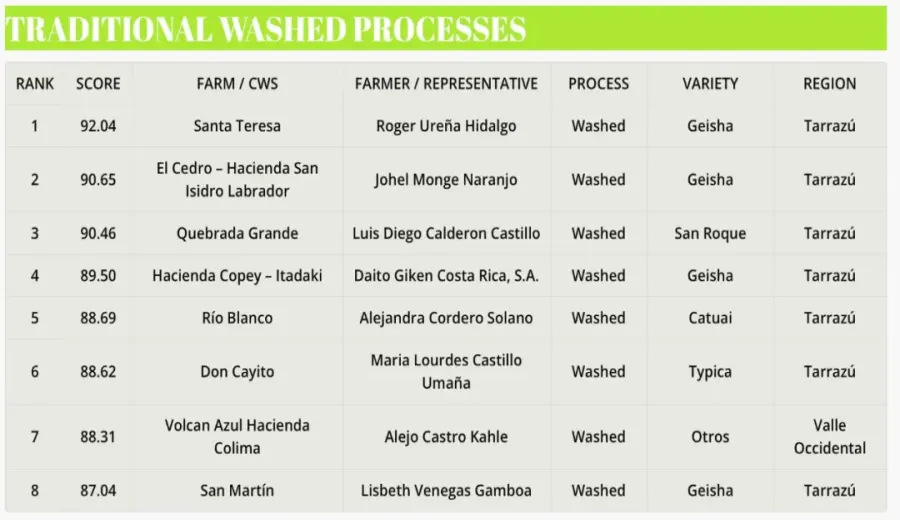
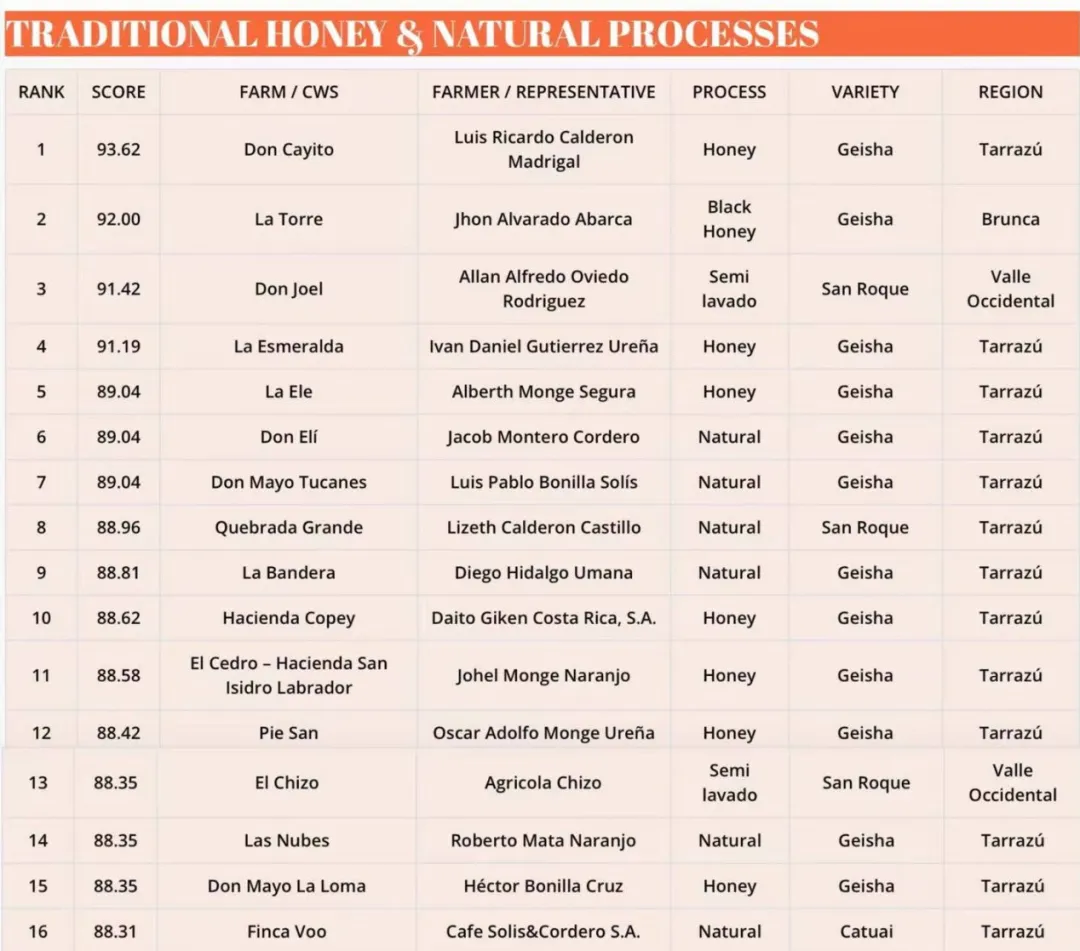
The results of the 2024 Costa Rica Cup of Excellence (COE) have been officially released. Similar to previous editions, this year’s competition is divided into three main processing categories: traditional washed, traditional honey and natural, and experimental processing. As in past years, Geisha remains a major contender, but classic varieties such as Typica and Catuai are also well represented. Particularly eye-catching is a rare variety that has repeatedly made its mark in COE competitions in recent years — San Roque.
Since its first outstanding performance in the 2018 COE competition, San Roque has gradually taken root in Costa Rica’s Central Valley region, thanks to its unique genetic background and exceptional cupping performance. This variety has not only been selected for the COE winners’ list multiple times, but has also become a focal point for coffee enthusiasts and roasters due to its ability to thrive at high altitudes and express rich fruit notes.
According to records, San Roque first gained recognition in the 2018 COE competition, ranking 14th, and hailing from Finca Leoncio in the Central Valley. The farm is managed by owner Manuel Antonio Barrantes Zuñiga, who named it in honor of his grandfather, Leoncio. At the time, the farm primarily grew Villa Sarchi and SL28.
Interestingly, in 2015, Finca Leoncio participated in the COE competition. At that time, the farm owner was not entirely certain of the specific variety being submitted, so it was temporarily submitted under the name SL28. Unexpectedly, this batch of coffee scored an impressive 91.46 and won the championship that year, drawing significant attention from the industry. However, after cupping by multiple tasters, it became clear that the flavor profile and appearance of the winning beans were noticeably different from traditional SL28, though its true identity could not be immediately determined.
It wasn’t until 2018, through genetic testing technology, that the true identity of this mysterious coffee was revealed — it turned out to be a variant of SL28, initially discovered in the San Roque area of central Costa Rica, hence the name "San Roque." Due to its outstanding performance in 2015, surrounding farm owners began requesting seedlings from Finca Leoncio, and the variety gradually spread throughout the Central Valley region, going on to win awards in subsequent COE competitions.
In terms of cupping flavor profile, San Roque exhibits qualities similar to SL28, but also has its own distinctive characteristics. The most noticeable difference is that the top young leaves of San Roque are light brown, while those of SL28 are green. This visual trait has become one of the key ways to distinguish the two. Additionally, thanks to its ability to adapt to high-altitude growing conditions and its complex flavor profile, San Roque can deliver rich and layered fruit notes — including tropical fruits, citrus, berries, and even hints of floral and honey sweetness — regardless of whether it is processed via washed, honey, or natural methods.
For coffee enthusiasts looking to experience the unique flavors of San Roque firsthand, it is recommended to look for lots from the Central Valley region of Costa Rica. These regions typically offer microclimates suitable for high-altitude varieties, helping to fully bring out the potential of San Roque. Moreover, when brewing via pour over or other extraction methods, it is suggested to use a medium-fine grind, maintain a water temperature between 90–93°C, and employ a mid-level pouring technique along with moderate blooming to help highlight its fruitiness and layers of sweetness.
The above content is compiled by CoffeeHunters, a coffee news website.


