








Introduction:When brewing pour over coffee, many coffee enthusiasts worry that fine particles may lead to poor mouthfeel or clog their equipment, so they choose to filter out the fines before brewing. But are fines really the “culprit”? This article will delve into the causes of fines, their actual impact on extraction, and the situations in which they actually need to be sifted out. It will help you master more precise extraction strategies and enhance the complexity and flavor expression of your coffee.
In the daily practice of pour over brewing, many baristas or enthusiasts often encounter issues such as slower drawdown speed, or overly astringent and burnt flavors in the cup. These problems are often attributed to the fines produced during grinding. As a result, many people gradually develop the habit of using a sieve to filter out fines before brewing. But does this action really lead to a better coffee experience? In fact, the presence of fines is not entirely negative—in some cases, it can even add more richness and complexity to the coffee.
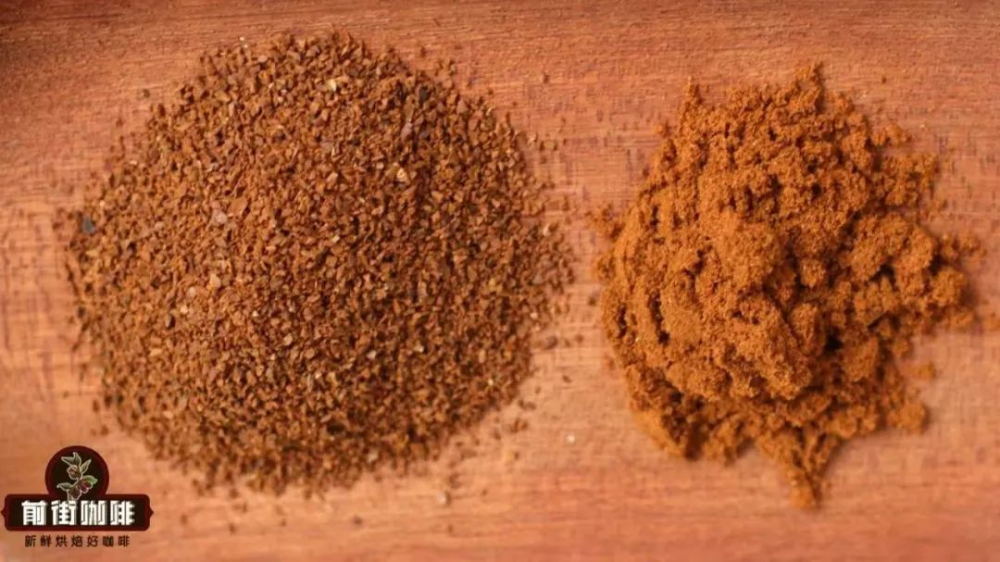
First, let’s clarify what fines are. In the standard coffee grinding process, most coffee particles fall within a size range of 0.6 to 0.8 millimeters, which is considered the conventional range suitable for pour over brewing. Those particles smaller than 0.25 millimeters are what we call “fines.” These particles are usually as fine as flour and hard to detect individually, but when present in large amounts, they can affect overall extraction performance.

As for how fines are produced, they mainly result from the fragmentation of coffee beans due to blade impact during the grinding process. Imagine a piece of glass falling from a height—it shatters into not only large fragments but also many tiny shards. The situation with coffee beans during grinding is very similar. Especially under high rotation speeds or uneven pressure, these microscopic particles are more likely to form.
In addition, the inherent brittleness of the coffee beans themselves is also a significant factor affecting the production of fines. Generally speaking, the darker the roast, the more brittle the internal structure of the bean becomes, making it easier to break into fines during grinding. Therefore, dark roasted beans often require a coarser grind size than medium or light roasts—not only because they release flavors more quickly, but also to reduce the generation of excessive fines.
At the same time, the quality of the grinder is equally key to determining the amount of fines. Whether you’re an amateur home brewer or a professional barista, almost everyone agrees that the grinder plays a pivotal role in the entire brewing chain. A grinder with good grinding uniformity can produce coffee particles with more consistent size distribution, and correspondingly, the proportion of fines will be lower. However, even with high-end equipment, it’s impossible to completely avoid fines, as this is closely related to the inherent material properties of the coffee beans.

So why don’t we recommend filtering out fines before every pour over? The reason is that although fines may pose some challenges to extraction, they are also one of the important elements that contribute to the complexity of coffee. As we all know, a good cup of pour over coffee should have depth and balance in flavor, and this is inseparably linked to the differences in extraction efficiency among coffee particles of varying sizes.
During the actual extraction process, since it’s impossible for every ground coffee particle to be exactly the same size, particles of different sizes will release soluble substances at different rates within the same period of time. Generally, coarser particles release more acids and sweetness, while finer particles tend to release more bitter substances. This difference helps create a transition in mouthfeel from bright to rich in the cup.
If we filter out all the fines beforehand, although we may achieve more consistent extraction, it could also result in an overall flavor that becomes monotonous, lacking depth in the finish and structural complexity. Therefore, it is only recommended to use a sieve to pre-filter excess fines in specific situations—for example, when the grinder performance is poor, resulting in fines accounting for more than 10% of the total coffee grounds, and when this significantly causes the coffee bed to become too muddy and the drawdown severely hindered.
In addition, to address the common issue of fines causing clogging, many baristas adopt a technique known as “bypassing,” which involves pausing the pouring when water flow slows or coffee extraction becomes abnormal, allowing the coffee bed time to resettle and degas. This method can effectively reduce the negative impact caused by fines accumulation, and it also eliminates the need for additional sieving each time—making it a practical technique worth trying for coffee lovers who value convenience and efficiency.
In summary, fines are not entirely the “enemy” in pour over coffee. Understanding their causes, their specific effects on extraction, and knowing when to intervene will allow you to fully unlock the potential of your coffee beans in every brew, and enjoy a coffee experience that is richer in complexity and balance.
The above content is compiled by CoffeeHunters, a coffee news website.


