







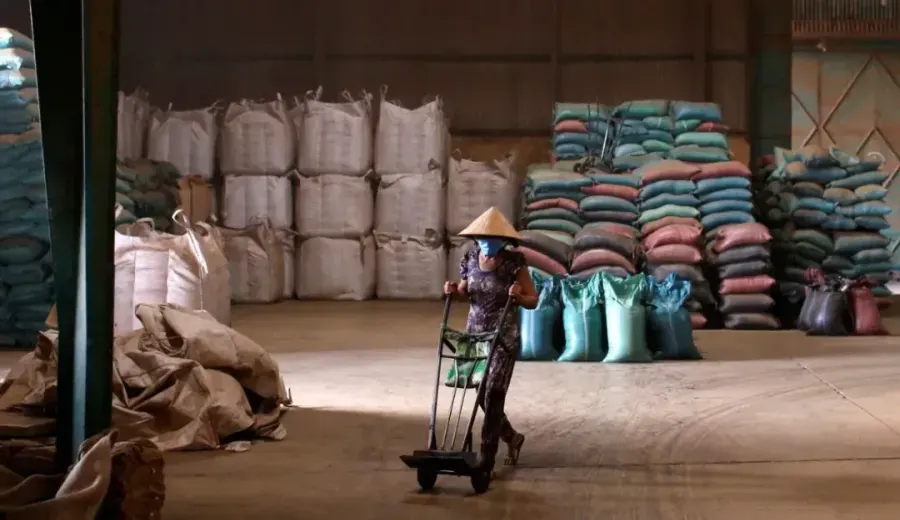
Introduction:Vietnam's coffee export revenue exceeded $3.04 billion in the first half of this year, a year-on-year increase of 38% and a record high for the same period in history. However, export volumes decreased by 8%. Persistent drought continues to plague coffee-growing regions, presenting severe challenges, while prices remain high. This article provides an in-depth analysis of Vietnam’s current coffee export situation, the impact of weather, market supply and demand dynamics, and the potential effects on the global Robusta coffee market.
According to recent data released by Vietnam’s General Department of Customs, the country’s total coffee export value in the first half of 2024 reached $3.04 billion. Although export volume amounted to only 862,400 tons, down 8% from the same period last year, the export value grew against the trend by 38%, setting a new historical record for the same period. This surge is driven by the combination of continuously rising global Robusta coffee prices and Vietnam experiencing its most severe drought in nearly a decade.
Looking at monthly performance, the average export price of Vietnamese coffee in May this year reached $4,275 per ton, up 14% month-on-month from April and a staggering 66% higher compared to the same period last year. Calculating the average export price over the first five months, it stood at $3,475 per ton, reflecting a year-on-year increase of 41%. Clearly, the strong upward trend in prices has become a key factor supporting overall export revenue.
Not only have international market prices continued to climb, but domestic green coffee bean prices in Vietnam have also remained high. Currently, the price of Robusta green coffee beans in the Central Highlands region ranges between 122 million and 125 million Vietnamese dong per ton, equivalent to approximately 12 to 12.5 yuan per kilogram. Meanwhile, international Robusta futures prices have held steady above $4,000 per ton since June, recently even surging to $4,253, reflecting global market anxiety over tight supply.
The primary driver behind the price surge is undoubtedly the extreme drought that has persisted in Vietnam for several months.Affected by the El Niño phenomenon, Vietnam experienced its most severe drought in nearly a decade from March to May this year.In many areas, riverbeds dried up and cracked, coffee tree leaves turned yellow and withered, and the overall growth conditions of the plants deteriorated. Although some regions have seen sporadic rainfall recently, providing slight relief from the drought, most of the rain has been in the form of brief showers, with total precipitation significantly insufficient to effectively improve soil moisture and crop growing conditions.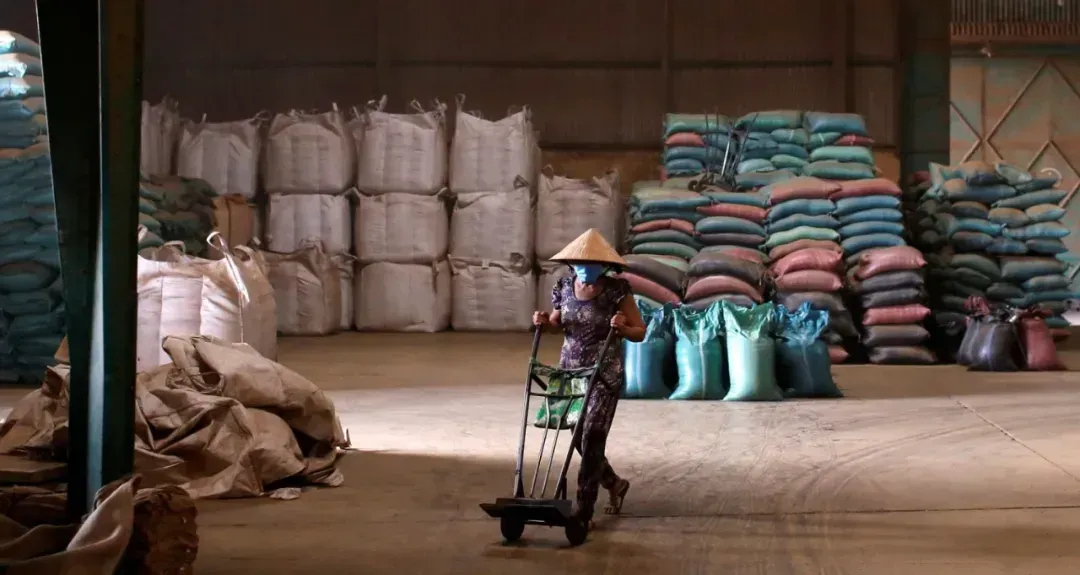
In addition, local temperatures have also been noticeably higher than in previous years, often staying above 30°C in most regions. The interaction of high temperatures and occasional rainfall has made coffee tree roots prone to rot due to poor soil drainage, while leaves are susceptible to yellowing and scorching. This has led to a stagnation in plant growth, sparse emergence of new buds, and further impacts on the quality of future flowering and fruiting. To make matters worse, the high-temperature environment also increases the likelihood of pests and diseases, posing additional management challenges for coffee farmers.
Industry insiders point out that if the drought is not followed by sufficient rainfall, or if rainfall becomes too concentrated around the main harvest period in October, it could further drag down annual coffee production and lead to a wider supply gap. Moreover, some traders are also concerned that even if rainfall stabilizes in the future, the physiological damage caused to coffee trees by the earlier drought will take a long time to recover, meaning Vietnam’s overall coffee production capacity still faces significant uncertainty this year.
It is worth noting that while prices are rising, farmers and traders in major producing regions such as Vietnam and Brazil are generally choosing to hold back sales, keeping coffee beans in hand in anticipation of higher offers. Simexco, a major Vietnamese exporter, stated that due to the continuous price increases over the past period, many coffee farmers have accumulated a certain amount of capital and now have the ability to hold inventory, so they are not in a rush to sell at current price levels. As a result, market liquidity has further contracted.
However, there is also some good news on the weather front.The U.S. National Oceanic and Atmospheric Administration (NOAA) predicts a high probability of La Niña forming between July and September 2024, and it may persist throughout the Northern Hemisphere winter.Generally speaking, La Niña tends to bring climate effects opposite to those of El Niño, including changes in rainfall patterns and temperature fluctuations. However, unlike typical La Niña years in the past, the process of shifting rapidly from El Niño to La Niña this year is somewhat special. It is expected to be of relatively weak intensity, and its actual impact on the world’s major coffee-producing regions may be limited.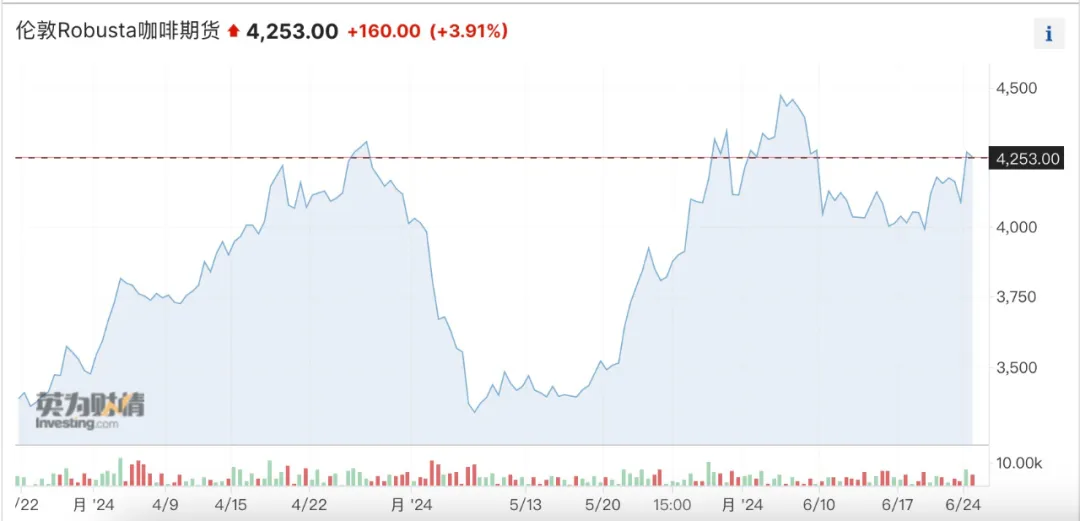
The industry generally believes that the production of major coffee-producing countries in the second half of 2024 is expected to gradually stabilize, but actual rainfall and temperature changes still need to be closely monitored. For consumers and traders, the price trend of Robusta coffee remains a focal point, especially in instant coffee, three-in-one blends, and certain specialty coffee applications, where Robusta continues to play an indispensable role. Relevant industry players will also continue to track the latest developments in Vietnam’s producing regions to help enthusiasts stay on top of market trends and flavor changes.
The above content is compiled by CoffeeHunters, a coffee news website.


