







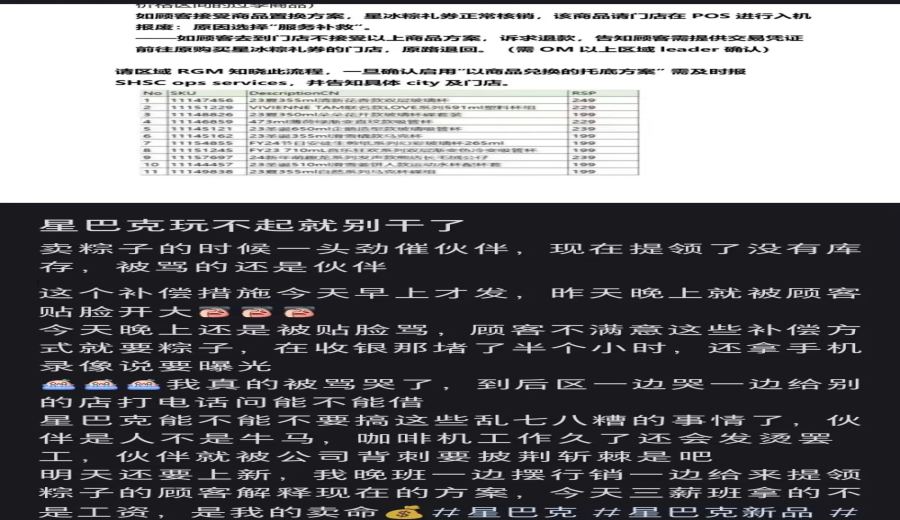
Introduction:During the Dragon Boat Festival, some Starbucks stores in the Jiangsu, Zhejiang, and Shanghai regions experienced a shortage of Zongzi Frappuccino vouchers, preventing customers from redeeming their coupons for products, which led to conflicts between store staff and customers. This article delves into the inventory management issues behind the incident and offers practical advice for consumers facing similar situations.
This year during the Dragon Boat Festival, multiple Starbucks stores in the Jiangsu, Zhejiang, and Shanghai areas faced an unexpected crisis — the inability to redeem Zongzi Frappuccino vouchers. Due to insufficient stock, many customers holding vouchers arrived at stores only to find they couldn’t claim their products, with some locations even witnessing heated arguments between customers and employees.
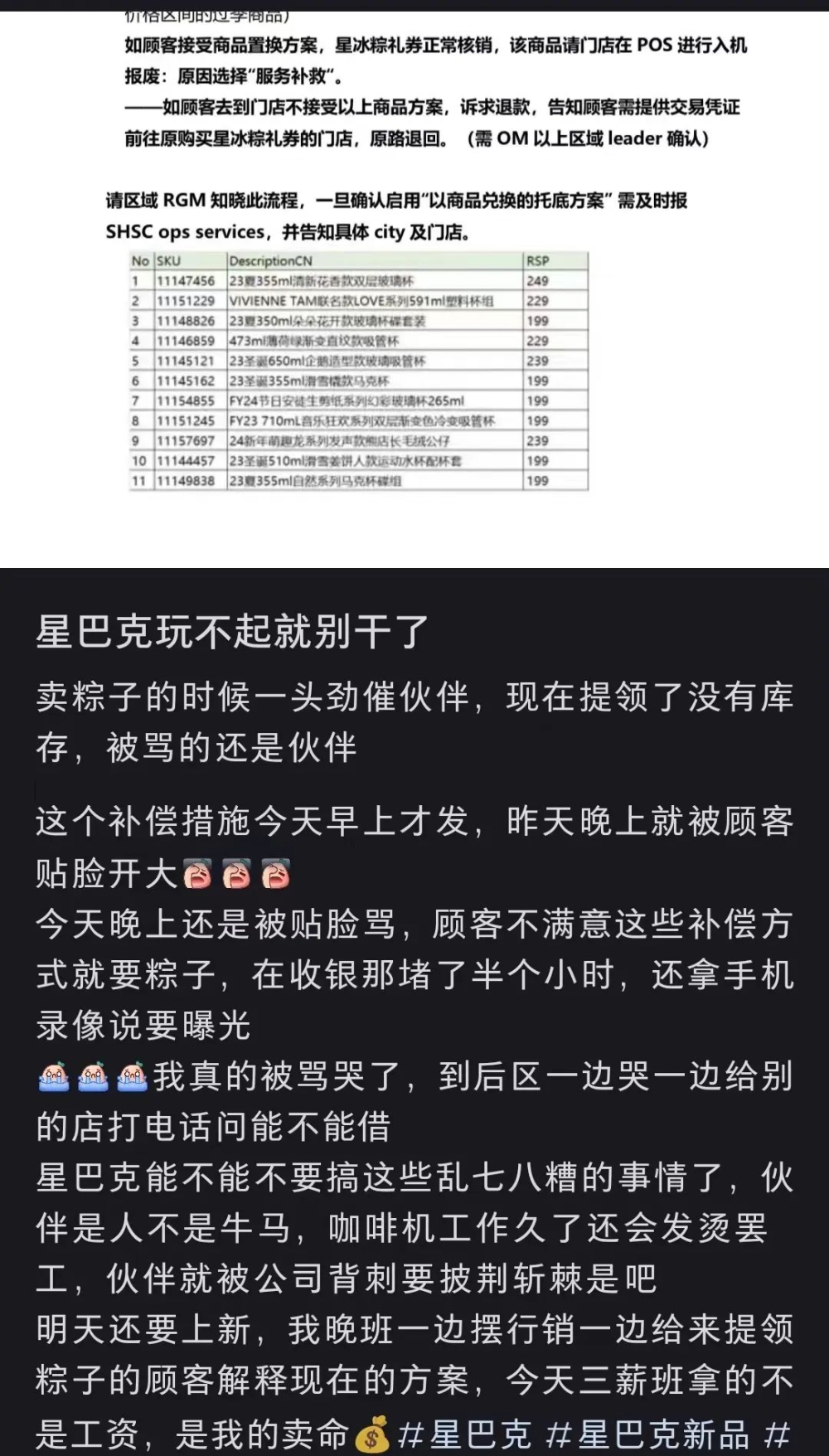
According to on-site employees, some customers became emotionally agitated when unable to redeem their Zongzi Frappuccino vouchers, not only complaining loudly but also threatening to call the police or expose the issue online. More regrettably, some employees broke down in tears under the pressure. This situation was not isolated, with similar redemption disputes reported across multiple city locations.
The core issue lies in the inventory management of seasonal products.As a Dragon Boat Festival limited-edition product, demand for Zongzi Frappuccino peaks just before the festival.However, the actual stock prepared by stores often fails to precisely match that demand. An anonymous store manager revealed that they usually estimate demand based on historical sales data, but this year’s distribution in the Jiangsu, Zhejiang, and Shanghai regions was clearly uneven.
From the consumer’s perspective, purchasing a voucher means acquiring the right to claim the product.Many customers expressed confusion: if so many vouchers were sold, why weren’t stores prepared with enough stock?Industry insiders explained that the uniqueness of seasonal products lies in their short sales cycle, and overstocking could lead to expiration losses.
It is worth noting that transferring stock between different stores also faces practical challenges. Even through internal system coordination,it is no easy task to quickly allocate a sufficient quantity of Zongzi Frappuccino across regions.Store managers in cities such as Shanghai and Ningbo mentioned that they had tried contacting nearby stores for support, but with little success.
Starbucks officially responded that it had made efforts to meet customer demands, including offering alternative solutions or negotiating resolutions. However, some consumers remained dissatisfied with such responses. Customers suggested that for unredeemable cases, the brand should provide more flexible compensation options, such as extending the redemption period or offering appropriate compensation.
This incident also provides valuable lessons for the coffee industry. For seasonal limited-edition products,stores need more scientific inventory forecasting methods and more comprehensive emergency mechanisms.For consumers, it’s best to confirm stock availability by phone before attempting to redeem, to avoid a wasted trip.
With the Mid-Autumn Festival approaching, similar mooncake voucher redemption issues may arise again. Both brands and consumers need to learn from this incident and establish a more positive interactive relationship. After all, a good customer experience is the foundation for a brand’s long-term development.
The above content is compiled by CoffeeHunters, a coffee news website.


