







Introduction:Colombia’s coffee industry is navigating between political turmoil and shifting environmental conditions. Although the total production for the 2024/25 season is expected to rebound to 12.4 million bags, challenges such as aging trees, pest infestations, and fluctuations in the international market still pose significant threats. This article provides an in-depth analysis of Colombia’s coffee-growing regions, including production trends, export prospects, variety composition, and how the security situation in Cauca department may affect future supply chains, while also highlighting the flavor profiles and selection tips for the country’s specialty coffee regions.
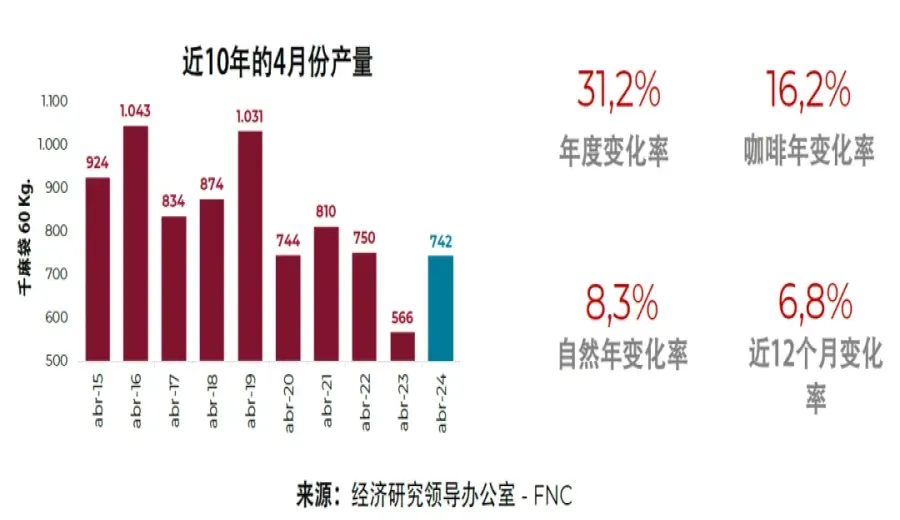
According to data from the Colombian Coffee Growers Federation (FNC), the country produced 742,000 bags (each 60 kg) of coffee in April 2024 — a sharp year-on-year increase of over 30% compared to the same period in 2023, though it showed a slight month-on-month decline of around 14.3% compared to March’s 866,000 bags. Overall, while improved weather conditions have aided coffee tree flowering, growers still face multiple challenges, including a high proportion of old varieties, recurring pest and disease issues, and volatile international coffee prices.
Notably, the southwestern department of Cauca has recently experienced a surge in violent incidents involving anti-government armed groups, including bomb attacks and shootings that have resulted in multiple casualties. These events cast a shadow over the safety of production and transportation in this important coffee-producing region. The FNC estimates that the total production for the 2024/25 season could reach 12.4 million bags, marking a slight increase of 1.6% over the previous year, with export performance also likely to recover accordingly.
In terms of exports, Colombia shipped 780,000 bags of coffee in April 2024, representing an 8% year-on-year growth, but a decline of about 22% compared to March’s 1 million bags. Due to poor weather in 2023 leading to supply shortages, the total exports for the 2023/24 season amounted to only 10.7 million bags. However, as production gradually stabilizes in the 2024/25 season, exports are projected to see a modest growth of 1.9%, potentially reaching 12 million bags.
Statistics from January to April this year show that Colombia’s cumulative coffee production reached 3.52 million bags, an 8% increase compared to the same period in 2023. Over the same period, cumulative exports totaled 2.76 million bags, reflecting an 11% year-on-year rise. This indicates that despite facing multiple challenges, the country’s coffee industry has demonstrated considerable resilience.
Currently, approximately 550,000 families in Colombia are engaged in coffee farming, cultivating across a total area of 840,000 hectares. Among these, 95% of the farming households operate on plots of 5 hectares or less, yet these smallholders contribute 60% of the national output. In terms of variety distribution, the largest planted area — 682,972 hectares — consists of newer variety-type cultivars, including Geisha and Maragogype; followed by older experimental or hybrid varieties such as Caturra and Catimor, totaling 152,950 hectares; while traditional varieties like Typica and Bourbon account for just 5,430 hectares. It is worth noting that varieties resistant to leaf rust now cover 87% of the nation’s total coffee-growing area, playing a crucial role in stabilizing both yield and quality.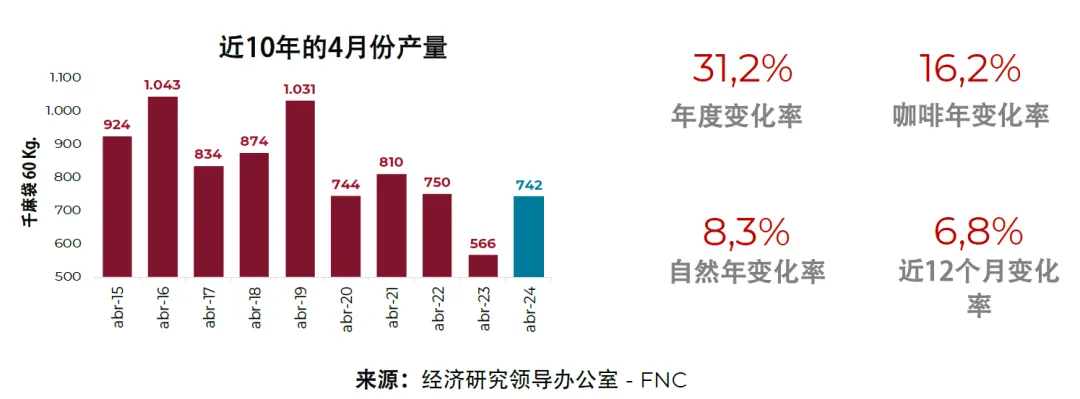
In terms of policy support, the Colombian government has signed a 10-year management agreement with the FNC and introduced the “Coffee Income Compensation Mechanism (MECIC-2024).” Its goal is to provide necessary income protection and subsidies to coffee farmers when international coffee prices are low or production costs rise, thereby maintaining industry stability.
However, the most pressing challenge currently facing Colombia’s coffee industry is the unstable domestic security situation. It has been reported that anti-government armed activities in Cauca department have intensified significantly in recent times. In addition to multiple bomb attacks and shootings that have resulted in four deaths and seven injuries, some armed groups are attempting to take control of local rural areas, giving rise to issues such as kidnappings, extortion, forced recruitment of children, and even the random placement of explosive devices — all of which severely threaten the safety of residents and farmers. In response, the government has urgently deployed 100 soldiers to the region to maintain security.
As one of Colombia’s important specialty coffee regions, any continued deterioration in the situation in Cauca will inevitably have a direct impact on local coffee harvests and the export supply chain. For consumers who enjoy pour over or specialty blends, Colombian coffee has long been known for its balanced acidity and rich fruity notes, with regions such as Huila and Cauca often regarded as classic choices for both entry-level and advanced tasting. When selecting, pay attention to roast level and brewing parameters — for pour over, it is recommended to use a water temperature of 90–93°C and a coffee-to-water ratio of 1:15 to 1:16 to fully showcase its layered flavor profile.
The above content is compiled by CoffeeHunters, a coffee news website.


