







Introduction:As the world’s leading supplier of Robusta coffee, Vietnam’s production season dynamics have a significant impact on the global market. The latest agricultural report estimates that Vietnam’s coffee output for the 2024/25 season will reach 29 million bags, but abnormal weather conditions and changes in planting structure are introducing uncertainties. This article delves into the farmer behaviors behind the production adjustments, the current state of export markets, and the potential impacts of the La Niña phenomenon, helping readers stay informed about the latest developments in key producing regions.
According to a recent assessment report published by the United States Department of Agriculture, Vietnam’s expected coffee production for the 2024/25 crop year has been slightly revised to 29 million bags (60 kg per bag), down marginally from the previous forecast of 29.1 million bags. This figure reflects the positive response of farmers increasing their input following the rise in market prices. Notably, despite being hit by high temperatures and drought in recent years, the climb in international coffee prices has provided producers with financial support, prompting them to adopt irrigation systems and intercropping practices—effectively mitigating some of the negative effects brought by the climate.
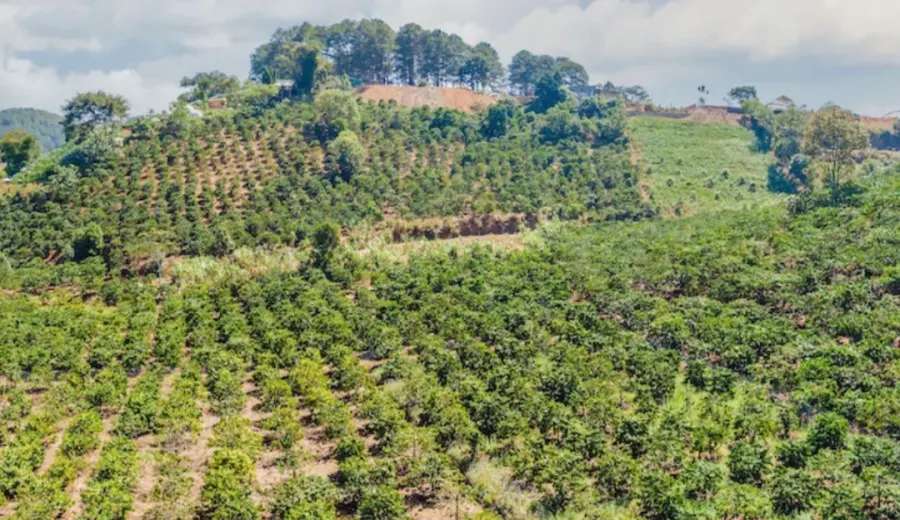
Looking at long-term trends, Vietnam’s coffee cultivation area is expected to remain stable at around 600,000 hectares. However, in traditional premium-producing regions such as the Central Highlands provinces of Đắk Lắk and Lâm Đồng, farmers are gradually shifting some coffee fields to grow higher-value crops like durian and passion fruit. Current returns from durian cultivation can be double those of coffee, and this shift is quietly transforming the local agricultural landscape.
On the export market front, Vietnam’s actual exports in the first half of the 2023/24 fiscal year totaled 15.94 million bags, a 7% decline compared to the same period in 2022/23. Major buyers include European countries such as Germany, Italy, and Spain. Based on current trade data and continuously rising coffee prices, the industry estimates the total annual exports for 2023/24 will be around 26.85 million bags. However, due to persistently high domestic coffee purchasing prices—currently ranging between 118 million and 123 million Vietnamese dong per ton—some traders are exercising greater caution when signing purchase contracts.
It is worth noting that some coffee farmers are choosing to stockpile inventory, hoping to sell when prices rise further, and past incidents of farmer contract defaults have led exporters to generally adopt a cautious stance toward signing forward contracts. They are concerned about the difficulty of maintaining a balance between high domestic purchase prices and lower international export prices, which could in turn affect overall trade stability.
Climatic factors remain a key variable affecting production. High temperatures and drought have had a visibly adverse impact on coffee production in the 2023/24 season, and the frequency of such extreme weather events is expected to increase in the future. To address these challenges, Vietnam’s local agricultural authorities and the Western Highlands Agriculture and Forestry Science Institute (WASI) have jointly formulated a series of sustainable production strategies. These include replacing old coffee trees with new, more resilient varieties, promoting intercropping to enhance shading and soil moisture retention, adopting water-saving irrigation techniques, and assisting farmers in obtaining relevant international certifications to add value to their products.
Although the USDA report is optimistic about Vietnam achieving a production volume of 29 million bags for the 2024/25 season, market participants generally hold a more reserved view. For instance, international trader Volcafe has estimated that Vietnam’s Robusta production for this year may only reach 24 million bags, marking a 13-year low. Observers point out that Vietnam’s current weather conditions remain unfavorable, and if the La Niña phenomenon occurs as expected, it could further threaten coffee yields.
Most critically, the new harvest season in Vietnam is not set to officially begin until October. Until then, the market will need to closely monitor the actual impact of climate changes on the producing regions. For industry players and consumers concerned with the global coffee supply chain, the development of Vietnam’s production season will be a key indicator influencing future market prices and supply stability.
The above content is compiled by CoffeeHunters, a coffee news website.


