








Introduction:Do you think only a V60 can brew deep-roast coffee via pour over? In the industry, when extracting dark roast beans, professionals actually prefer a classic Japanese filter cone — the KONO. With its unique rib design and slow flow rate, it perfectly highlights the richness and layered flavors of dark roast beans. This article delves into the history, model differences, and design principles of the KONO filter cone, and provides practical extraction recommendations based on testing, so you can easily master this low-key yet powerful pour over tool.
In the world of pour over coffee, the V60 is often seen as the quintessential conical filter cone. But many specialty coffee shops turn to another classic design — the KONO filter cone — when handling dark roasted beans. Born in Japan in 1925, this filter cone was crafted by the Kono family. Thanks to its special rib configuration and siphon effect, it delivers an exceptionally rich and full-bodied taste when brewing dark roast beans. However, compared to the high popularity of the V60, the KONO is relatively less known in Chinese-speaking communities. This article will take you through the complete evolution of the KONO filter cone, the differences among its main models such as the Kono Meimon and Konos series, and why it’s especially suited to the brewing logic of dark roast coffee. We’ll also share parameter suggestions tested in real-world brewing to help you better understand this extraordinary yet understated filter cone.

In fact, when serving coffee, it's not just about relying on the V60 — tools are adjusted flexibly according to the roast level of the beans. Especially when dealing with dark roast beans, they tend to opt for the KONO filter cone to achieve better flavor expression. Many coffee enthusiasts may be unfamiliar with KONO because the commonly seen filter cones are either the fast-flowing V60 or the uniquely shaped Origami. Those who actually use KONO for pour over are relatively few, which makes its advantages less widely recognized. Today, let’s explore what makes this filter cone so unique.
Speaking of KONO, it enjoys a very high reputation among Japanese coffee lovers and professionals. The brand was founded in 1925 by Mr. Akira Kono, and the name “KONO” comes from the Japanese pronunciation of the family name. Initially, KONO mainly produced siphon coffee makers, and gradually expanded into other coffee tools and bean roasting as the business grew. Given the brand’s origin in siphon maker manufacturing and its affinity for the bold flavors of dark roast coffee, the second-generation president, Mr. Toshio Kono, designed the first conical filter cone with a rib structure in 1973 — the “KONO MD-21.” It is said that Mr. Kono went through more than ten years of repeated adjustments before finally finalizing the length and depth of the ribs. The original KONO filter cone had ribs that extended nearly halfway up the cone, totaling twelve in number. Of course, improved versions were released subsequently.
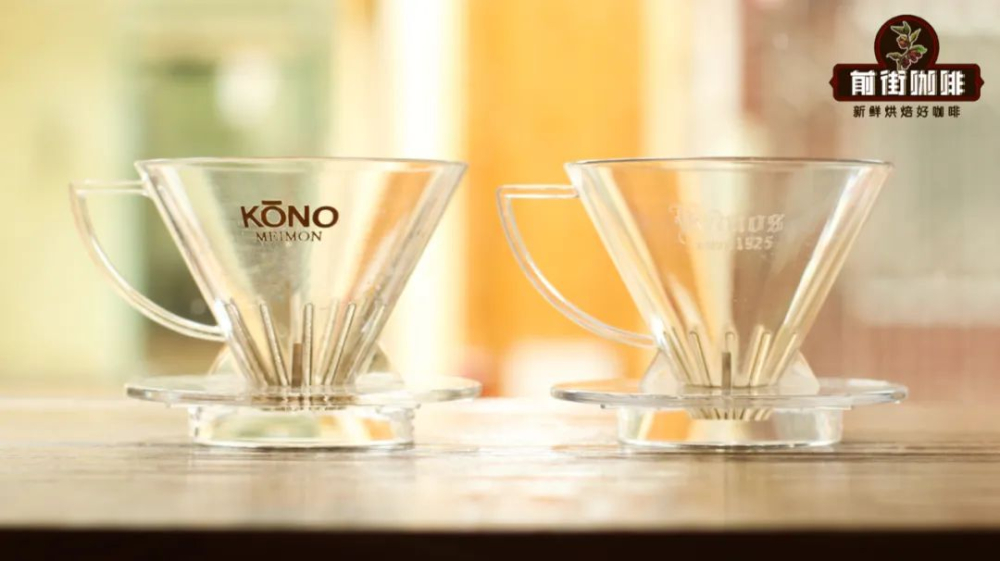
Among them, the 2010 improved version shortened the ribs to half their original length — this is the now widely praised “KONO Meimon (Kono Meimon),” model number MDN-21. By 2015, KONO launched a 90th-anniversary edition with even shorter ribs, but after that limited edition sold out, it was succeeded by the regular edition “Konos since1925,” model number MDK-21. (Note: Konos is an early name used by the KONO brand.)
These three filter cones are extremely similar in appearance, so many users often get confused between models and numbers. Simply put, the most popular ones on the market right now are the Meimon (Kono Meimon) and Konos, both of which have shorter ribs and relatively smaller drip holes. In terms of flow rate from fastest to slowest, it goes: MD-21 (original) > MDN-21 (Meimon) > MDK-21 (Konos since1925). But regardless of the version, the upper part of the filter cone has no ribs, allowing the filter paper to fit tightly against the cone wall. This design creates a sealed space where the upper coffee grounds and hot water mix, effectively preventing bypass water but also limiting air circulation.
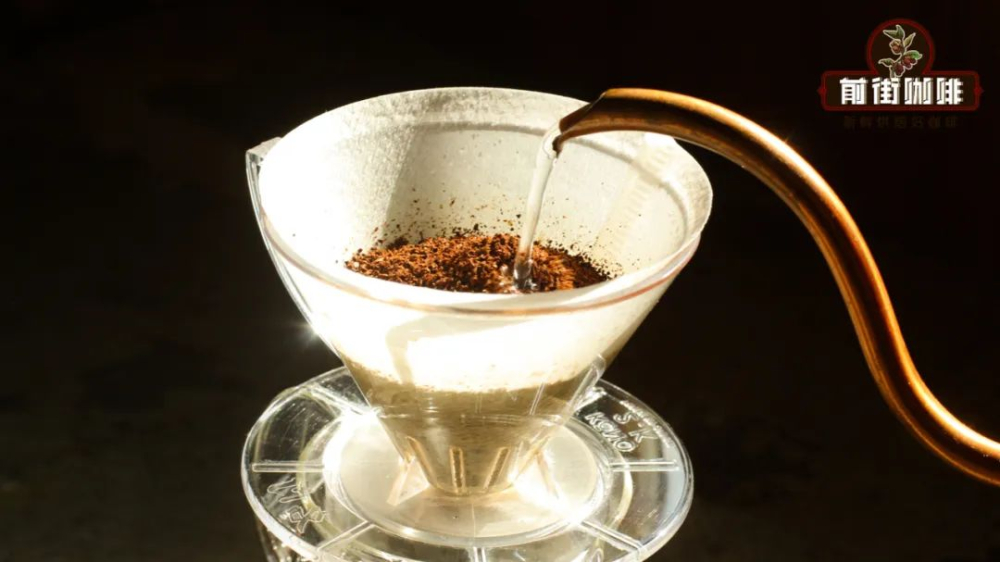
During coffee extraction, as coffee liquid flows out through the filter holes, it draws away some of the air that should otherwise percolate downward, creating a negative pressure zone in the lower part of the filter cone. At this point, the area above the coffee grounds generates positive pressure due to the mixture of hot water and air. The difference between these positive and negative pressures causes the liquid to be “sucked” out of the filter cone. This unique extraction mechanism, inspired by the principles of the siphon pot, was infused into the KONO by Mr. Toshio Kono. Interestingly, many users do not pre-wet the filter paper during the blooming stage to maintain smooth gas release from the coffee grounds. Over time, as the weight of the coffee grounds and liquid presses the filter paper against the cone wall, it becomes almost fully sealed by the time actual brewing begins, making the whole process smooth and natural.
So, what kind of coffee beans is the KONO filter cone suitable for brewing? The answer is: particularly well-suited for dark roast beans. Due to the slower flow rate of the KONO series, it provides more ample extraction time, which is especially important for dark roast coffee. To fully bring out the rich mouthfeel and long aftertaste of dark roast beans, a more complete extraction is needed. But because dark roast beans are less dense and release substances more easily, using the same parameters as for light roast can easily lead to over-extraction. Therefore, it’s recommended to use a coarser grind to avoid over-extraction.
However, while a coarse grind reduces the amount of extraction per unit time, it also increases the gaps through which water can pass, leading to faster drainage. This is where the slow flow rate advantage of the KONO filter cone comes into play — it extends the extraction time, allowing the coarsely ground dark roast coffee to be more thoroughly soaked and to release its flavors, resulting in a richer taste and aroma. Of course, extending the extraction time also means overall extraction efficiency increases, so it’s advised to adjust the water temperature downward to balance the flavors. Practical experience suggests using a 1:15 coffee-to-water ratio, with water temperature controlled between 88°C and 90°C, paired with an Ek43 grinder using a coarse grind size (75% passing through a 20-mesh sieve), brewed with a three-pour method. For 15 grams of coffee, the total brew time is around 2 minutes.
Using the above extraction method not only improves fault tolerance but also consistently yields a balanced, rich, and long-aftertasting cup of dark roast pour over coffee. But be especially mindful: since dark roast beans become structurally more fragile during roasting, grinding can produce a lot of fine particles. Therefore, during actual brewing, avoid using high water flow or rapid circular pouring, and reduce the frequency and intensity of stirring to prevent excessive clogging of the filter holes, which could cause loss of control over brew time and the release of too many bitter and astringent compounds, thereby disrupting the overall flavor balance — trust us, that would be seriously “bitter and harsh”!
The above content is compiled by CoffeeHunters, a coffee news website.


