







Introduction:Although Cuba is not a mainstream specialty coffee origin, its unique geographical environment and rigorous grading system have nurtured representative coffee quality. This article provides an in-depth analysis of Cuba’s three major coffee-growing regions, the characteristics of its primary coffee varieties, and the nine-tier grading standard from “Crystal Mountain” to “peaberry,” giving you a comprehensive understanding of this Caribbean island nation’s coffee characteristics and flavor profile.
The Caribbean region is not only famous for its enchanting scenery but also home to several islands with potential for coffee cultivation, among which Cuba is one of the most representative producing countries. This island nation, referred to by the indigenous Taíno people as the “land of fertility,” boasts a tropical savanna climate, abundant rainfall, and fertile volcanic soil. At elevations between 1,000 and 1,900 meters, the slopes and valleys nurture coffee with a distinctive flavor. The main variety grown in Cuba is Typica, along with others such as Bourbon, Caturra, and Catimor. The harvest season runs from September to March of the following year. Among them, Crystal Mountain coffee has garnered widespread attention due to its flavor profile being close to that of Jamaican Blue Mountain, especially being regarded as a symbol of top-tier quality in the Japanese market.
When it comes to renowned island coffees, many people first think of Jamaican Blue Mountain or Hawaiian Kona. However, the entire Caribbean Sea region is dotted with numerous islands suitable for coffee cultivation, including Cuba, Haiti, and the Dominican Republic, all of which possess ideal soil and climatic conditions, creating a diverse coffee production landscape in the area.
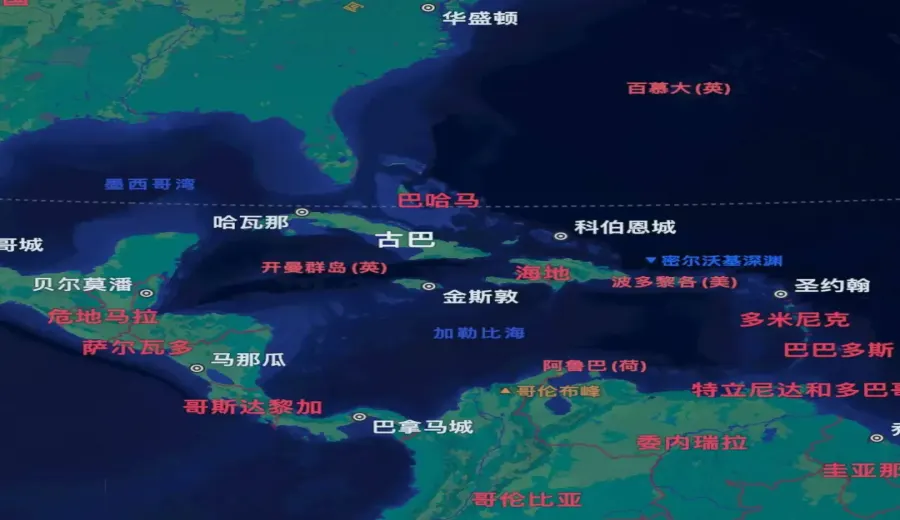
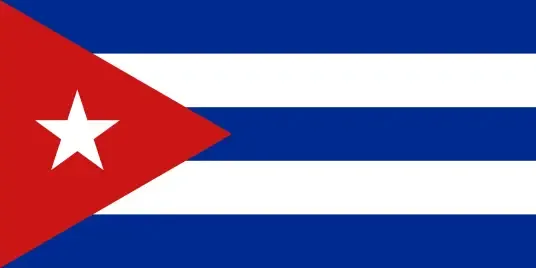
The name of the Republic of Cuba (The Republic of Cuba) originates from the Taíno word “coabana,” meaning “fertile land.” Geographically, Cuba is located in the northwestern part of the Caribbean in North America, directly facing the entrance to the Gulf of Mexico. It borders the Straits of Florida to the north, the Caribbean Sea to the south, is about 140 kilometers from Jamaica, faces the Gulf of Mexico to the west, and lies approximately 210 kilometers from Mexico. The country covers a total area of 109,900 square kilometers. The Cuban national flag is rich in historical significance, featuring a white five-pointed star in the center of a red equilateral triangle on the left, symbolizing freedom, equality, and patriotism. On the right, three wide blue stripes and two wide white stripes are arranged in parallel—the blue representing the historically divided eastern, central, and western provinces of Cuba, while the white signifies the pure conviction during the independence war.
Cuba consists of the main island of Cuba, the Isle of Youth, and more than 1,600 smaller islands, making it the largest island country in the West Indies. The country experiences frequent volcanic activity, and its terrain includes vast plains, highland mountains, and hilly swamps. The highest peak in the country, Pico Turquino, reaches an elevation of 1,974 meters. Plains account for 75% of the national territory, plateaus and mountains for 18%, and the remaining 7% comprises western hills and swamps. Cuba has a tropical savanna climate, distinctly divided into a dry season (November to April) and a rainy season (May to October). The average annual temperature is around 25°C, with most areas receiving over 1,000 millimeters of rainfall annually. Coupled with fertile soil, these conditions provide an exceptionally favorable natural environment for coffee cultivation.
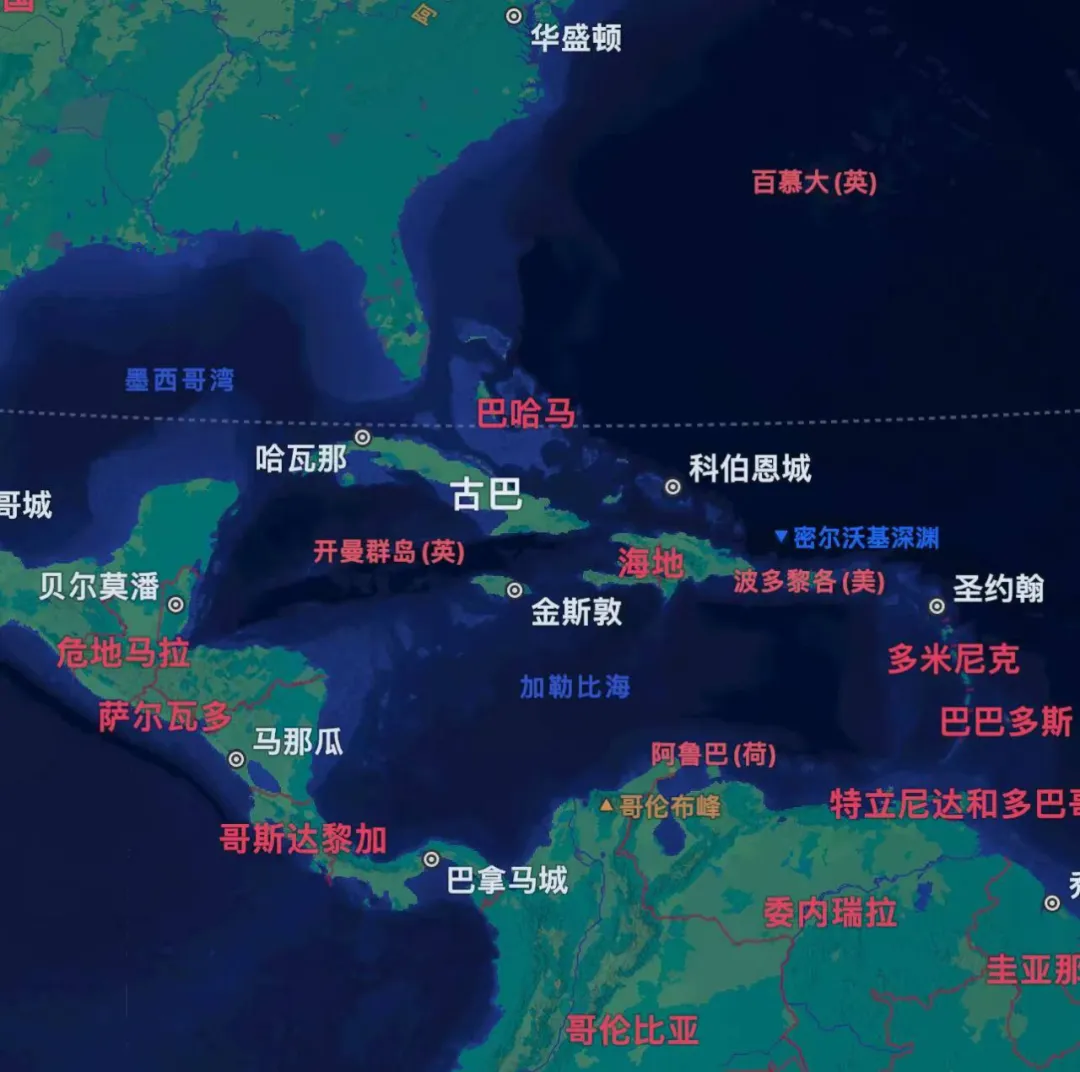
Cuba’s coffee-growing regions can be divided into three main blocks, all situated on slopes and in valleys at elevations between 1,000 and 1,900 meters. The eastern region is dominated by Santiago de Cuba and Granma; the central region includes Villa Clara, Sancti Spíritus, and Cienfuegos; and the western region is most notably represented by Pinar del Río. The main cultivated variety in Cuba is Typica, alongside other varieties such as Bourbon, Caturra, and Catimor. The harvest season spans each autumn through spring.
Among the many Cuban coffees, none is more celebrated than Crystal Mountain coffee. Its flavor profile is similar to that of Jamaican Blue Mountain, hence it is often affectionately called the “Cuban Blue Mountain.” In fact, Cuba’s highest-quality coffee farms are located in the central mountainous region, an area not only rich in coffee production but also abundant in underground quartz and crystal mineral resources—hence the name “Crystal Mountain.” Situated at elevations between 900 and 1,200 meters in northeastern Cuba, Crystal Mountain stands alongside the southeastern Sierra Maestra and the central-southern Sierra Escambray as one of Cuba’s three premier specialty coffee-producing areas. It is worth noting that not all “Crystal Mountain coffee” on the market necessarily originates from this mountainous region—some may come from the other two major regions. The widespread use of the name is primarily related to export markets, especially the preference of Japanese consumers, who collectively refer to this high-quality Cuban coffee as “Crystal Mountain coffee” and regard it as a top-tier choice. This naming convention has continued to this day.
The Cuban Coffee Association classifies coffee beans into nine grades based on bean size and flavor performance, from premium to entry-level, in the following order: Crystal Mountain, Extra Turquino, Turquino, Altura, Montana, Cumbre, Serrano Superior, Serrano Corriente, and Caracolillo. Additionally, regional coffee beans can also be categorized by bean size into three classes: ETL (extra), TL (top), and AL (average). Notably, the most representative high-quality large coffee beans in Cuba come from the carefully selected beans of the Crystal Mountain region. These beans are not only notably large in size but also deliver the most outstanding flavor performance, standing as the pinnacle of Cuba’s coffee grading system.
The above content is compiled by CoffeeHunters, a coffee news website.


