







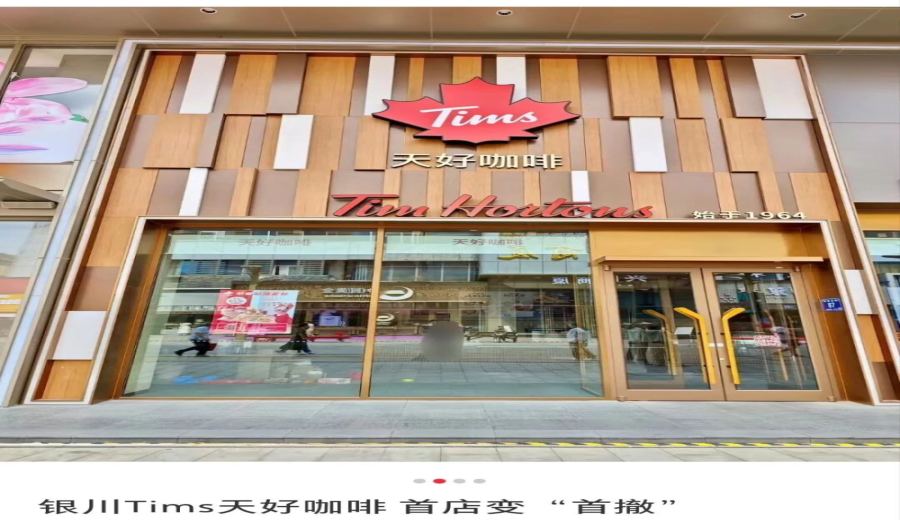
Introduction:Tims has gained recognition in China with its signature bagel breakfasts, but recently it has been facing a wave of store closures across multiple cities — including its first location in Yinchuan, which had been open for less than a year. This article takes an in-depth look at Tims’ expansion challenges in the Chinese market, examining factors such as competitive environment, rental costs, and brand positioning. It explores how the brand is managing the tension between its goal of reaching 1,000 stores and the harsh realities it faces on the ground, while providing practical insights to help readers understand the current state of chain coffee brand operations.
Tims has made a name for itself with its iconic bagel breakfasts. Many people remember it not for its coffee, but for those soft, flavorful bagels that melt in your mouth. Yet this popular chain has recently been hit by a wave of store closures, drawing attention from the market. Notably, the store located in Yinchuan’s New Bai Center — the brand’s first outlet in the city and its 700th nationwide — quietly shut down after operating for less than a year, leaving many local customers disappointed.
It is understood that this Tims store in Yinchuan’s New Bai Center officially opened on June 18, 2023, even earlier than the mall itself, aiming to claim the spotlight as the “first store.” In its early days, thanks to its prominent location and the novelty of being the first Tims in town, the store attracted a fair number of customers. However, surprisingly, in less than a year, it announced its closure, becoming the first Tims outlet to pull out of Yinchuan.
Many loyal customers expressed their disappointment. Some commented: “This store was pretty good, why did it just close? They even hired deaf employees,” “I used to stop by for a bagel and some air conditioning after walking around Xinhua Street, how come it’s gone?” “Such a nice store closed too, my bagels,” “The service at the New Bai Center store was really great, I always ordered takeout from them.” These comments reflect customers’ appreciation for the store’s service and products, but also highlight the challenges the brand faces in operating in certain regions.
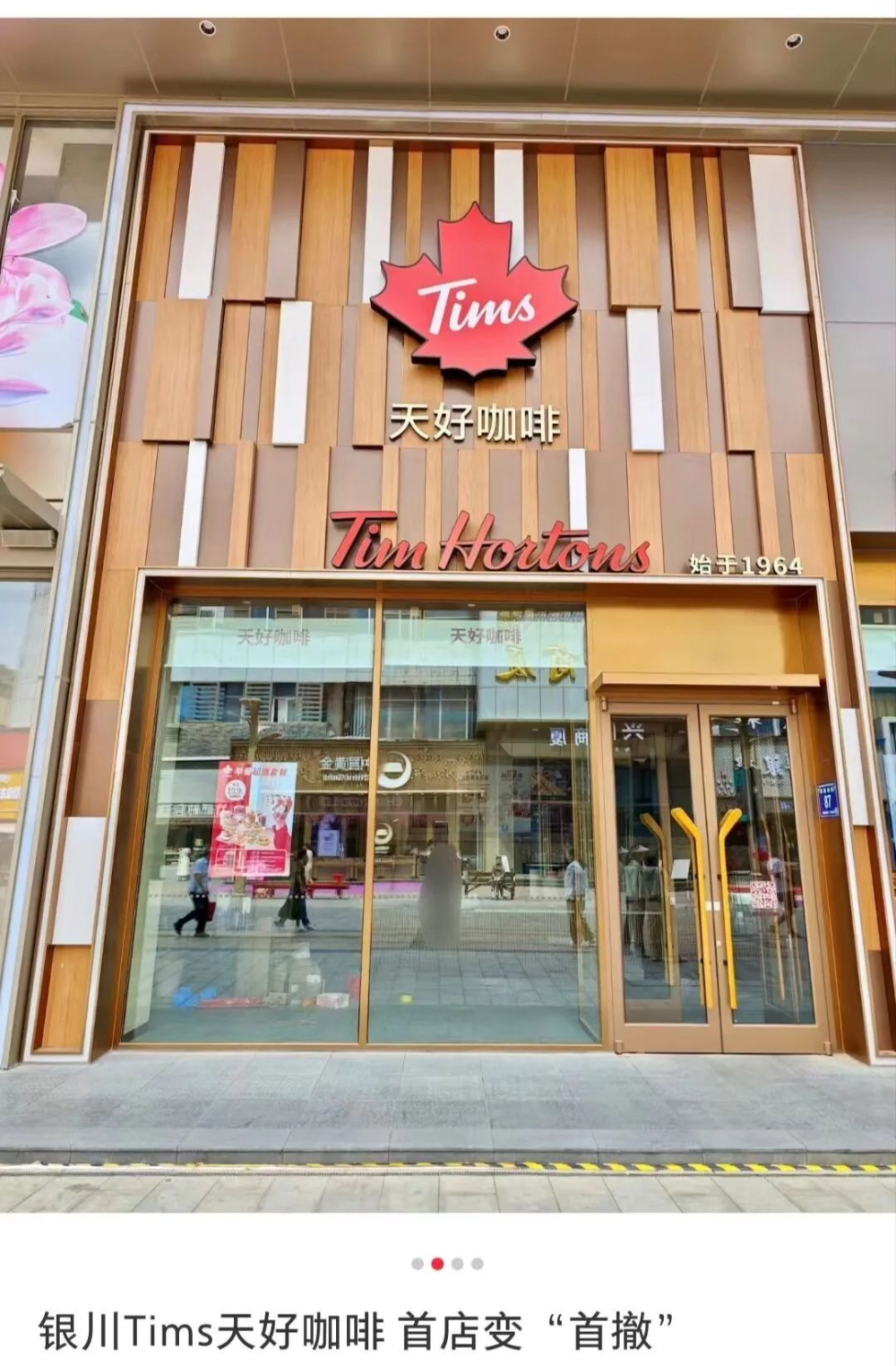
A closer look at the reasons behind the closure of Tims’ first Yinchuan store reveals an extremely competitive environment. The New Bai Center commercial area is densely packed with competitors — not only three Luckin Coffee outlets and two Starbucks, but also one Cotti Coffee, forming a highly competitive cluster. For price-sensitive consumers, Luckin and Cotti stand out for their affordability, making them top choices; while customers seeking a branded atmosphere and premium service often prefer Starbucks. In comparison, Tims’ positioning seems somewhat awkward, relying mainly on distinctive food items like bagels and farmer’s wraps to maintain its appeal.
Additionally, the store is situated in a prime, high-rent location within the mall, and the operational cost pressure is considerable. With revenue unable to effectively cover rent and daily operational expenses, coupled with possible impacts from the mall’s broader strategic adjustments, the brand ultimately decided to cease operations at this location.
Notably, Tims’ recent closures are not limited to Yinchuan. In first-tier and emerging first-tier cities such as Beijing, Shanghai, Nanjing, and Dalian, there have also been reports of multiple store shutdowns, indicating that the issues it faces are somewhat widespread.
According to Tims’ full-year 2023 financial report, the total number of stores under the brand and its fried chicken brand Popeyes reached 912, even surpassing the 1,000-store milestone in early 2024, showing some momentum in expansion. However, data from the Zhaomen Canyan platform shows that as of April 2024, Tims actually has 885 stores in China, with growth noticeably slowing compared to the past. There has even been a near balance between new openings and closures, with the store closure rate reaching16.84%in the past four months, almost hitting a “one open, one close” rhythm.
Although Tims has attempted to maintain market coverage and store count growth through a partnership with Sinopec’s Easy Joy, launching the lower-cost Tims Express in-store model, the overall economic slowdown and increasingly fierce competition in the coffee market mean that Tims faces significant pressure in achieving its previously set goal of 1,000 stores. Striking a balance between brand positioning, product differentiation, and cost control will be key to the brand’s stable future expansion.
In summary, the closure of Tims’ first Yinchuan store is not just an isolated incident of a single outlet, but reflects the strategic adjustments and market adaptation challenges the brand is facing during its expansion in the Chinese market. For consumers, it also serves as a reminder that when choosing a coffee brand, in addition to the product itself, the brand’s operational capability and market strategy are equally worthy of attention.

The above content is compiled by CoffeeHunters, a coffee news website.


