







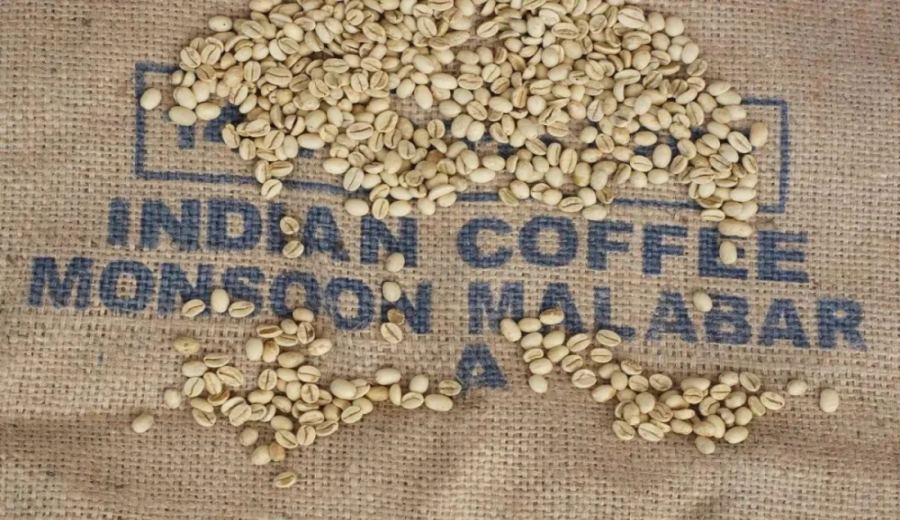
Introduction:India is not only one of the world’s key coffee-producing countries but also the birthplace of both Robusta and specialty monsooned coffee. From the high-altitude mountainous regions in the south to the monsoon-prone areas on the west coast, the diverse microclimates and farming practices across different states give rise to a wide variety of coffee flavors. This article will delve into the characteristics of India’s four major coffee-growing regions, the dominant coffee varieties planted, and how local farmers enhance their income through spice intercropping—unlocking the secrets behind India’s coffee cultivation and flavor profiles.
As an important gateway for coffee entering Asia, India has played a pivotal role in the history of coffee cultivation. Not only is it renowned for its high-yield Robusta production, but it also gave birth to the unique Monsooned Malabar process, with production volumes consistently ranking among the top in the world. This article will take readers on a deep dive into India’s main coffee-growing regions, geographic and climatic background, as well as the diverse varieties cultivated locally, thereby revealing the key factors that have enabled Indian coffee to establish itself in the international market.
Located on the South Asian subcontinent, India is the largest country in the region, boasting a rich natural environment and diverse climates. It borders the Bay of Bengal to the east and the Arabian Sea to the west, and shares borders with countries such as China, Nepal, and Pakistan. Its terrain includes high mountains, plains, and plateaus. Overall, most parts of India experience a tropical monsoon climate, with the rainy season concentrated between June and October, the dry season from March to May, and the cool season from November to February of the following year, providing varied conditions for agricultural production.
Coffee cultivation in India is primarily concentrated in four southern states: Tamil Nadu, Karnataka, Kerala, and Andhra Pradesh. Each state, due to differences in geography and altitude, has developed its own unique planting characteristics. Generally speaking, the main coffee harvest season runs from October to February each year, with cultivars mainly consisting of Arabica and Robusta, where Robusta accounts for over 70% of the national output.
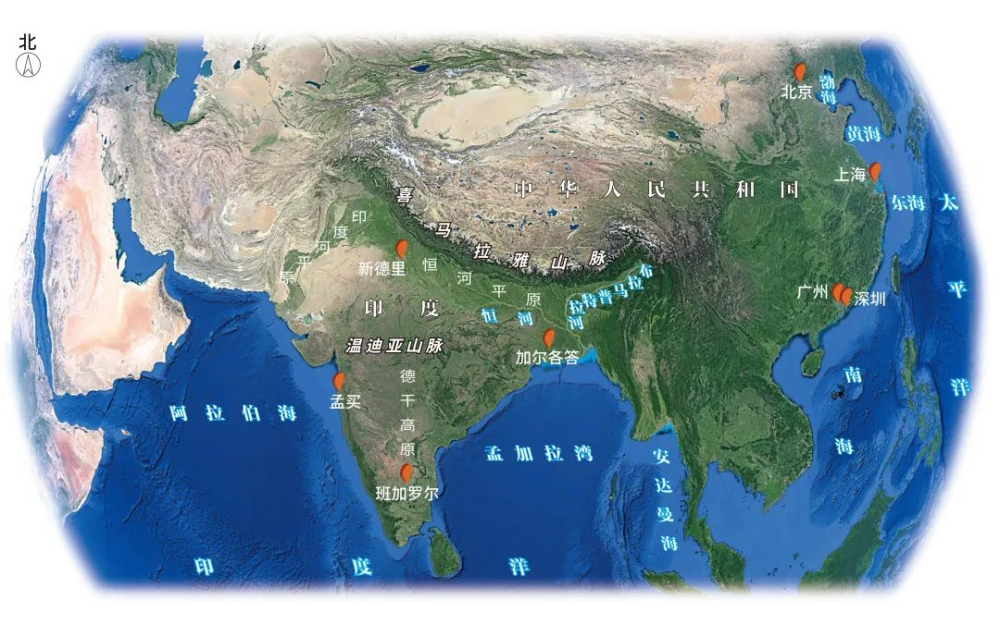
Tamil Nadu is located at the southernmost tip of India and is known for its magnificent Hindu temples and biodiversity. The region’s coffee is primarily grown in mountainous areas such as Pulney, Nilgiri, and Shevaroy, at altitudes ranging from 600 to 2,000 meters, classifying it as a high-altitude cultivation zone that is conducive to producing coffee with complex flavors. The microclimate and sloped terrain of this area allow coffee trees to grow steadily under moderate sunlight and humidity.
Karnataka is the highest-producing coffee state in India, located in the southwest and endowed with abundant natural resources and a variety of crops. The Bababudangiri region is widely regarded as the birthplace of coffee cultivation in India. Surrounding sub-regions such as Chikmagalur, Coorg, and Manjarabad typically grow coffee at elevations of about 700 to 1,500 meters, where the cool climate and fertile soil provide ideal growing conditions for both Arabica and some Robusta varieties.
Kerala, also located in southwestern India, is home to the famous Malabar Coast and serves as an important producer of Monsooned Malabar coffee. The region exhibits distinct monsoon climate characteristics. During the post-harvest processing stage, the influence of oceanic monsoons leads to unique dehydration and flavor transformations in the coffee beans, resulting in the distinctive monsooned flavor profile. Sub-regions such as Travancore and Wayanad feature planting altitudes between 400 and 1,600 meters. While Robusta dominates, Arabica can also be found in higher-altitude areas.
Andhra Pradesh has a relatively smaller scale of coffee cultivation but boasts a unique geographical location. The Eastern Ghats stretch along India’s eastern coast, providing favorable altitude conditions. Most of the coffee grown here is Arabica, at elevations of around 900 to 1,100 meters. Although limited in planting area, the region’s terroir remains suitable for the cultivation of specialty coffee.
Compared to other renowned coffee-growing regions, India’s coffee cultivation environment has its own particularities: the climate is generally hot, certain areas are not very high in altitude, and the air humidity is relatively high. As a result, Robusta becomes the dominant variety due to its strong adaptability to the environment and high per-unit yield. Commonly cultivated varieties include Kent, Catimor, S795, and S274. Among them, S795 is an Indian-bred Arabica cultivar known for its disease resistance and good flavor performance. To increase income, many farmers adopt spice intercropping models—for instance, mixing high-value spice crops such as cardamom, cinnamon, and cloves within coffee plantations. This not only improves land utilization but also provides additional benefits to the coffee-growing environment through the shade and aroma of the spices.
The above content is compiled by CoffeeHunters, a coffee news website.


