








Introduction:The quality of espresso isn’t something you can judge solely by taste — in fact, many issues can be detected early through visual cues during extraction. This article will teach you how to determine whether an extraction is proceeding normally by observing the flow time, color changes, and speed of the coffee liquid. It also provides a detailed explanation of pre-extraction equipment checks, common abnormalities, their causes, and how to adjust them, helping you precisely control the quality of every shot of espresso.
Although the flavor of espresso is ultimately judged by the palate, in practice, we can often detect potential problems early from visual signals during extraction. Learning to observe the operation of the espresso machine and the behavior of the coffee as it flows out can effectively help avoid many common extraction mistakes, thereby improving the quality of each shot. This article begins with pre-extraction equipment preparation, then analyzes the characteristics of normal and abnormal extractions based on actual liquid output, and offers specific adjustment suggestions.

Many people believe that as long as the final drink tastes good, the process doesn’t matter. But in reality, various details during extraction — such as water temperature, pressure, grind size, and dose distribution — directly affect the final outcome of the coffee. If you can identify issues during extraction itself, you can greatly reduce failure rates and avoid drinking espresso with poor flavor.
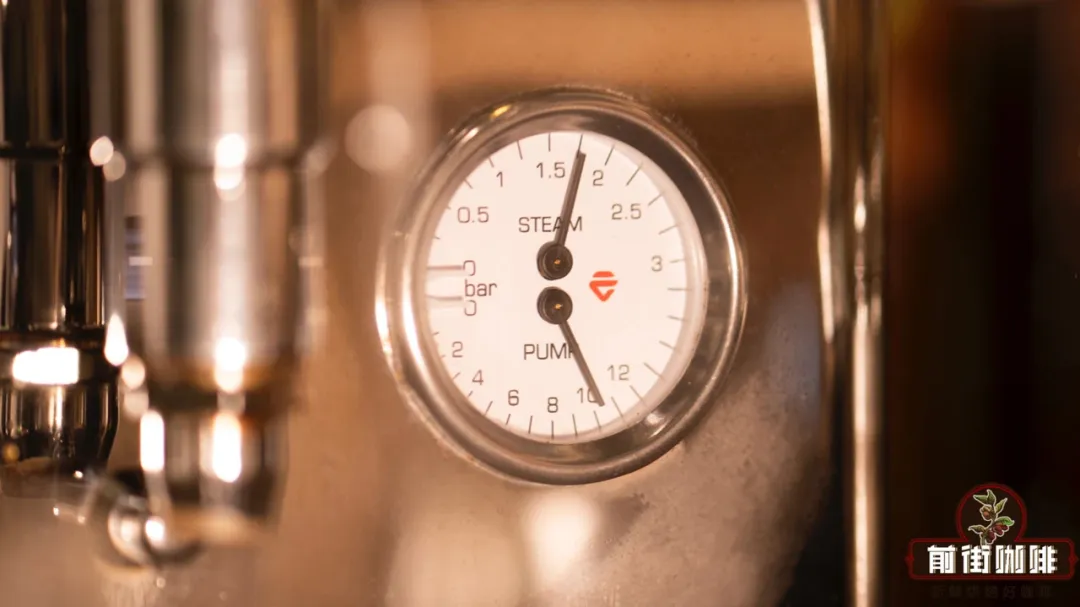
Before starting extraction, there are some key preparatory steps that are often overlooked, the most important being to confirm that the espresso machine’s water temperature and pressure have reached standard ranges. Many baristas or hobbyists tend to adjust extraction right after turning the machine on, when it hasn’t fully warmed up or stabilized. This can easily lead to insufficient water temperature or pressure, causing incomplete extraction and resulting in overly sharp acidity or bland taste. Therefore, it is recommended to allow the machine to preheat to a stable state before each extraction, and ensure the extraction pressure is around 9 bar, with water temperature generally controlled between 90–96°C — the ideal extraction range for most medium to dark roasted coffee beans.
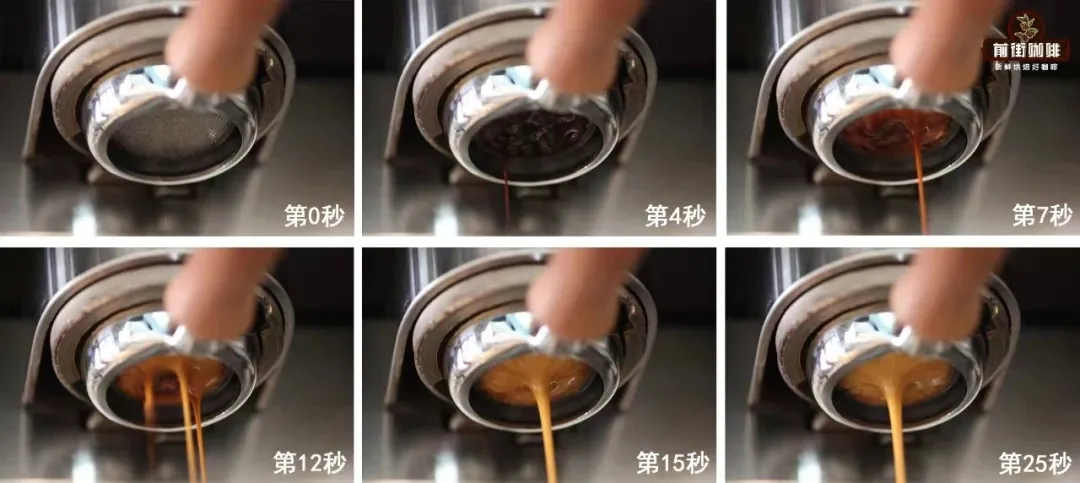
Next, let’s look at what the coffee liquid should look like during a normal espresso extraction. Taking a standard double shot as an example, when you press the extraction button, you’ll typically see the first drop of coffee liquid emerge only after 5 to 6 seconds . At this point, the liquid is dark in color, presenting a rich deep brown, and the flow rate is slow with relatively thick consistency. As extraction progresses, around about 12 seconds, the flow rate will gradually increase, entering a relatively stable phase. The coffee liquid will also change to a lighter brown-yellow color, with the stream appearing smooth and fine, resembling the texture of milk foam — this indicates that extraction is going well and flavor compounds are being evenly released.
By around approximately 20 seconds, the coffee liquid will become even lighter, taking on a bright golden yellow hue. Although the flow remains stable, the thick consistency noticeably diminishes, signaling that extraction is gradually coming to an end. Once you notice the liquid becoming too pale — for example, approaching a light yellow — you should stop the extraction immediately to avoid extracting excessive undesirable compounds that could negatively impact the overall taste.
However, if the extraction does not follow the sequence and characteristics described above, it may indicate an abnormality. Below are several common types of extraction issues and their possible causes:
1. Delayed Liquid Output
If no first drop of coffee liquid appears within 10 seconds after pressing the extraction button without pre-infusion, this is usually due to the grind being too fine, causing the coffee puck to become overly compact with excessive resistance, making it difficult for hot water to penetrate. This situation not only prolongs extraction time but may also lead to over-extraction, resulting in bitter and astringent flavors. If you encounter this problem, stop the extraction immediately and try adjusting the grind to a coarser setting, then test again. Conversely, if the flow is too fast, it may be due to the grind being too coarse or insufficient coffee dose — consider adjusting the grind to a finer setting or slightly increasing the amount of coffee used.
2. Unstable Flow Rate
Another common issue is when the coffee liquid flows out at inconsistent speeds — sometimes fast, sometimes slow — or even spurts out irregularly, resembling a ‘waterspout’ effect. This is typically caused by uneven distribution of coffee grounds, leading to channeling where water finds the path of least resistance and fails to extract all the coffee grounds evenly. To resolve this, recheck the distribution process to ensure the coffee is evenly spread in the portafilter basket, and maintain consistent tamping pressure to avoid localized over- or under-compaction, thereby improving flow stability and extraction uniformity.
In summary, observing the output state of espresso is a practical skill that helps you identify issues in real-time during extraction and make appropriate adjustments. Whether it’s delayed output, unstable flow, or unusual color changes, each has its possible causes and corresponding solutions. Through continuous observation and practice, you’ll be able to approach each extraction with more confidence and improve the overall quality and consistency of your coffee.
The above content is compiled by CoffeeHunters, a coffee news website.


