








Introduction:The results of the 2024 Mexico Cup of Excellence (CoE) competition have just been announced. This year, the event was divided into three major categories based on processing methods for the first time. Not only were classic varieties such as Geisha and Bourbon featured, but several specialty varieties with disease resistance and high-yield potential also stood out. This article takes an in-depth look at the award-winning varieties Obata, Marsellesa, and Oro Azteca, analyzing their breeding backgrounds, botanical characteristics, and cultivation advantages. It also explains the grouping mechanism and judging criteria of this edition’s competition, helping readers grasp the latest trends in global specialty coffee.
The Cup of Excellence (abbreviated as CoE) is a highly authoritative competition platform in the global specialty coffee field and was the first competition to auction award-winning coffees online. Established in 1999 by the Alliance for Coffee Excellence (ACE), it is held annually in different producing countries and invites outstanding farms from around the world to participate. The competition determines scores through blind cupping, and those scoring 87 points or above are selected as CoE award-winning beans and enter international auctions. For participating farms, it is not only a certification of quality but also a way to gain tangible profits through auctions.
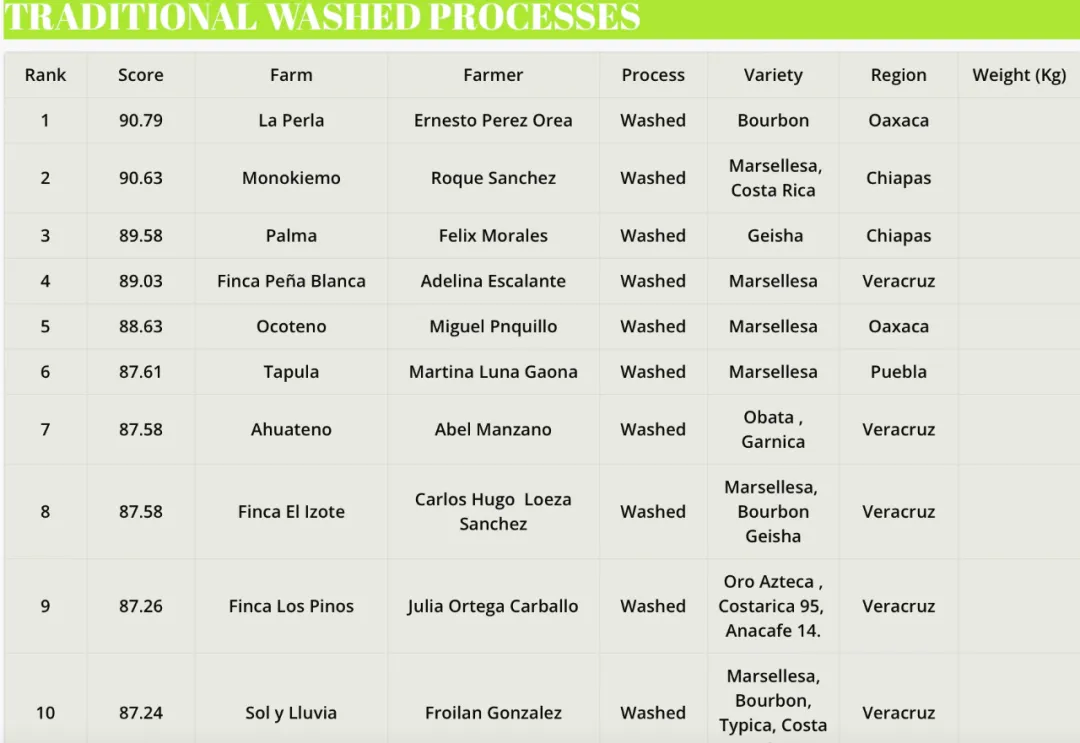
The results of the 2024 Mexico COE competition were recently announced. The biggest highlight of this edition is the introduction of a three-category grouping system based on processing methods for the first time. These include the 'Traditional Washed Processes' group, the 'Traditional Honey & Natural' group, and the 'Experimental Category' group. Each category is rigorously scored by a professional jury based on cupping flavor performance, with up to 10 CoE award-winning beans selected per group, all scoring no less than 87 points. Each group will also crown one overall champion.
Among the many selected varieties, in addition to well-known classic ones like Geisha, Bourbon, and Typica, several relatively rare yet highly promising varieties also stood out, including Obata, Marsellesa, and Oro Azteca. These three varieties not only demonstrated outstanding flavors in cupping but also showed practical value in production due to their disease resistance and adaptability to different altitudes and soil conditions.

First is Obata, a variety bred by the Agronomic Institute of Campinas (IAC) in São Paulo State, Brazil. Its parentage comes from a cross between the Timor hybrid and Villa Sarchi. Obata produces red-colored cherries and relatively large beans. The plant is short in stature, making it suitable for high-density planting, resulting in excellent yield per unit area. This variety thrives at medium altitudes, around 1,000 to 1,400 meters, and is most notable for its high resistance to coffee leaf rust, making it an ideal choice for stable production in regions frequently affected by disease.
Next is Marsellesa, which also originates from a cross between the Timor hybrid and Villa Sarchi. It was selectively bred by the CIRAD-ECOM institution in Nicaragua with a focus on group resistance to coffee leaf rust. Marsellesa produces red cherries and has uniformly shaped beans. The plant is also of short stature and is suitable for planting in mid-altitude environments, offering high-yield potential. In terms of cupping performance, it exhibits relatively bright acidity and a complex flavor profile. However, it is worth noting that this variety has weaker resistance to nematodes, so enhanced soil management and pest control are required during cultivation.
The third noteworthy variety is Oro Azteca, successfully bred between 1996 and 1997 by Mexico’s National Institute of Forestry, Agriculture and Livestock Research (INIFAP). It is Mexico’s first disease-resistant coffee variety with independent intellectual property rights. This variety belongs to the Catimor group and is a cross between the Timor hybrid and Caturra. Oro Azteca has a compact tree structure, with tightly clustered fruit and uniformly shaped beans, delivering strong yield performance. It is particularly suitable for planting in acidic soils and lower-altitude regions. Although this variety is somewhat sensitive to coffee berry disease, it shows good resistance to coffee leaf rust, making it a practical variety suitable for promotion in many parts of Mexico.
This edition of the Mexico COE competition, through its grouped evaluations, more precisely highlights the flavor differences presented by various processing methods and varieties. Whether it’s the clean profile of traditional washed, the sweet intensity of honey and natural processes, or the innovative flavor explorations in the experimental category, both judges and consumers can witness the diverse potential of coffee. For coffee enthusiasts, understanding the characteristics of these award-winning varieties helps make more informed purchasing decisions and allows for a deeper appreciation of the agricultural wisdom and technical accumulation behind each producing region.
The above content is compiled by CoffeeHunters, a coffee news website.


