







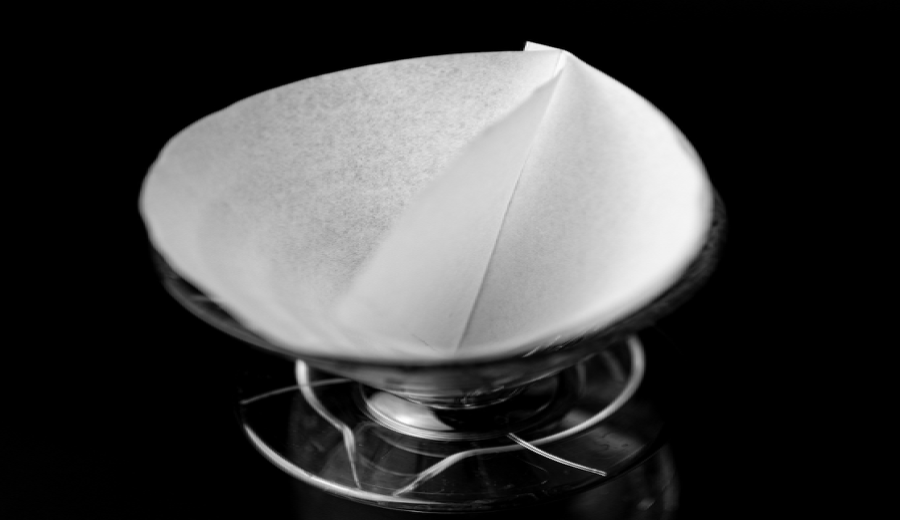
Introduction:Want to experience the flavors of two different beans in a single pour over? The dual-chamber paper filter introduced by Spanish accessories brand Sibarist allows you to brew two distinct coffees in the same dripper without pre-blending. This specially designed hollow filter separates the two types of coffee grounds, enabling you to adjust brewing variables such as grind size or bean variety to create unique and versatile flavor profiles. However, the nearly 8 RMB price tag per filter has sparked considerable discussion. This article will detail how to use this innovative tool, the potential flavor effects it offers, and practical recommendations.
Traditional pour over blending usually involves mixing different beans together beforehand, then grinding and brewing them as a single batch. But Spanish accessories manufacturer Sibarist breaks the mold with an innovatively structured dual-chamber filter that lets pour over enthusiasts extract two different beans simultaneously, resulting in a completely new taste experience.
The design of this filter resembles the common Hario v60, but its most distinctive feature is a sturdy paper partition running down the center when unfolded, dividing the filter into two independent chambers on the left and right. Each chamber can be filled with different coffee varieties, proportions, or even grind sizes, enabling a novel “single-drip, dual-extraction” pour over method.
According to Joaquim Morató, co-founder of Sibarist, speaking to media, the core concept of this design is to allow each side’s coffee grounds to have their own separate contact time and flow rate with water during extraction, thereby influencing the final flavor profile. For example, you could place 14 grams of medium-fine ground coffee on the left to extract a rich and layered taste, and 5 grams of coarse-ground beans on the right to enhance bright acidity and early-stage flavors, ultimately blending them into a more complex cup.
This dual-chamber design isn’t limited to different bean varieties—it can also be used to test variations in grind size for the same bean, further exploring its potential under different brewing conditions. For instance, setting one side to a finer grind to boost body and the other to a coarser grind to emphasize crisp acidity, while adjusting the coffee-to-water ratio and pouring speed for each side, can yield an unprecedentedly personalized flavor combination.
This innovative filter made its debut at the SCA International Coffee Expo in Chicago and was soon priced at 30.94 euros for a pack of 30 filters. That works out to about 8 RMB per filter, or roughly 242 RMB for the whole pack. This pricing has led many pour over enthusiasts to exclaim “too expensive,” especially when compared to regular single filters that cost just a few RMB—giving many pause about whether to buy.
Despite the high price, some enthusiasts have started experimenting with DIY alternatives. Some users have tried taping together two regular v60 filters. Though not the original design, this method has unexpectedly succeeded in blending the characteristics of two beans during actual brewing. While not as precise as the dual-chamber filter, this budget-friendly approach is undoubtedly worth trying for those wanting to experiment without breaking the bank.
Interestingly, due to its shape when unfolded, many Chinese netizens have nicknamed this filter the “Yuan Yang (double-flavored hotpot) filter,” inspired by the Chinese dish. Some have even taken creativity further, suggesting using one side for coffee grounds and the other for a small amount of tea leaves, then brewing with hot milk to create a fusion “Yuan Yang Latte,” blending coffee and tea flavors in the same dripper and opening up even more beverage possibilities.
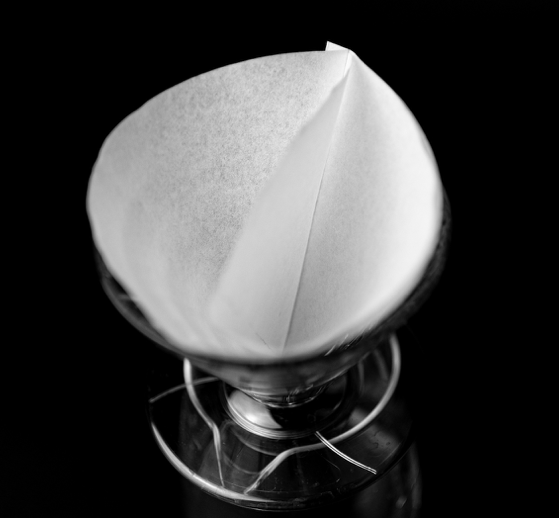
In summary, the dual-chamber filter offers a fresh approach to blending and brewing in pour over coffee, allowing users to adjust bean variety, grind size, and brewing parameters on the fly without pre-mixing, resulting in more flexible and varied flavor experiences. But with a single-filter cost of nearly 8 RMB, consumers should carefully consider their usage frequency and actual needs before purchasing. If you’re curious to try this method, start by DIY-ing with two regular filters—you can still explore the fun of dual extraction.
The above content is compiled by CoffeeHunters, a coffee news website.


