








Introduction:The piccolo latte is often mistaken for a mini version of a latte, but this 3-ounce small milk coffee is not only distinct in size and recipe—it also embodies the essence of Australian coffee culture. What exactly sets the piccolo apart from the latte? From extraction ratios and milk foam thickness to cup selection, this article explores the origins, flavor characteristics, and brewing challenges of the piccolo latte, helping you better appreciate the charm of this refined coffee.
Walk into a specialty coffee shop and order a “piccolo latte,” and the barista will hand you a small drink that looks like a miniature latte. Many customers, upon seeing this 3-ounce (about 90 ml) coffee, often exclaim, “Isn’t this just a small latte?” But in fact, the piccolo is not only smaller in volume—its historical roots, brewing techniques, and flavor profile are all uniquely its own.
The Etymology and Origins of the Piccolo
The word “piccolo” comes from Italian, meaning “small” or “short,” and in music, it refers to a small woodwind instrument. In the world of coffee, this term is used to describe a small-volume milk coffee with a strong espresso flavor. According to records, this drink may have first been created around a decade ago by baristas or roasters in Sydney, Australia, who, while adjusting beans and extraction parameters to save materials and time, had the idea to combine a single shot of espresso with a small amount of microfoam milk, resulting in this rich yet compact milk coffee.

Although the name includes “piccolo,” it has no direct connection to the musical instrument—it borrows the image of something “small and refined.” This coffee initially gained popularity in Australian specialty coffee shops and is now a staple on many local café menus, though it is less commonly seen in coffee shops outside Oceania.
The Standard Recipe and Challenges of the Piccolo Latte
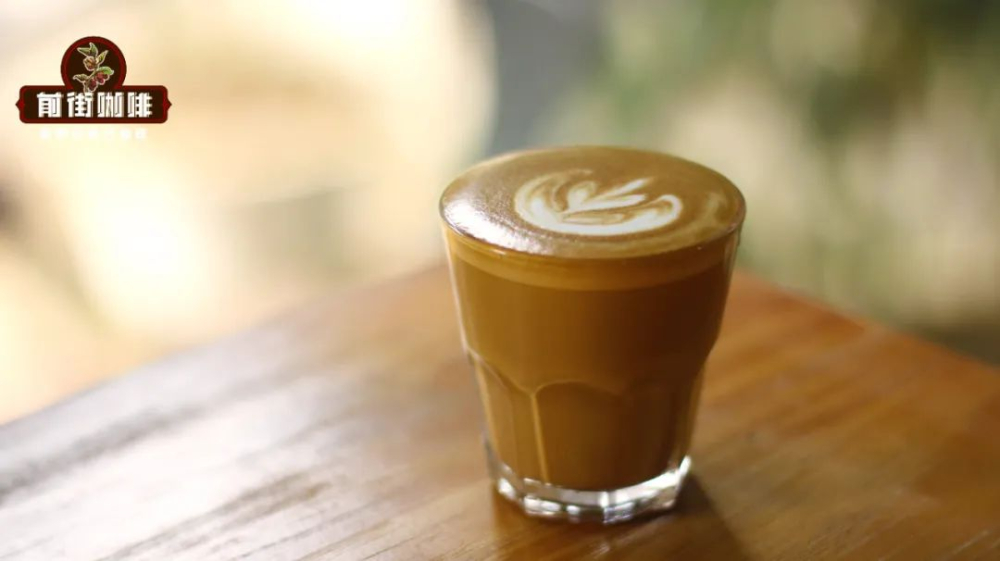
A typical piccolo latte is served in abouta 3-ounce (90 ml) glassand contains onesingle shot of espresso (about 15–20 ml)and60 ml of microfoam milk, with the milk foam thickness controlled atless than 0.5 centimeters. This ratio is designed so that, with each sip, the drink delivers the intense aroma of the espresso alongside the smooth, velvety texture of the milk, without the milk flavor overpowering the essence of the coffee.
However, this small cup poses quite a few challenges for baristas.The small cup size limits latte art space, usually allowing only simple designs such as tulips, small leaves, or hearts. Additionally, with only 60 ml of milk in total, baristas must precisely control the angle and duration of the steam wand to create fine and stable microfoam, then evenly integrate it with the espresso—all skills that require long-term practice to master.
How Is the Piccolo Different from a Mini Latte?
Many people think of the piccolo as a mini latte (mini latte) or a small flat white, but the three are actually quite different. First, the piccolo uses a single shot of espresso, not a double; second, its total volume is only about 90 ml, much smaller than a regular latte (about 300 ml) or a flat white (about 150–200 ml). Moreover, the piccolo has thinner milk foam, emphasizing the balance between coffee and milk rather than a heavy milky feel.
In terms of flavor profile, due to its small size, the impact of the espresso is more pronounced in the piccolo. Upon the first sip, you can immediately taste the distinct coffee crema and aroma, followed by the sweet smoothness of the milk. The overall flavor layers are clear, making it ideal for those who enjoy espresso but don’t want to consume too much liquid at once.
The Market Positioning and Innovative Variations of the Piccolo
In the early days, the piccolo was relatively rare in the Chinese market, and many baristas were not even familiar with this drink. However, with the rise of specialty coffee culture, more and more cafes have begun adding this small milk coffee to their menus and experimenting with various innovations. For example, some shops have replaced traditional blended espresso with single-origin SOE (Single Origin Espresso), or substituted the single shot with a more concentrated ristretto, making the overall flavor of the coffee more focused and distinctive.
Additionally, the serving vessel has evolved from early transparent glass cups to various finely crafted small cups, such as ceramic or heat-resistant glass, which not only enhance visual appeal but also better retain the drink’s temperature. The piccolo has also gradually become part of a “coffee combo,” suitable for pairing with desserts or as a pick-me-up during a light lunch.
In short, though small in size, the piccolo latte carries a wealth of coffee culture and technical depth. Whether as a daily pick-me-up or an entry point into exploring coffee flavors, this 3-ounce coffee is well worth savoring.
The above content is compiled by CoffeeHunters, a coffee news website.


