








Introduction:The sales of iced beverages surge in summer, but requests to "hold the ice" are frequently denied, leading to friction between consumers and brands. This article delves into the reasons why chain coffee brands strictly control the amount of ice, analyzes the dilemma faced by baristas, and shares practical strategies to help readers enjoy their iced drinks with a better experience.
During the peak of summer, chilled drinks become the top choice for beating the heat, but controversies surrounding the option to "go without ice" are endless. Recently, a customer ordering an iced drink at Manner specifically requested only two ice cubes, yet still found the drink too cold upon pickup and asked to have the ice removed on the spot — only to be turned down by the staff. The employee explained that the brand has strict standard ratios for iced beverages, and unauthorized adjustments could violate regulations, even risking fines.
Similar situations also occur at well-known chains like Starbucks. When customers request to have the ice removed, they often receive responses such as "this product requires ice during preparation and cannot be adjusted." While these rules may seem unyielding, they actually reflect the brands’ commitment to quality control.
In fact, ice plays a crucial role in iced drinks.Too much ice can dilute the flavor of the beverage, while too little may fail to maintain a suitably cool drinking temperature.To ensure consistent taste across every cup, brands typically establish detailed preparation standards, covering specifics such as the number of ice cubes and ingredient ratios.
Take Manner, for example — employees revealed that they must strictly follow the prescribed recipes, with only minor allowable adjustments to the number of ice cubes within a specific range.Violating these procedures could lead to fines, and repeated infractions might even result in dismissal.Therefore, when faced with special requests like "just two ice cubes," staff often opt to adhere to the standard process to ensure job security.
Starbucks adopts a similar stance, emphasizing that for certain iced beverages, ice not only serves to cool the drink but also affects the overall flavor profile.Removing the ice without authorization may alter the original balanced taste of the drink, potentially prompting customer complaints.Employees who violate the rules may face anything from reprimands to financial penalties.
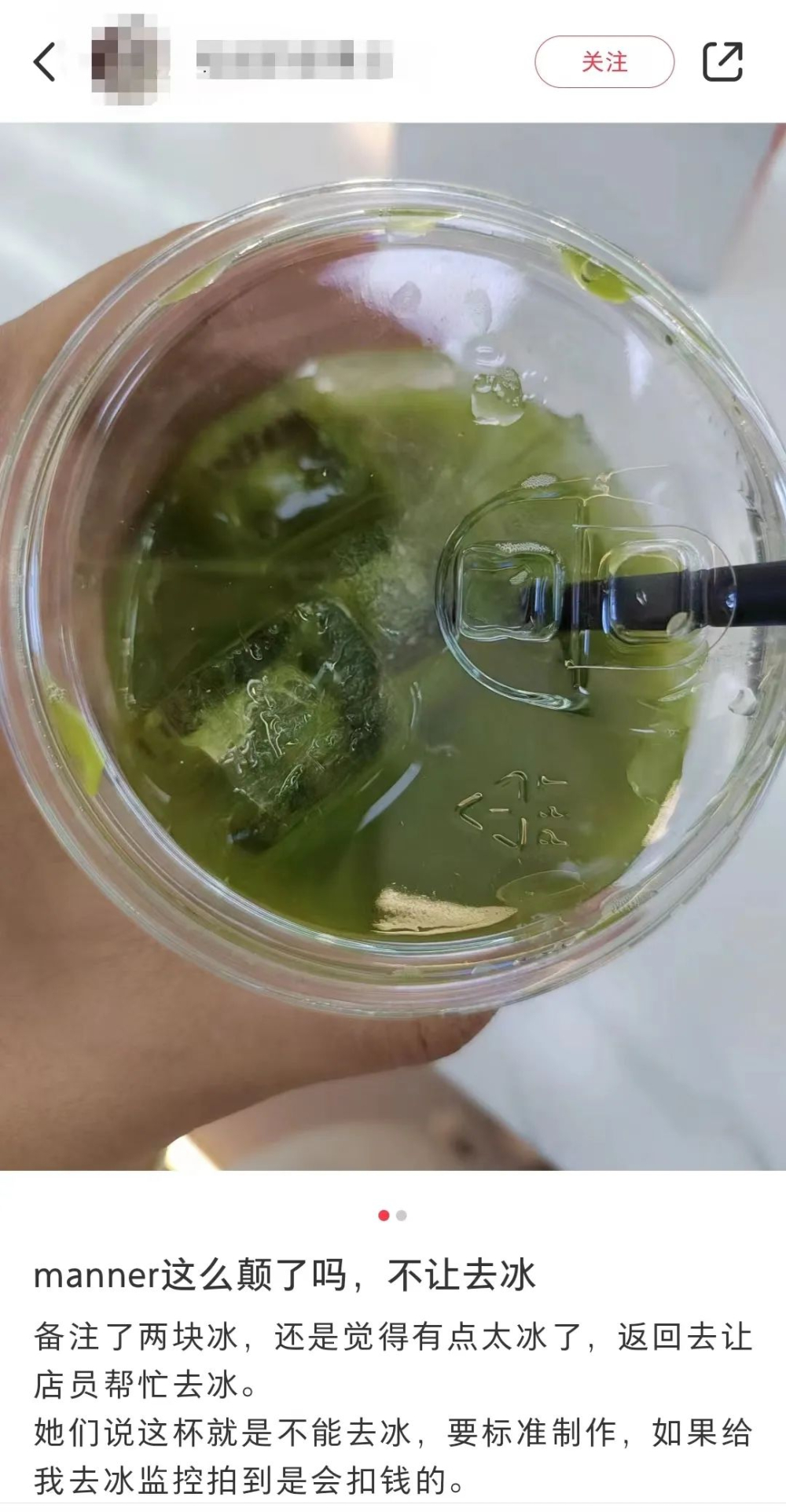
It’s worth noting that not all brands take a one-size-fits-all approach. Some chains show flexibility within reasonable limits when addressing special customer needs. For instance, in certain cases, baristas may use their discretion to slightly reduce the number of ice cubes, provided it doesn’t compromise the quality of the drink.
Industry experts point out that chain brands insist on standardized processes primarily for the sake of quality control and brand image maintenance.Uniform preparation standards ensure that consumers worldwide enjoy the same quality of beverage experience.However, as consumer demands grow increasingly diverse, brands are gradually seeking a balance — maintaining basic standards while moderately increasing service flexibility.
For consumers, if faced with situations where removing ice isn’t possible, consider opting for a hot version or discussing with staff the possibility of adjusting the ice ratio.Understanding a brand’s policy in advance can help make more suitable choices when ordering.Additionally, some brands offer bring-your-own-cup services, which can also serve as an alternative way to adjust beverage temperature.
In summary, the debate over removing ice from iced drinks reflects the eternal tension between standardized production and personalized demand. While brands must ensure product consistency and quality, they also need to consider the diversity of consumer experiences; and when expressing personal preferences, consumers should also understand the operational logic behind the industry. Only through mutual understanding can both sides create a better beverage consumption experience together.
The above content is compiled by CoffeeHunters, a coffee news website.


