








Introduction:With the rise of social media, cafés have become popular spots for photos, but this has also led to conflicts between café owners and customers. This article delves into the pros and cons of café photography, analyzes the reasons behind owners setting restrictions, and provides practical advice on balancing commercial shoots with the experience of regular customers—helping readers understand both sides and find possible ways to coexist harmoniously.
In the age of social media, cafés have become a favorite setting for many young people to share their lives. A pour over coffee paired with an exquisite dessert, followed by a beautiful photo upload, seems like the perfect day. However, more and more café owners are putting up “No Photography” signs in prominent places, and some staff even proactively remind customers to avoid taking photos. This shift reflects the frustration many café owners feel.
Many owners say they’re not entirely against customers taking photos—after all, attractive photos can serve as free promotion for the shop. But the issue arises when some photography enthusiasts treat cafés like professional studios. They bring in a lot of equipment such as DSLR cameras with long lenses, ring lights, and reflectors, occupy multiple tables, move the café’s furniture and decorations, or even have a group that orders just one drink but takes photos for hours, severely affecting other customers’ dining and resting experiences.
Some operators admit that at first, they were happy to see customers taking photos of the interior decor and sharing them, believing it brought natural exposure. But when the behavior escalates—such as damaging decorations, asking other guests to move for the best angle, or disrupting the café’s originally quiet atmosphere—they have no choice but to take action. To protect the rights of the majority of customers, many shops have opted to explicitly ban commercial shoots and excessive posing, and even restrict general photography.
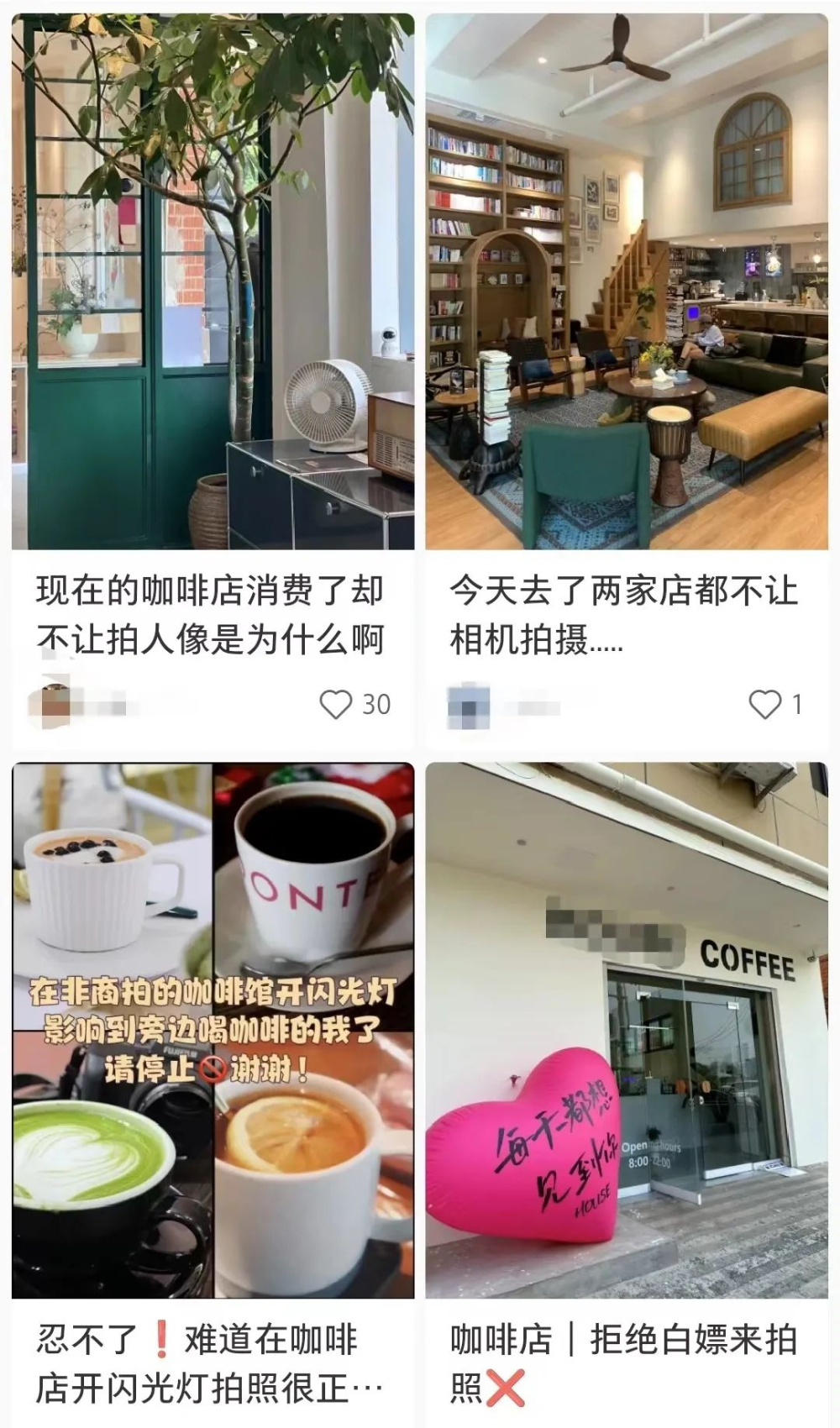
While these measures help maintain a harmonious environment, they’ve also sparked dissatisfaction among some customers, especially those who enjoy documenting their lives through photos. They argue that since they’ve made a purchase, they should have the right to take photos inside, as long as they don’t disturb others. In reality, however, many disputes stem from the blurry line of what counts as “disturbing others”—for example, frequent flash bursts, photography gear blocking walkways, or asking others to move for a better shot, all of which can disrupt the café’s tranquil atmosphere.
For customers who value a focused coffee tasting experience, they prefer to savor the aroma and flavor of coffee in an undisturbed environment, rather than drinking hastily in a space filled with flashes and noise. As a result, more and more consumers support café owners managing commercial shoots and excessive posing to maintain a pleasant tasting and resting environment.
To resolve such conflicts, café owners can adopt several practical strategies: First, clearly designate photography-friendly areas and photography-restricted time periods—for example, allowing photos only on weekends during specific hours and not on weekdays. Second, set photography guidelines, such as limiting the number of photographers, the duration, and types of equipment used, and requiring customers not to move any furniture. Third, offer photography collaboration packages—for instance, charging commercial photography teams a reasonable fee or assigning them a designated area to balance resource usage. Fourth, encourage customers to use their phones for simple snapshots, reducing the impact of large equipment on the environment. Lastly, post clear signage inside the café outlining photography rules so customers are aware of the restrictions before entering, helping avoid misunderstandings and conflicts.
In summary, the issue of photography in cafés isn’t without solutions—the key lies in mutual understanding between owners and customers, along with well-established guidelines. Through reasonable rules and communication, the café’s operating environment and the experience of regular customers can be protected, while also moderately meeting the needs of photography enthusiasts, creating a space where all can coexist harmoniously.
The above content is compiled by CoffeeHunters, a coffee news website.


