







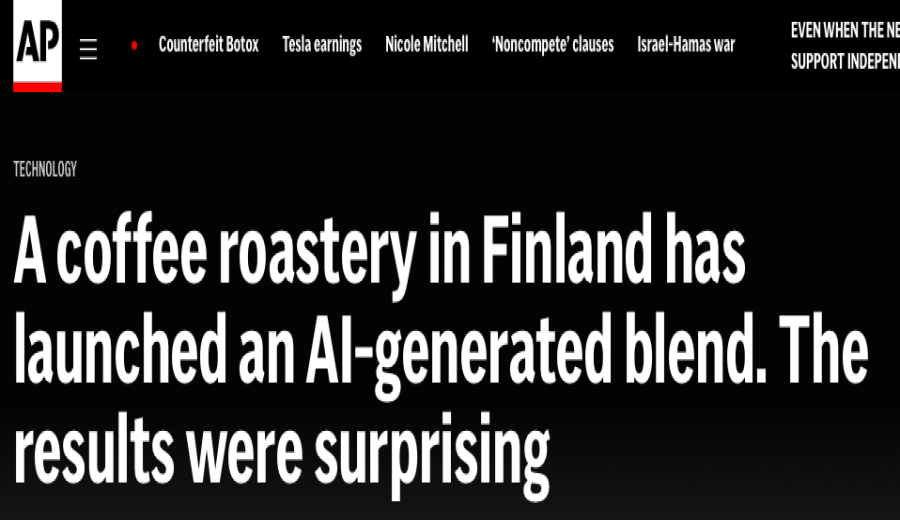
Introduction:In the process of crafting coffee blends, traditional methods often require repeated trial and error, which is time-consuming and costly. Finnish roastery Kaffa collaborated with AI company Elev to develop a four-bean blend tailored for the general public using a model similar to ChatGPT. By analyzing flavor data from all beans in their inventory, the AI quickly generated a blend that not only performed exceptionally well in blind tastings but also automatically designed the packaging label and flavor description—sparking industry debate on whether AI might reshape the role of baristas.
At this year’s World Brewers Cup (WBC), blends once again became a popular choice among many competitors in the open service segment, showcasing diverse combinations and rich flavor profiles. However, crafting an outstanding blend has traditionally relied on baristas conducting lengthy and repetitive trials—a cumbersome and expensive process, especially when using premium beans, where failure can lead to significant losses.
To develop a high-performing blend while minimizing waste, renowned Finnish roastery Kaffa partnered with local AI consultancy Elev. They utilized a ChatGPT-like AI model, inputting all the coffee bean varieties and flavor characteristics in their inventory, and tasked the AI with designing a blend suited to mainstream tastes.
Surprisingly, the AI’s proposed blend ratios diverged significantly from traditional barista logic. The final blend consisted of four coffee beans:40% Brazil Fazenda Pinhai,25% Guatemala La Bolsa,25% Colombia San Lorenzo, and10% Ethiopia Gerke. When Kaffa’s founder first saw this formula, they remarked, “It’s a bit odd,” but after the initial roast and blind tasting, the results astonished the team.
This AI-designed blend received unanimous praise without any manual adjustments. Even more surprisingly, the AI also autonomously created the packaging and label, featuring a flavor description it generated: “A balanced mix of sweetness and ripe fruit”—demonstrating nuanced insight beyond mere data analysis.
The application of AI technology in the coffee industry is no longer novel, with AI involved in everything from cultivation and production to brewing. In recent years, as technology has advanced, AI baristas have also emerged, capable of learning online to deliver stable and standardized coffee experiences. Kaffa’s newly launched AI-conic blend is seen by its founder as an enlightening experiment.
AI can not only propose blending directions that professional baristas might never consider but also has the potential to reduce material waste, improve overall efficiency, and ensure consistent product flavor. In terms of quality control and work efficiency, tireless AI demonstrates clear advantages over human baristas—and in some cases, can even produce intricate latte art to enhance customer experience.
Today, AI can generate market-aligned blend recommendations based on the flavor profiles of beans from different origins, combined with expert knowledge. For some in the industry, AI may be gradually approaching—or even poised to replace—the role of baristas, a future that no longer seems far off.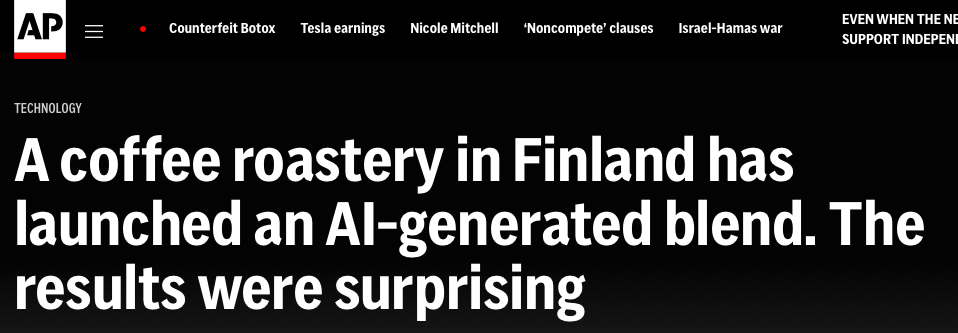
The above content is compiled by CoffeeHunters, a coffee news website.


