







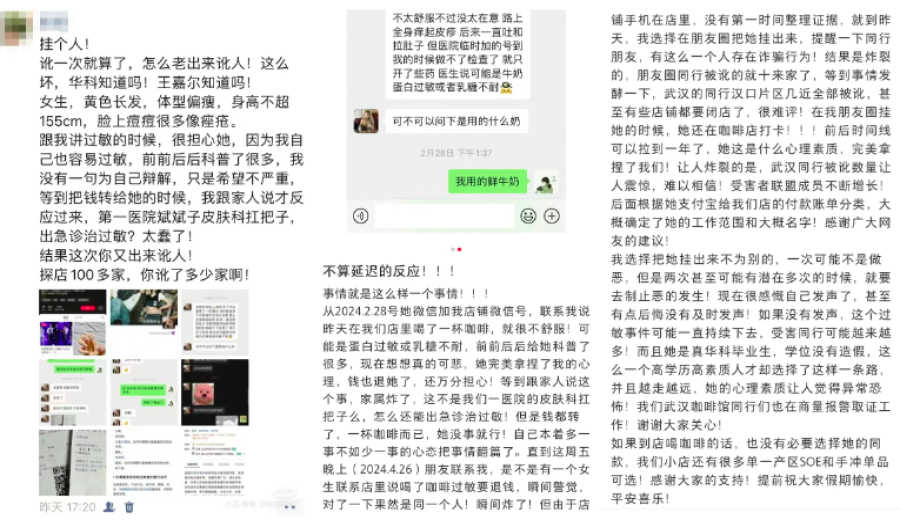
Introduction:Over twenty independent coffee shops in Wuhan were successively approached by the same female customer who requested refunds on the grounds of "lactose intolerance allergy." Shop owners initially refunded the money out of goodwill, only to later discover the suspicious nature of the proof and the repetitive patterns involved. This article unveils the details of this "allergy refund" controversy, analyzes common scam tactics, and offers practical preventive advice to help businesses avoid similar pitfalls.
Recently, the Wuhan coffee industry has been abuzz with discussion, all stemming from a female customer dubbed by netizens as the "Allergy Sister." She demanded refunds from multiple local independent coffee shops, citing allergic reactions caused by lactose intolerance. Many shop owners, out of concern for customer health, readily agreed to the refunds—only to realize later that this was part of a premeditated scheme.
It is understood that the incident initially involved only isolated cases. In consideration of customer experience and business reputation, shop owners often chose to resolve matters quietly by directly refunding the cost of the drinks. However, as more and more owners noticed that the woman’s explanations, the medical certificates she provided, and even the details of the incidents were strikingly similar, they began to suspect they had fallen victim to the same ploy.
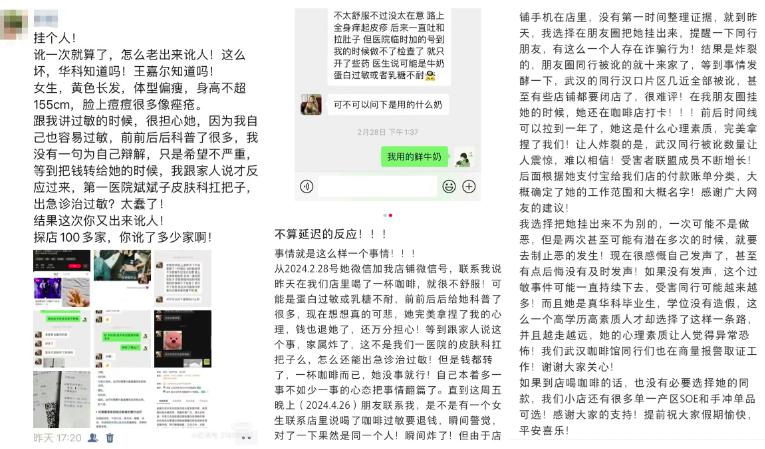
One shop owner, who was among the first to speak out on social media, recalled that in February of this year, a female customer contacted them shortly after purchasing coffee, claiming to have had an allergic reaction due to lactose intolerance. At the time, the shop owner also had personal experience with allergies and, out of empathy, quickly processed the refund. It was only later, when reviewing the documentation, that several red flags emerged—but the case was still treated as an isolated incident and not pursued further.
It wasn’t until another peer encountered the same situation that the two shop owners compared notes and realized this was not a one-off event. That shop owner then compiled their experience and the evidence they had gathered, and published it online—unexpectedly sparking widespread attention among Wuhan coffee shop owners, and becoming what the industry jokingly referred to as the “Coffee Circle’s Spring Festival Gala.”
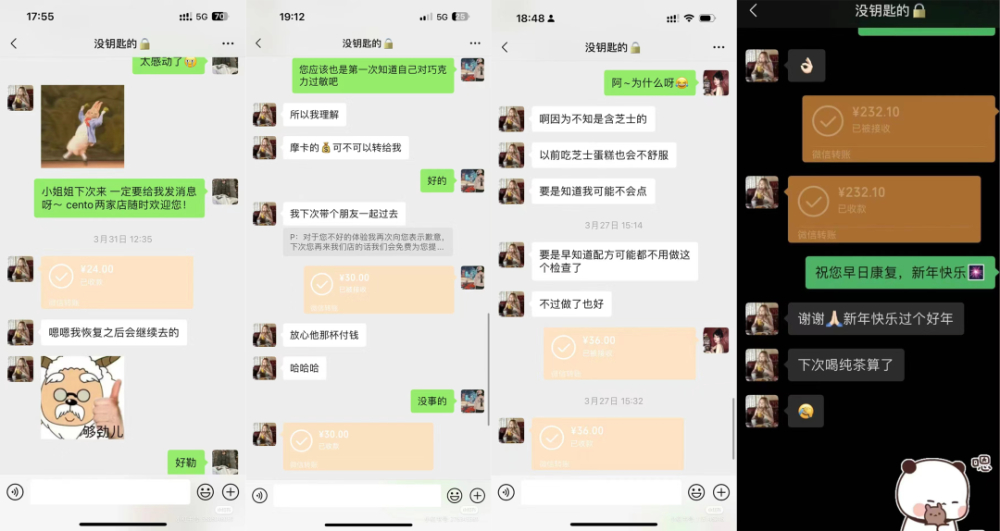
Subsequently, many shop owners posted chat records and transfer screenshots with the female customer, confirming that they too had been asked for refunds under similar pretexts. Several owners admitted that upon hearing the customer claim to feel unwell after drinking the coffee—even needing to take medication—they initially felt guilt and concern, fearing negative reviews might harm their shop’s image. As a result, they agreed to the refunds without much questioning.
Notably, when communicating with shop owners, the woman mostly admitted that she hadn’t proactively avoided the allergen and was willing to take partial responsibility. As a result, she rarely asked for reimbursement of medical expenses, insisting only on a refund for the drink. Some shop owners recalled thinking at the time that this customer was “understanding”—a perception that now seems quite unusual in hindsight.
In addition, some shop owners did request medical proof from her. However, upon seeing the images she provided, they failed to further verify the information with medical institutions and proceeded to transfer the refunds—something they now deeply regret.
According to netizen statistics, over twenty coffee shops have so far confirmed refunding this customer. Based on her check-in records on social media, the actual number of affected shops may be even higher, with the scope of the victims still expanding.
Industry insiders pointed out that, when facing customer complaints, most coffee shops choose to quickly compromise in order to avoid negative reviews and disputes. It is precisely this mindset of “sweeping things under the rug” that allows scammers to repeatedly succeed using the same story.
After the incident came to light, the female customer has not made any public response, and her social media account has been deactivated. Some shop owners attempted to contact her via messaging apps but received no reply. However, some business owners have stated that they have obtained partial personal information and are contacting other victims to gather evidence. Legal action may be pursued in the future to recover losses and defend their rights.
This incident serves as a reminder to coffee shop operators that, when dealing with health-related customer complaints, empathy should be accompanied by basic vigilance. When necessary, customers can be asked to provide detailed medical certificates or advised to seek professional medical assistance—so as not to fall victim to scams.
The above content is compiled by CoffeeHunters, a coffee news website.


