







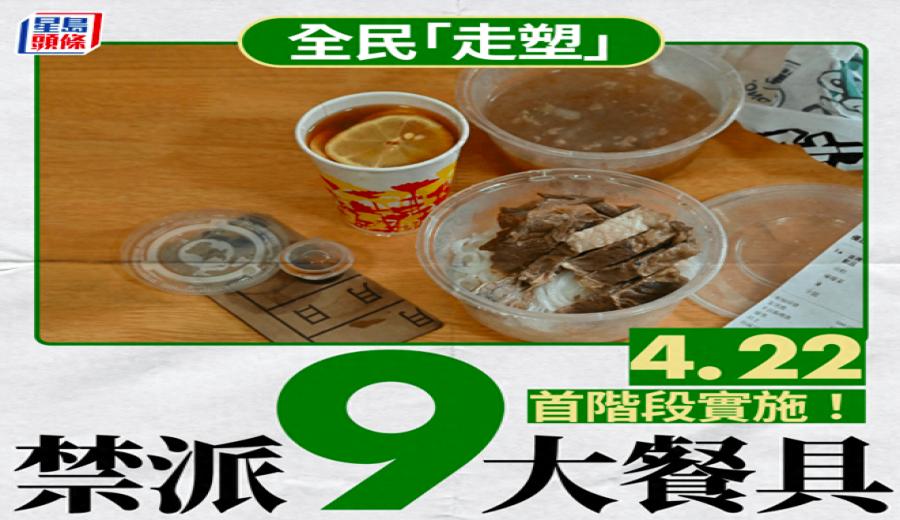
Introduction:Hong Kong implemented the first phase of its plastic reduction policy starting from Earth Day on April 22. McDonald’s took the lead by replacing plastic cutlery with paper packaging, but this move was soon met with a wave of customer complaints about paper taste, leakage, and durability. This article takes an in-depth look at the actual performance of paper cup lids and straws, explores how food and beverage businesses can strike a balance between environmental policies and consumer experience, and provides tips for using paper packaging.
This year’s Earth Day holds special significance for Hong Kong residents. Starting April 22, the city officially entered the “plastic-free” era, with the first phase banning the provision of foam plastic tableware and various types of single-use plastic products for takeout meals. The rollout of this policy immediately caused ripples across the chain restaurant industry. As an industry leader, McDonald’s responded swiftly to the policy by fully switching to paper cup lids and paper straws. However, this change brought about some unexpected challenges.
According to the new regulations, starting April 22, Hong Kong food and beverage establishments are prohibited from providing takeout customers with foam plastic tableware, plastic straws, stirrers, knives, forks, spoons, or plastic plates. McDonald’s quickly complied with the policy, switching all cold and hot drinks to paper packaging cups and paper cup lids. Customers who need straws are provided with paper ones. Some outlets even completed their packaging changes ahead of the policy implementation, giving both staff and customers time to adapt to the new rules.
However, consumers’ reactions to paper packaging materials have generally been negative, with the most criticized issue being the distinctive smell of paper. Many customers reported that after their drinks came into contact with paper containers for a period of time, the liquid would pick up a strange odor, severely affecting the drinking experience. Even for dine-in customers, the paper smell was clearly noticeable upon receiving the drink, significantly reducing satisfaction.
In addition to the odor issue, the practicality of paper packaging has also been widely questioned. Many customers pointed out that these paper materials are neither water-resistant nor heat-resistant, making them highly prone to leakage when holding liquids. Cold drinks served in paper cups become soggy over time due to moisture exposure both inside and outside the cup, resulting in a very poor user experience. In some cases, liquid has even leaked from the seams, causing considerable inconvenience.
The issues with paper cup lids are equally apparent. After multiple uses, the drinking opening of the lid softens due to repeated contact with liquid. For those who opt for paper straws, some consumers noted that the straws also become soft, making it difficult to suck up the liquid or small ingredients like tapioca pearls. These practical problems have led many customers to question the durability of paper packaging.
Faced with the various issues of paper packaging, dissatisfaction has come not only from customers but also from McDonald’s staff, who face operational difficulties. Since both cold and hot drinks now use the same type of paper cup, it has become hard for staff to quickly identify the drink type once an opaque cup lid is placed on top. Although McDonald’s introduced a new marking system with the paper cup lids—requiring staff to press markings on the lids—in practice, staff reported that even with these markings, it remains difficult to distinguish drinks, which to some extent affects store service efficiency and has led to a noticeable increase in wrong drink orders.
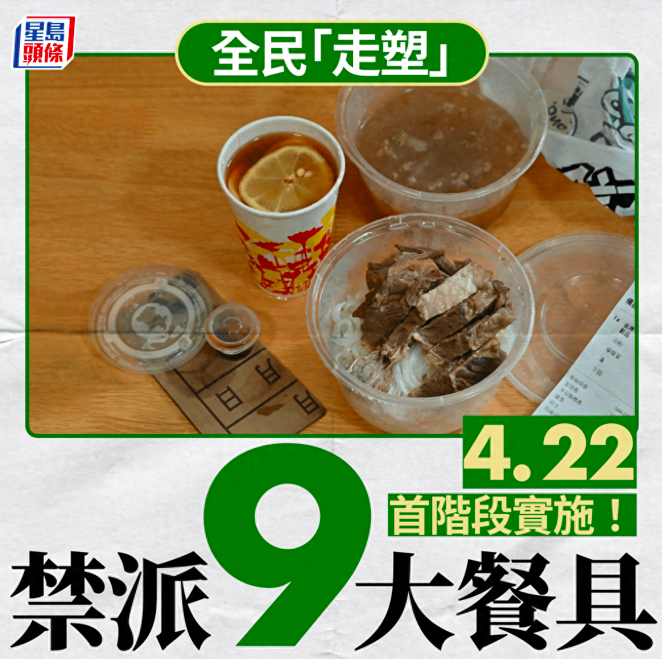
According to data from Hong Kong’s Environmental Protection Department in 2022, the city discards up to 227 tonnes of plastic and foam plastic tableware daily, amounting to over 82,000 tonnes annually—an astonishing figure. To reduce the use of disposable plastic products and alleviate pressure on landfills, the plastic reduction policy is imperative. However, considering that the food and beverage industry may still have plastic tableware in stock and that consumers need time to adjust, the policy has set a six-month adaptation period. This allows merchants to use up regulated plastic inventories and purchase suitable alternative tableware.
During this six-month adaptation period, the Environmental Protection Department is focusing mainly on public education and awareness. Businesses are still allowed to use some plastic products for takeout packaging. Some McDonald’s outlets, after listening to customer feedback, have switched back to using the previous plastic cup lids for takeout to avoid issues such as liquid leakage. However, such temporary adjustments are likely just stopgap measures. As policy enforcement becomes stricter, paper packaging will ultimately fully replace plastic products.
For coffee businesses, finding a balance between environmental policies and consumer experience is an important challenge. While paper packaging aligns with sustainability trends, it still needs to overcome challenges related to odor, leakage, and durability in practical applications. Businesses may consider choosing high-quality, waterproof-treated paper materials and enhancing staff training to improve packaging identification efficiency, thereby reducing the occurrence of incorrect orders.
The above content is compiled by CoffeeHunters, a coffee news website.


