







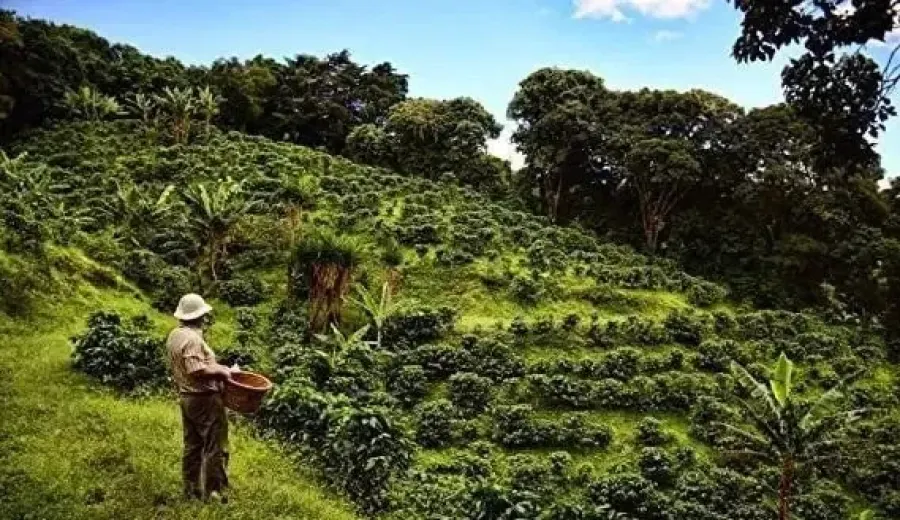
Introduction:Once a major coffee-exporting nation in Central America, Costa Rica now faces the severe challenge of a significant decline in production. From a peak of 3.5 million bags per year in the 1990s, the country now produces only about 1.7 million bags — a near-halving of output that reflects the combined effects of exchange rate fluctuations, policy shifts, and climate change. This article delves into the root causes of the industry’s struggles, examines the current situation for smallholder farmers, and explores how the global specialty coffee market is responding to these structural changes.
Costa Rica has long been renowned in the global specialty coffee market for its refined processing methods and distinctive flavor profiles. However, in recent years, it has fallen into a predicament of continuously shrinking production. Official data shows that the country’s annual coffee output has plummeted from a high of 3.5 million bags (each bag weighing 60 kilograms) in the 1990s to around 1.7 million bags today. The nearly 50% reduction in production scale has directly impacted the supply stability for international buyers.
This industry crisis stems from the interplay of multiple factors:Sharp exchange rate fluctuationshave weakened export competitiveness,agricultural policy adjustmentshave failed to effectively address new challenges, andthere is a severe shortage of seasonal labor— Nicaraguan migrant workers, who were previously relied upon, now mostly seek higher wages in the United States. Even when farms offer accommodation and double pay, it remains difficult to recruit enough workers.
A deeper underlying cause is economic structural transformation. Over the past twenty-five years, the service sector’s share of Costa Rica’s GDP has surpassed 44.5% (2017 data), with tourism, biopharmaceuticals, and technology industries rising rapidly, attracting a large portion of the young and able workforce into high-value sectors. Many second-generation coffee farmers prefer urban employment over inheriting family farms with limited returns.
Climate change further exacerbates production uncertainty. Irregular rainfall patterns disrupt traditional harvesting schedules, extreme high temperatures threaten the suitable altitude range for Arabica varieties, and the soaring cost of fertilizers due to international geopolitical tensions has increased production costs by 15–20% per hectare. Under the combined influence of these factors, the flavor consistency of beans from some traditional producing regions has begun to show noticeable fluctuations.
There are two views on the future direction of the industry: optimists believe that through investments in smart agriculture and differentiation strategies in the specialty market, Costa Rica can still maintain its premium positioning; pessimists warn that if the government continues to reduce agricultural subsidies, small and medium-sized farmers may be forced to abandon their fields, ultimately following a development path similar to Panama’s, where only a small number of ultra-premium micro-lots remain available.
It is worth noting that local farm owners report that although the current immigration policy is strict, the efficiency of bringing in qualified Southeast Asian skilled workers is insufficient, leading to labor shortages of over 30% during harvest seasons. Some advanced estates have begun testing mechanical harvesting assistance systems, but the steep mountainous terrain limits their widespread adoption, and it is expected that the reliance on manual labor will remain unresolved for at least the next five years.
The above content is compiled by CoffeeHunters, a coffee news website.


