








Introduction:If the final stage of a pour over brew exhibits slow dripping or even stagnant water that refuses to drain, it not only prolongs the overall extraction time but also tends to extract excessive off-flavors, negatively impacting the flavor profile. This article delves into the key factors affecting flow rate during the final phase, including grind size, coffee bean roast level, pouring technique, and puck structure, while offering practical adjustment tips to help you quickly identify the root cause and optimize your pour over experience.
The total extraction time of a pour over is influenced by a complex interplay of factors, such as grind coarseness, the speed at which coffee grounds absorb water, the pouring method and rhythm, as well as the design of the filter cone and the material of the filter paper. Precisely controlling the exact timing of each drop of coffee is therefore quite challenging due to the many variables involved. For beginners, total brew time is often used as an indicator of whether the flow rate is normal. If the total time is too long—especially if the final flow becomes sluggish—the coffee is very likely to develop unpleasant bitter and astringent off-notes.
During the pour over process, water seeps through the coffee grounds in the filter cone and eventually drips into the server below. This is a natural process that takes time. While an electronic scale can tell you how long the water was poured, the total time required from the end of pouring until all the coffee has dripped through cannot be precisely predicted through technique alone. Especially in the final stage, poor drainage in the coffee bed can lead to what is known as "puddling," which in turn affects the overall balance of flavors.

For those new to pour over brewing, completing the drip within around 2 minutes is generally considered an ideal benchmark. If the total time exceeds 30 seconds to 1 minute, or falls significantly below 2 minutes, it may indicate issues in certain steps that need further inspection and adjustment. Among these, an unusually slow or completely stalled flow in the final stage is one of the most common challenges people face in practice, often described as "coffee pooling" or "flooding."
So, does final-stage pooling really affect the flavor of the coffee? The answer is yes. The principle of extraction, whether immersion or drip, hinges on two main elements: "time" and "contact." A longer extraction time means more interaction between coffee grounds and water, which can certainly release more flavor compounds, but also increases the risk of over-extraction—especially of large-molecule bitter compounds and impurities. Once the flow rate slows down in the final stage, water can only seep through slowly, often carrying less soluble substances that can compromise the coffee’s clarity and complexity.
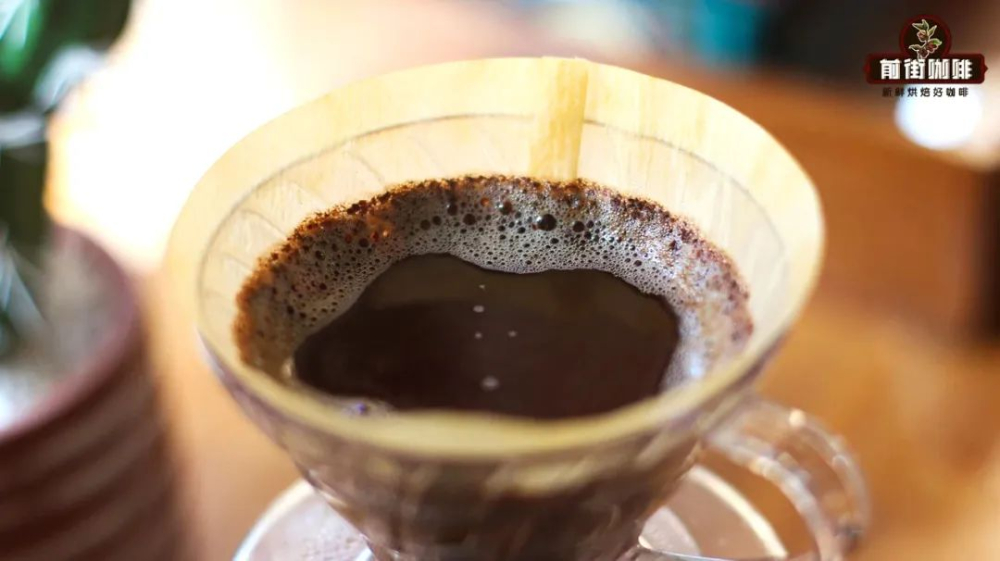
When you notice that there’s almost no foam on the surface of the coffee bed in the final stage, or only sparse pale yellow bubbles remain, and the water inside the filter cone is visibly stagnant, this is usually a sign that the coffee bed structure has compacted and the water pathways are blocked. At this point, most of the soluble compounds have already been extracted, and the remaining liquid may contain an excess of undesirable flavor components.
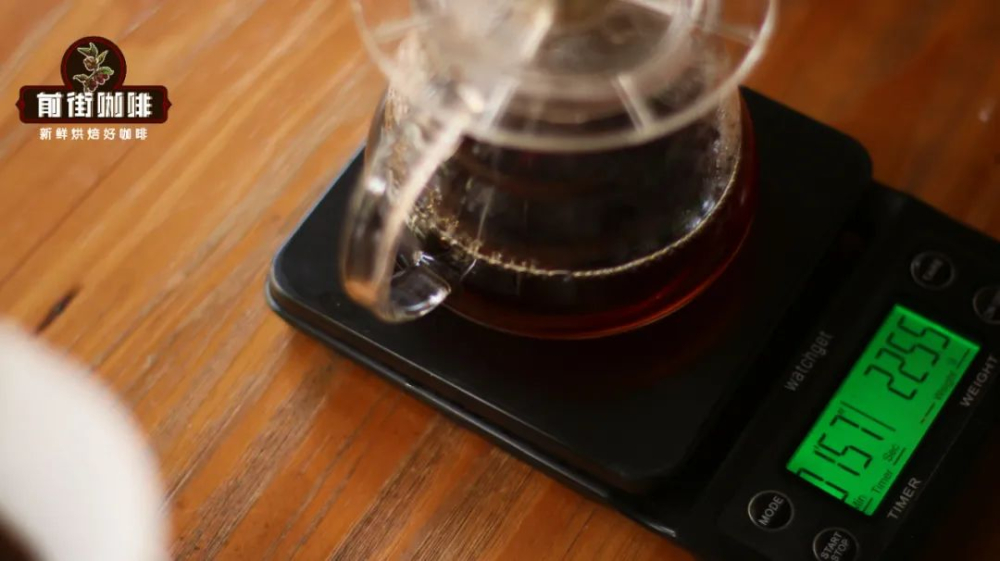
The primary cause of final-stage pooling is the quality and fineness of the grind. For pour over coffee, a grind size similar to granulated sugar is recommended. When tested with a #20 sieve, an ideal range is 70% to 80% of particles passing through. However, even when adjusted to this ideal range, it’s still difficult to completely avoid the production of very fine particles. If the grinder is of poor quality and produces a high proportion of fines, these tiny particles can quickly settle to the bottom of the filter cone and clog the drainage holes, severely restricting water flow in the later stages.
Additionally, the roast level of the coffee beans plays a crucial role. Lighter roasts typically have a denser structure and lower water absorption, making them more prone to settling at the bottom during brewing and contributing to blockages along with fines. If you find that no matter how you adjust your pouring technique, lighter roasts consistently pool at the end, then grind size and the physical characteristics of the beans themselves may be the main bottlenecks.
Beyond grind and bean type, pouring technique is equally important. Some brewers tend to pour in wide circular motions, which can help with even saturation and water level rise early on. But in the final stage, if the water stream directly hits the filter paper, it can dislodge the coffee bed that has built up against the walls of the cone and push it to the bottom, instantly causing a blockage. Moreover, if the initial pouring pressure is too light and fails to effectively agitate and lift the coffee bed, the resulting bed may become too flat in the later stages, allowing water to seep through solely by gravity, thus prolonging the brew time.
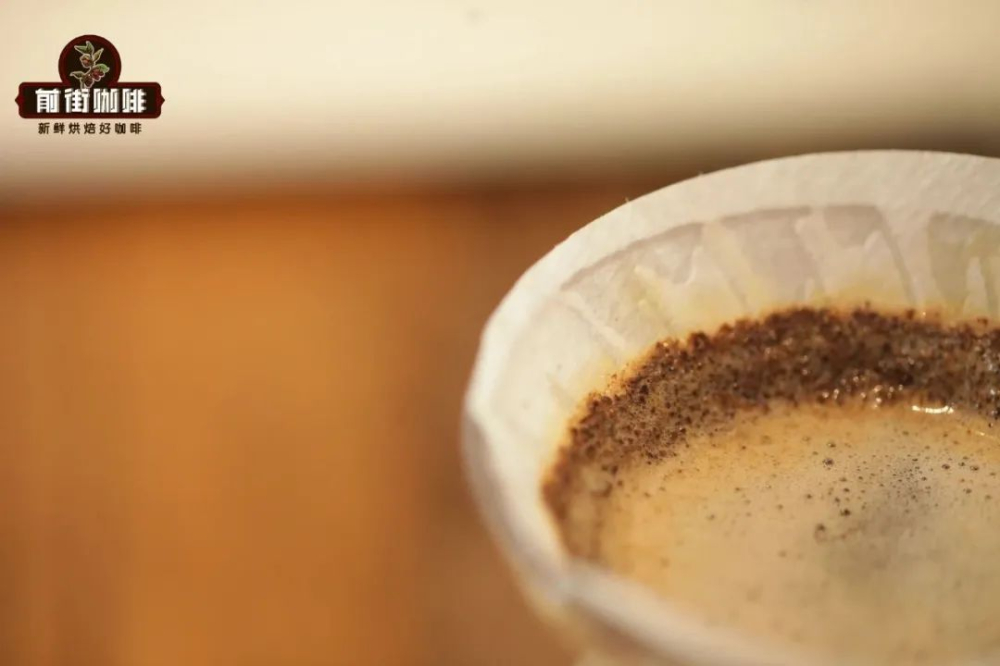
To pinpoint the true cause of pooling, start by observing the final state of the coffee bed. If, after each brew—regardless of whether it's a dark or light roast—the bed appears soggy and mud-like, and the total brew time exceeds 2 minutes, with the coffee tasting dull and unclear, the issue is likely an excess of very fine particles produced during grinding. In this case, switching to a grinder with higher precision is the most fundamental solution. If replacing the grinder isn’t immediately possible, try adjusting to a coarser grind, which can effectively reduce the proportion of fines. Additionally, using a filter cone with better flow performance—such as the Hario V60 or the Icepaw B75—can also significantly improve drainage in the final stage.
If the pooling issue mainly occurs when brewing light roasts, then adjustments to pouring technique and puck management should be prioritized. Taking the common three-pour method as an example: after the bloom, it’s recommended to pour with a steady and slightly stronger flow starting from the center, controlling the circular motion to roughly the size of a coin. This helps the coffee grounds float evenly and form an appropriately high “puck wall” along the edge of the cone. In the final stage, switch to a smaller stream and a more focused circular area. This not only maintains stable extraction efficiency but also avoids excessive agitation that could cause the bottom layer of the bed to collapse or be washed away, thereby keeping the water flow smooth.
The above content is compiled by CoffeeHunters, a coffee news website.


