








Introduction:Have you ever wondered why the common latte art patterns are usually seen on hot lattes, but rarely on iced lattes? This isn’t just a matter of visual difference—it involves the science behind milk foam formation, how temperature affects dairy fluidity, and the practical feasibility of execution. This article starts with the basic principles of coffee latte art, analyzes the differences in preparation processes and material handling between hot and iced lattes, and explores the challenges and limits of iced milk foam through real-life examples, giving you an in-depth understanding of the science and limitations behind latte art.
The delicate and layered latte art patterns on hot lattes always catch the eye and have even become iconic images in coffee photography. However, iced lattes, which are also made with espresso and milk, rarely feature latte art decorations. This isn’t due to any creative limitation on the part of baristas, but rather stems from the unique behavior of milk foam in cold drink environments. This article will take you through the key principles behind coffee latte art, explain why it’s difficult to achieve latte art on iced lattes, and share the challenges and results of actual attempts to make iced milk foam.
In coffee shops, when a customer orders a “latte” and asks if the barista can “draw a flower” (i.e., create latte art), in most cases, the response is: “Yes, but only for hot lattes.” This answer implies the subtle relationship between milk foam, temperature, and the conditions required for proper milk and espresso integration. Hot lattes involve the process of steaming and frothing milk, which produces fine, stable foam that serves as the foundation for forming latte art patterns. Iced lattes, on the other hand, do not require heating, thus skipping this crucial step.
The principle of coffee latte art lies in using the tiny air bubbles in milk (i.e., milk foam) to contrast with the dark liquid of espresso. Through the barista’s skill, the foam and coffee are blended in the cup to create patterns such as hearts, leaves, or roses. The texture of the milk foam must be fine and uniform to create stable and smooth pattern lines. These bubbles are formed by milk proteins encapsulating air, and if the temperature, stirring, or material conditions are not right, the foam cannot maintain the desired form.

A common misconception is that as long as you have espresso and milk, you can create latte art.But without properly frothed milk foam, latte art is simply not possible.Even if you pour espresso and milk into a cup, without the fine foam floating on the surface, the pattern won’t appear, nor can it remain clear. Moreover, the high temperature of a hot latte helps with the flow and integration of the milk foam and coffee, allowing the barista to more precisely control the pouring speed and movement, further shaping the details of the pattern.
So, is it possible to achieve latte art on an iced latte through other methods? Some have proposed: what if we use cold milk foam instead of hot milk foam? Theoretically, it’s possible, but in practice, it’s fraught with difficulties. To make cold milk foam, some creators have tried using handheld milk frothers. This tool doesn’t use a steam wand but instead creates tiny bubbles in cold milk by spinning a fine mesh at high speed to incorporate air. However, this method requires a high level of skill and patience—you need to maintain the spinning “vortex” for a long time and precisely control the amount of bubbles, otherwise the foam can easily become too large or uneven.
One coffee team actually tested this method but found that the cold milk foam produced by the handheld frother was often too dense and firm—not only did it fail to blend uniformly with the espresso, but it also floated on the surface, creating a noticeable layering effect. Both the taste and visual results were unsatisfactory.This type of foam not only lacks the smooth texture of hot milk foam, but its stability is also very poor—it collapses or dissipates within just a few minutes.
Another attempt involved mimicking the method for iced cappuccinos, using a French press to create cold milk foam. This method controls the depth of the plunger to limit the amount of gas entering the milk, resulting in relatively smoother and more fluid foam. Although the final foam was still somewhat thick, it had a certain gloss and fineness. With the barista’s efforts, this “specially made iced latte” managed to display a faint, small floral design—but the overall clarity and durability of the pattern were far inferior to those of hot latte art, and the mouthfeel of the foam was harder, noticeably different from the soft experience of regular latte art lattes.
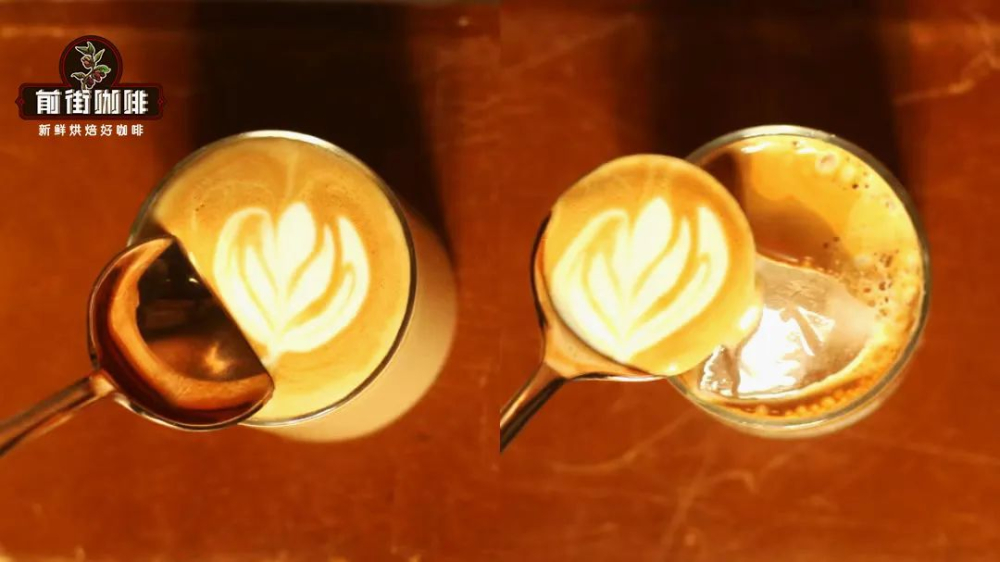
More importantly, these experiments typically didn’t include ice cubes. If a significant amount of ice is added, the cold milk foam quickly loses its structure due to temperature changes and melting ice, causing the pattern to blur or even disappear rapidly. Therefore, if an “iced latte” contains no ice cubes, while it may be technically possible to create some form of latte art, it would lose the core essence of an iced drink—its cool and refreshing quality.
Combining experimental findings with current market practices,the main reason iced lattes rarely feature latte art is because their preparation does not involve milk frothing, and the presence of ice cubes prevents the foam from achieving the stability and visual contrast needed for latte art. While it is technically possible to attempt breakthroughs with special tools and methods, limitations in material properties and operational difficulty have so far prevented this from becoming a mainstream practice.
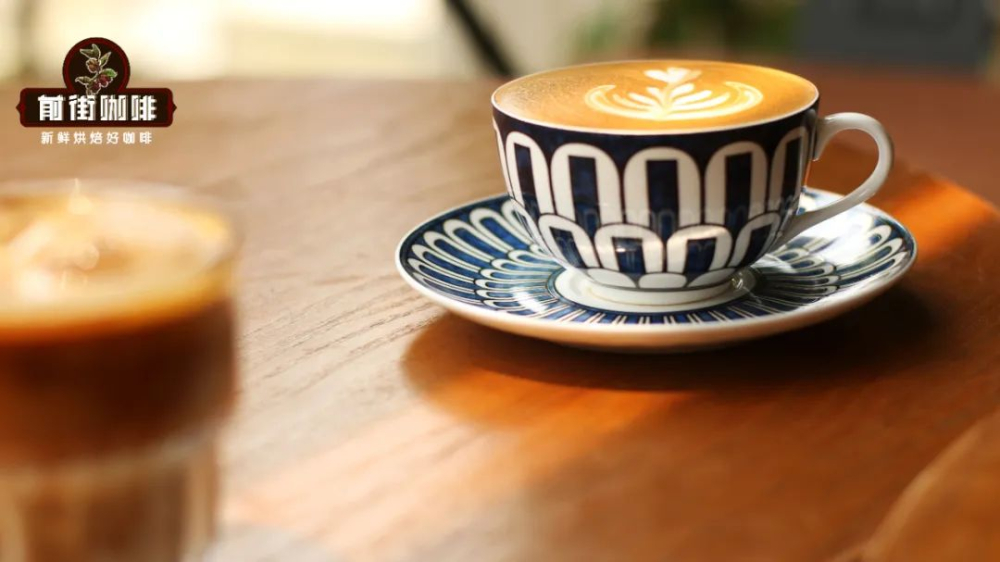
In summary, latte art is not just art—it’s science. From the creation of milk foam, to temperature control, to the precision of pouring techniques, every step influences the final pattern. While iced lattes may lack the flashy appearance of latte art, they win over another group of coffee lovers with their refreshing taste and minimalist style. So the next time you order an iced latte and don’t see any latte art, now you know why.
The above content is compiled by CoffeeHunters, a coffee news website.


