







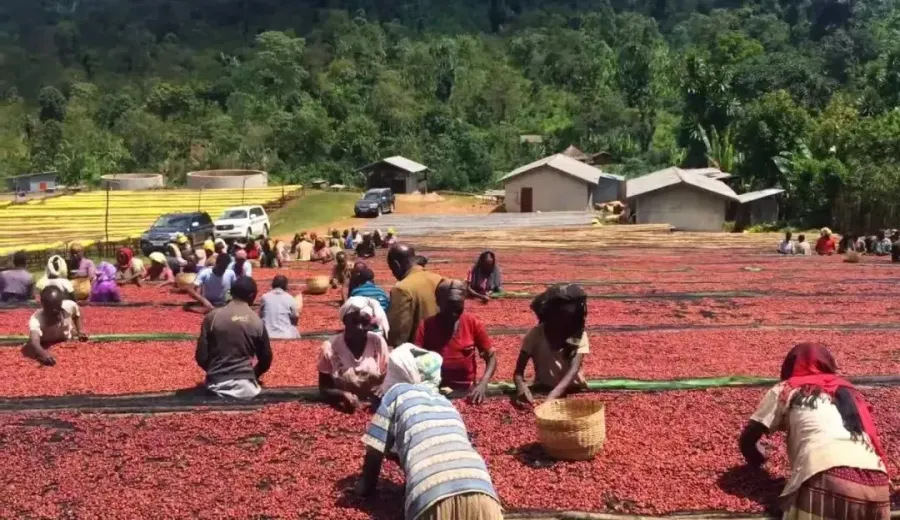
Introduction:As the birthplace of coffee, Ethiopia is home to over 15,000 native coffee varieties, and Yirgacheffe is one of the world’s most renowned specialty coffee regions. This article will delve into the local coffee farming models, unique geographical environment, and how the Red Cherry Project enhances coffee quality by purchasing only fully ripe red cherries. Through detailed origin insights and brewing references, it helps you better understand the flavor profile of this popular natural Yirgacheffe Red Cherry coffee bean.
As the cradle of coffee, Ethiopia not only gave birth to the world’s first coffee tree but also retains an exceptionally rich coffee gene pool, with approximately 15,000 varieties. Among the many producing regions, Yirgacheffe is widely celebrated for its distinctive floral and fruity notes, making it a top choice for many coffee enthusiasts. The “Red Cherry Project” improves local farmers’ incomes by purchasing only fully red cherries at premium prices, while effectively enhancing overall coffee quality, injecting new vitality into the specialty coffee market.
Ethiopia is located on the East African Plateau, southwest of the Red Sea, bordering Djibouti, Somalia, Sudan, South Sudan, Kenya, and Eritrea. The country’s terrain is predominantly highland and mountainous, with about two-thirds of the region consisting of the elevated Ethiopian Highlands. The East African Rift Valley runs through the entire territory, with an average altitude of nearly 3,000 meters. The national average elevation is around 2,450 meters, resulting in stable climatic conditions — an average annual temperature of about 16°C, mainly divided into dry and rainy seasons, with abundant rainfall totaling approximately 1,237 millimeters per year. Additionally, the country boasts abundant water resources and over 50 volcanoes. These exceptional natural conditions make Ethiopia an ideal location for cultivating Arabica coffee.
In the local coffee farming structure, the “garden model” is the most common method, where coffee trees are intercropped with other plants around homes and tended by farmers themselves. During harvest season, farmers pick the coffee cherries themselves and then deliver them to middlemen or processing facilities for centralized processing. This traditional farming approach still accounts for more than 50% of Ethiopia’s total coffee production.
Among Ethiopia’s well-known producing regions, Sidamo, Gimma, Harar, Guji, and Yirgacheffe are all prominent. Originally part of Sidamo, Yirgacheffe later became an independent region due to its unique flavor profile. As a small town in the northwest of the Sidamo province, Yirgacheffe is situated on the eastern side of the East African Rift Valley and is one of the highest-altitude producing areas in the country, ranging from approximately 1,750 to 2,200 meters above sea level. In the local ancient language, “Yirga” means “to settle down,” and “Cheffe” refers to “wetland.” This humid climate, fertile soil, and ample sunlight endow the local coffee with rich floral and fruity notes, distinct flavor layers, and high recognizability.
When it comes to classic Yirgacheffe coffees, the washed process version from a certain well-known coffee brand has long been a beginner’s top choice. This bean features a jasmine floral base, paired with bright citrus acidity and notes of orange and berry-like fruitiness. It has a clean and refreshing taste, making it ideal for experiencing the unique charm of Ethiopian coffee.
However, in the early days when specialty coffee concepts were not yet widespread, many farmers, in pursuit of higher yields, often harvested coffee cherries before they were fully ripe, resulting in significantly compromised coffee bean flavors. It wasn’t until 2007, when Dutch green coffee trader Trabocca launched the “Red Cherry Project (ORC, Orange Coffee Roasters),” that the situation began to improve.
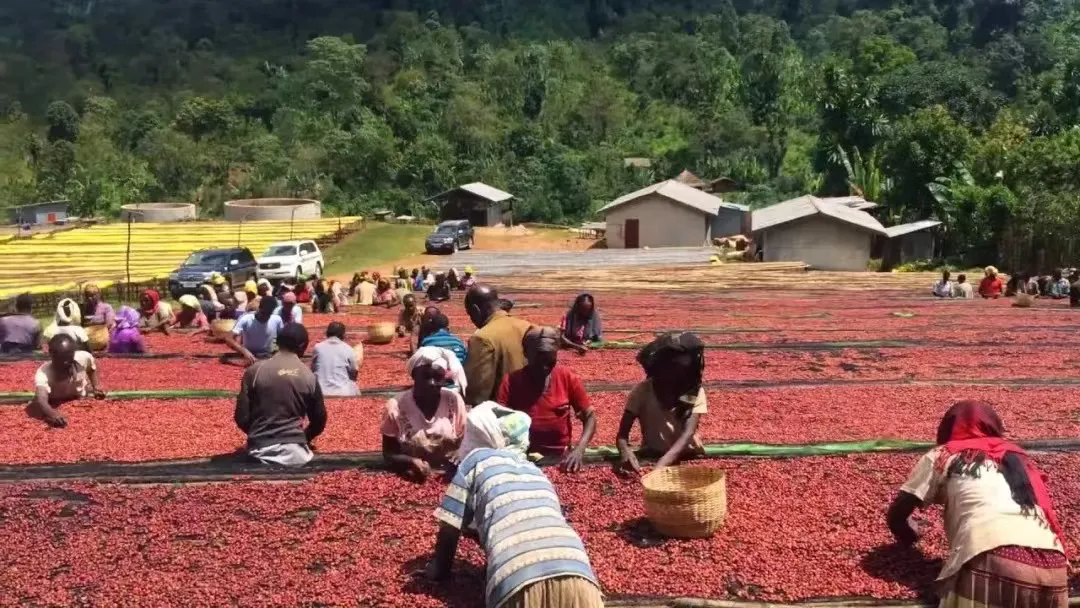
The core of the Red Cherry Project lies in encouraging farmers to harvest only fully ripe red coffee cherries and requiring them to be handpicked manually. The project purchases these meticulously selected red cherries from farmers at prices several times higher than the market rate, but only if the beans pass the strict cupping standards set by Trabocca’s facilities in both Ethiopia and the Netherlands. Although the harvesting, selection, and processing require more labor and time, this initiative not only increases farmers’ incomes but also motivates them to pay greater attention to coffee quality, thereby producing higher-grade green beans.
The influence of the Red Cherry Project has gradually expanded, now covering producing regions including Yirgacheffe, Sidamo, Pungo Forest, Lekempti, Kembata, Harrar, and Limu. The success of this project has also helped more consumers understand that behind every cup of specialty coffee lies rigorous care and dedication at every step — from planting and harvesting to processing.
Taking the popular natural Yirgacheffe Red Cherry coffee beans from a well-known brand on the market as an example, this bean is processed using light roasting and the natural method. Brewing it with a V60 filter at a 1:15 coffee-to-water ratio and 92°C water temperature highlights its bright citrus acidity and rich fruit notes such as berries and strawberries. It has a refreshing taste and a long-lasting aftertaste. For coffee enthusiasts who enjoy trying pour over brewing, this bean is not only great for practicing extraction techniques but also offers a full experience of the distinctive floral and fruity flavors of the Yirgacheffe region.
The above content is compiled by CoffeeHunters, a coffee news website.


