







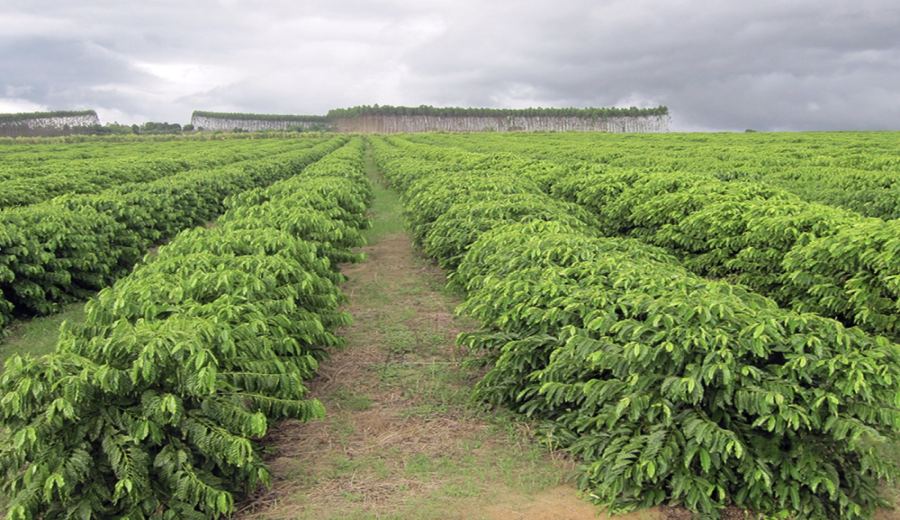
Introduction:Want to explore the representative flavors of fine Brazilian coffee? This article takes an in-depth look at Fazenda Rainha in the Alta Mogiana region of São Paulo state, focusing on its proud Yellow Bourbon variety. From the geographical advantages of the origin, the history of the variety, to the unique processing methods, we fully break down this coffee bean with its gentle yet layered flavor profile. Practical pour over parameters and expected flavor profiles are also provided, making it ideal for readers seeking both fine coffee knowledge and everyday drinking experiences.
Brazil is not only the world’s largest producer and exporter of coffee, but also, thanks to its diverse geography and climate conditions, it is home to many coffee-growing regions with distinct styles. Located in São Paulo state, the Alta Mogiana (Alta Mogiana) region stands out among many producing areas due to its high altitude and long-standing tradition of cultivating fine coffee. Among them, Fazenda Rainha is one of the region’s representative high-quality coffee producers.
Fazenda Rainha belongs to the Carvalho Dias family. Since the first edition of Brazil’s Cup of Excellence (COE) competition in 1999, the four farms under this family have consistently achieved outstanding results, winning more than 12 awards within seven years, demonstrating their internationally recognized standards in cultivation and processing. This farm, located in northern São Paulo state, primarily grows the Yellow Bourbon variety, which occupies 200 of its 280-acre planting area, making it practically a dedicated cultivation base for Yellow Bourbon.
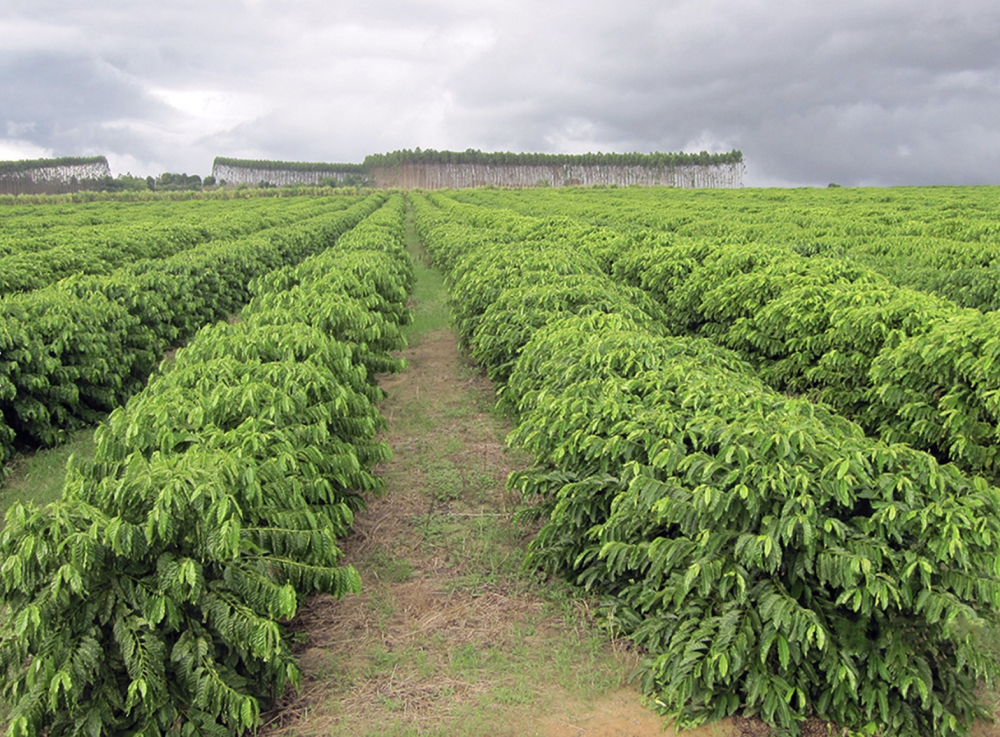
Yellow Bourbon is a Bourbon mutation unique to São Paulo state in Brazil. Its name comes from the distinctive color of the ripe fruit — unlike the common Red Bourbon, Yellow Bourbon, due to a recessive gene, shows a soft orange-yellow hue when the fruit matures, rather than red. The Bourbon variety itself is a historically significant branch of Arabica, standing alongside Typica as one of the oldest surviving coffee varieties. Its coffee cherries are mostly red, yellow, or orange (also called Pink Bourbon), with beans that are rounder in shape. The plants are tall but relatively delicate, prone to nematodes, leaf rust, and coffee berry disease, requiring strict management. However, when grown at high altitudes, they often exhibit richer flavor potential.
When discussing the overall development of Brazilian coffee, geography and climate play key roles. As the world’s fifth-largest country, Brazil’s terrain can be divided into the central-southern plateau, which is over 500 meters above sea level, and the northern plains and Amazon basin, which are below 200 meters. In terms of climate, the north is tropical rainforest, the central region is tropical savanna, and the south has a subtropical monsoon humid climate. Combined with sedimentary volcanic ash soil, red-yellow soil, and brown clay soils rich in organic matter and minerals, along with an extensive river network, this creates a highly suitable natural environment for coffee cultivation.
Out of the country’s 26 states, 17 produce coffee, with Paraná, São Paulo, Minas Gerais, and Espírito Santo together accounting for 90% of total production. Arabica accounts for about 80% of the national output, with the rest being Robusta. Among the many varieties, Bourbon, Catuai, Typica, and Mundo Novo are commonly cultivated, with the Bourbon variety performing particularly well in high-altitude regions such as Alta Mogiana.
The Yellow Bourbon coffee beans from Fazenda Rainha are grown at altitudes between 1400 and 1950 meters. Such heights not only help the coffee cherries mature slowly, accumulating richer sugars and flavor compounds, but also impart a firmer acidity and greater complexity to the beans. In terms of processing, the farm uses the Pulped Natural method, which involves removing the outer skin and part of the pulp of the coffee cherry, then allowing the mucilage-covered seeds to dry in the sun. This method balances fruity aroma with cleanliness, and common flavor notes include sugarcane sweetness, black tea-like tones, nutty characteristics, and chocolatey aftertaste.
For coffee enthusiasts who enjoy pour over brewing, it is recommended to use a KONO filter cone, with a 1:15 coffee-to-water ratio and water temperature around 90°C for extraction. This highlights its sweetness and full body. Upon tasting, you can clearly perceive a distinct fruity sweetness, accompanied by sugarcane-like brightness, nutty aromas (such as peanuts), and a soft chocolatey finish. The overall mouthfeel is smooth and delicate, with a clean and lingering aftertaste, making it very suitable for everyday drinking or as an entry point for understanding fine Brazilian coffee.
The above content is compiled by CoffeeHunters, a coffee news website.


